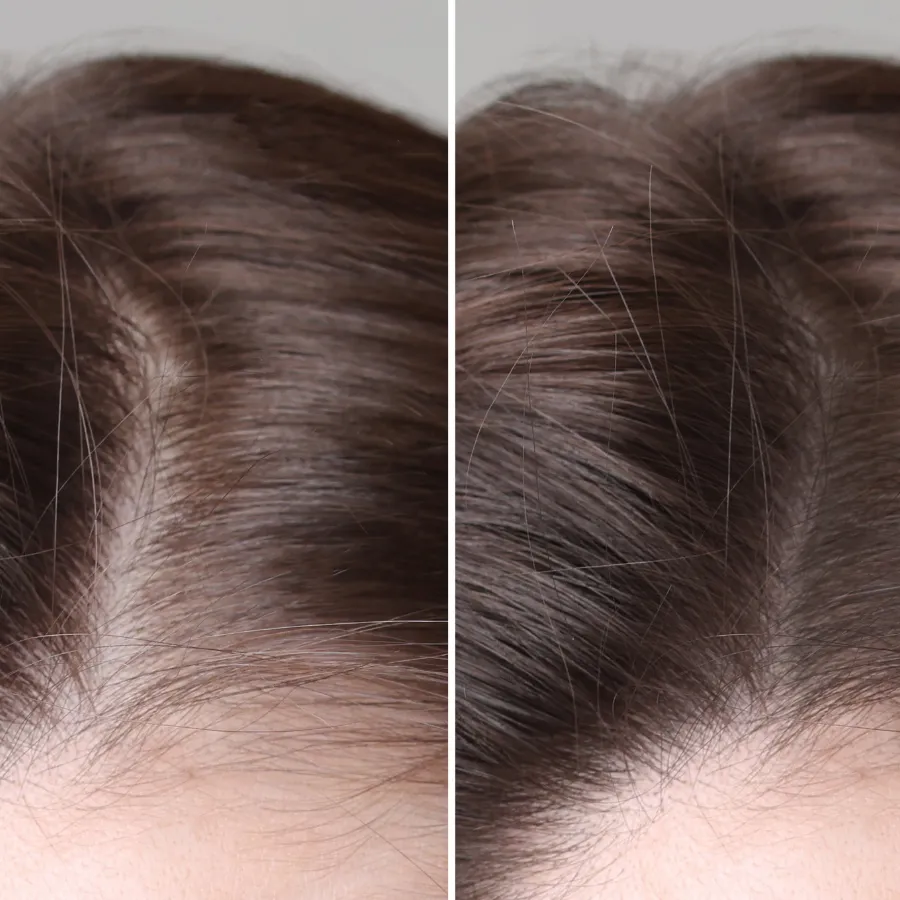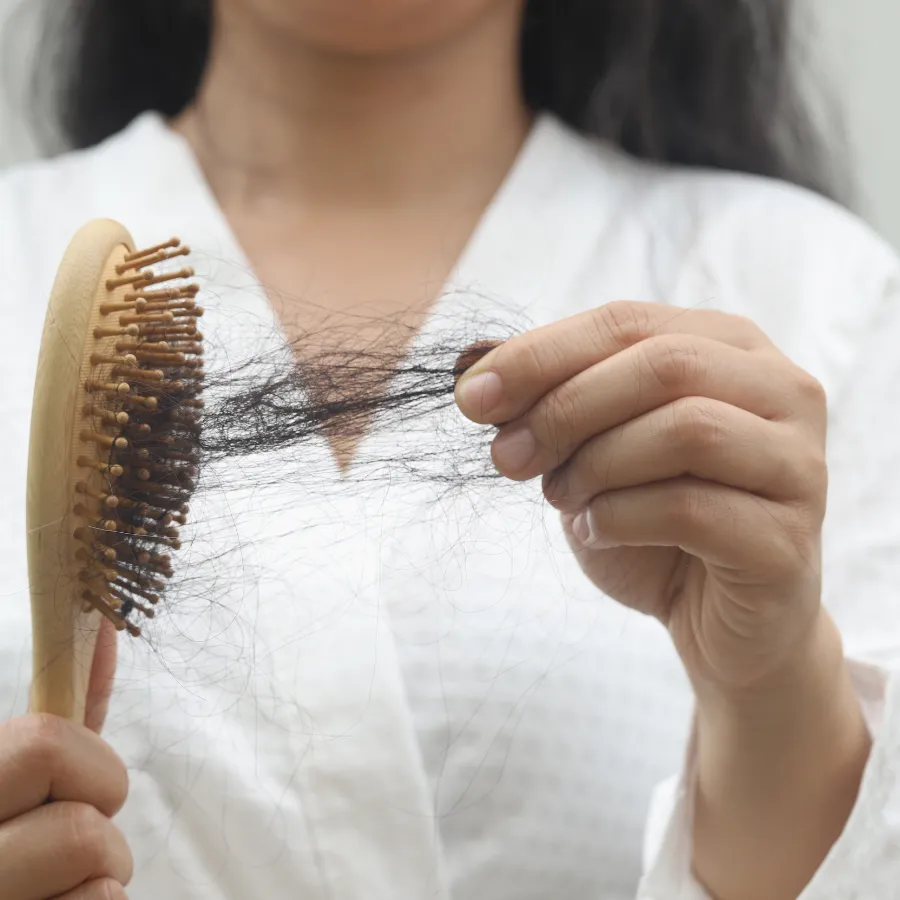
Quick answer: If your hair is suddenly falling out more than usual, one possible explanation is telogen effluvium, a type of temporary hair shedding. It can happen after an illness, a stressful period, significant weight loss, childbirth or hormonal changes. Shedding often becomes noticeable around two to three months after the triggering event, which can …

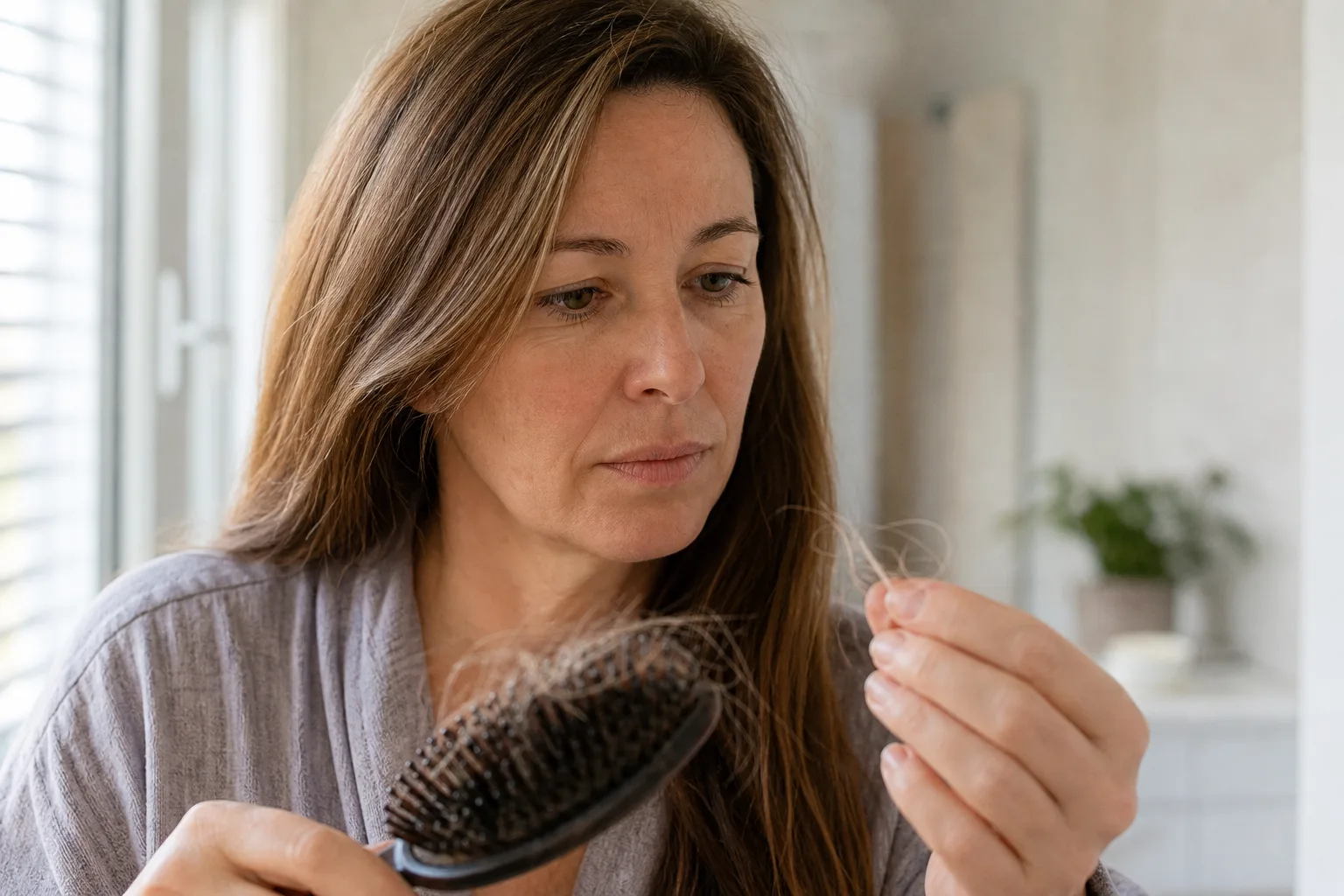
Quick answer: If your hair is suddenly falling out more than usual, one possible explanation is telogen effluvium, a type of temporary hair shedding. It can happen after an illness, a stressful period, significant weight loss, childbirth or hormonal changes. Shedding often becomes noticeable around two to three months after the triggering event, which can make the cause difficult to pinpoint. However, sudden hair loss is not always temporary, particularly if you notice bald patches, progressive thinning or changes to your scalp.
Finding more hair than usual on your hairbrush, pillow or in the shower can be unsettling. You might wonder whether you’re going bald, whether something has changed with your health, or whether your hair will grow back.
The good news is that increased shedding often has an explanation. The important thing is to look at when it started, where you’re losing hair and whether anything else has changed.
Here’s what could be behind it.
1. Something that happened a few months ago
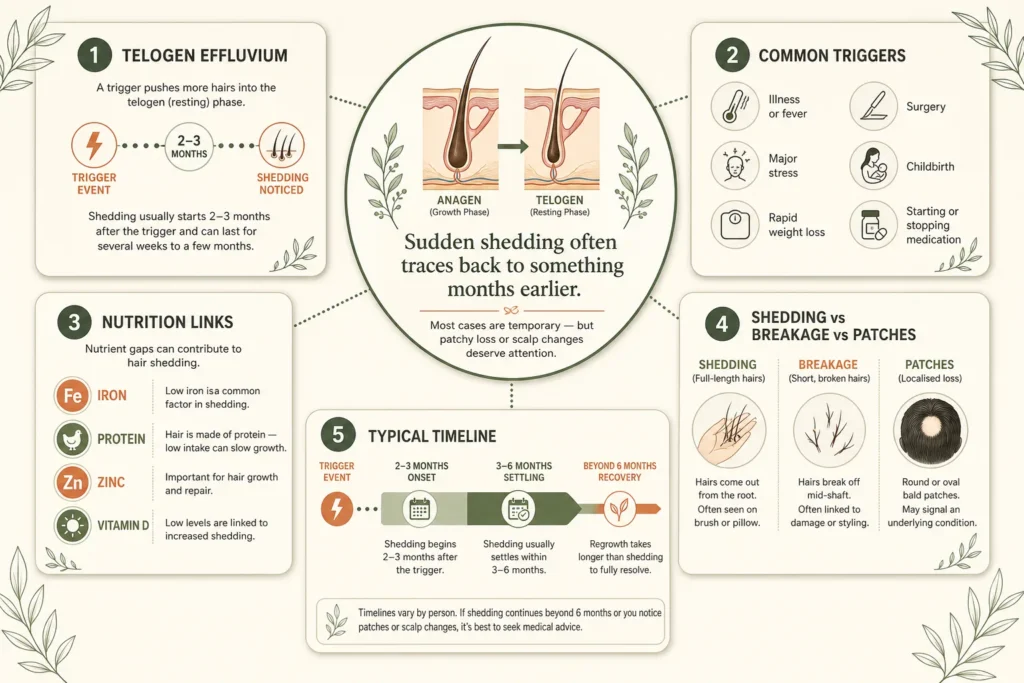
One of the more common reasons for sudden, widespread hair shedding is a condition called telogen effluvium.
Your hair naturally goes through a cycle of growing, resting and shedding. Usually, individual hairs are at different stages of this cycle, so you don’t notice large amounts falling out at once.
Sometimes, a physical or emotional stressor causes more hairs than usual to enter the resting phase around the same time. These hairs may then shed several weeks or months later.
Possible triggers include:
- A significant illness or high fever.
- Surgery or another major physical stress.
- A particularly stressful period.
- Rapid weight loss or a restrictive diet.
- Childbirth or hormonal changes.
- Starting or stopping certain medicines.
This delay is why you might notice increased shedding long after an illness has passed or life has returned to normal. The event that triggered it may no longer seem relevant by the time your hair starts falling out.
You can read more about telogen effluvium and temporary hair shedding to understand how this process affects the hair growth cycle.
2. Can stress make your hair fall out suddenly?
Yes, significant stress can contribute to increased hair shedding in some people.
It doesn’t necessarily happen while you’re going through a difficult time. With stress-related shedding, the change may become noticeable a few months later, when you might have thought you’d already put the stressful period behind you.
Stress can also overlap with other factors. You might be sleeping poorly, eating less than usual or recovering from an illness at the same time. This can make it difficult to identify one clear cause.
If you’ve noticed more hair falling out recently, think back to the previous two or three months. Was work particularly demanding? Did you experience a major life change or a prolonged period of worry?
These details may help explain the timing, although they can’t confirm the cause on their own.
For a closer look at the relationship, read our article on whether stress can cause hair loss.
3. Could your diet or recent weight loss be affecting your hair?
Your hair needs adequate energy, protein, and essential nutrients to grow normally. Significant weight loss, prolonged calorie restriction or certain nutritional deficiencies can contribute to increased shedding.
This is one reason you might notice more hair falling out a few months after starting a strict diet, rather than straight away.
Nutrients that may be relevant include:
- Iron: Low iron stores can be associated with hair loss, particularly when iron deficiency is present.
- Protein: Consistently eating too little protein can affect normal hair growth.
- Zinc: A deficiency can contribute to hair loss.
- Vitamin D: Low levels have been associated with some hair-loss conditions, although this doesn’t mean vitamin D deficiency is responsible for every case of shedding.
Hair loss alone doesn’t tell you whether you’re lacking a particular nutrient. Equally, taking supplements isn’t guaranteed to make your hair grow back faster.
If you’ve recently lost weight, changed your eating habits, or been following a restrictive diet, these are factors worth considering alongside other possible explanations.
Our guide to nutrition and blood tests for hair loss explores the connection in more detail.
4. Hormonal changes can affect hair shedding
Hormonal changes can influence the hair growth cycle, and some can lead to noticeable shedding or gradual thinning.
These changes may be associated with:
- Hair shedding after childbirth.
- Perimenopause and menopause.
- Changes after stopping hormonal contraception.
- Certain hormonal conditions, including polyendocrine metabolic ovarian syndrome (PMOS)
- Thyroid conditions that affect normal hair growth.
The pattern isn’t always the same. Some people experience increased shedding across the scalp, while others notice a gradually widening parting or less hair around the crown.
For example, hair shedding after childbirth often becomes noticeable a few months after delivery. Hair changes associated with menopause may develop more gradually.
The timing and pattern can offer useful clues, but they don’t establish the cause on their own.
5. Could a medicine be causing your hair to fall out?
Some medicines can contribute to hair shedding, and the effect may not become noticeable immediately after starting treatment.
If your hair started falling out more than usual after beginning a new medicine or changing a dose, the timing may be relevant. However, it doesn’t necessarily mean the medicine is responsible, as other factors may have contributed.
Don’t stop a prescribed medicine abruptly because you suspect it’s affecting your hair. If you’re concerned about a possible connection, discuss it with the healthcare professional responsible for your treatment.
6. Is your hair shedding, breaking, or gradually thinning?
Not all hair that appears to be falling out is being shed from the root. Sometimes, hair breaks along the length of the strand, or the main change is a gradual reduction in density.
The differences can be subtle, but the pattern may offer some clues.
| What you’ve noticed | What it might mean |
| More full-length hairs coming out when washing or brushing | Increased shedding may be occurring |
| Short strands of different lengths | Hair breakage may be contributing |
| A wider parting or less volume around the crown | Gradual thinning may be occurring |
| A distinct round or oval bald patch | A localised hair-loss condition is one possibility |
| Thinning around the hairline where hairstyles pull tightly | Traction-related hair loss is one possibility |
| Hair loss alongside itching, redness, soreness or scaling | A scalp condition may be contributing |
These are general clues rather than a way to diagnose the cause yourself. Different conditions can look similar, and more than one factor can be involved.
If you’re noticing short, broken strands rather than full-length hairs, our article on hair breakage and hair shaft damage explains some of the possible causes.
7. Why is my hair falling out in patches?
Sudden shedding across the scalp is different from losing hair in one clearly defined area.
Round or oval bald patches can occur with alopecia areata, an immune-related condition that affects hair follicles. Other conditions can also cause localised hair loss.
Pay attention to whether the patch is growing, whether the skin looks different and whether you’ve noticed other changes around the affected area. These observations may be useful, but appearance alone can’t reliably identify the cause.
Hair loss accompanied by scalp pain, persistent redness, significant scaling, or areas that look unusually smooth or scarred also deserves attention. Some scalp conditions can damage hair follicles, so it’s important not to dismiss unusual changes as ordinary shedding.
If you’ve noticed a distinct bald area, you can find out more in our guide to what to know if you’ve found a bald patch.
8. How long does sudden hair shedding usually last?
It depends on what’s causing it.
With acute telogen effluvium, increased shedding often begins around two to three months after a trigger. It commonly settles within three to six months, although the timing varies from person to person.
Regrowth takes longer. Even when shedding starts to ease, new hairs need time to grow before your hair looks as full as it did previously.
You might notice short, new hairs appearing before there’s an obvious difference in overall thickness. Equally, your hair may still look thinner for a while after the shedding has slowed.
If shedding continues beyond six months, repeatedly returns, or is accompanied by progressive thinning, it shouldn’t automatically be assumed to be temporary. The underlying cause may be different, or several factors may be contributing.
9. What can you do when your hair suddenly starts falling out?
You don’t need to count every strand or check your hair constantly. A few simple observations can help you get a clearer picture of what’s changed.
Think back over the previous two or three months.
Consider whether you’ve experienced an illness, a stressful period, significant weight loss, dietary changes, childbirth, or a change in medication.
Notice where the hair loss is happening.
Is the shedding spread across your scalp, or is it concentrated around your parting, crown, temples, or hairline? Have you noticed any distinct bald patches?
Pay attention to your scalp.
Think about whether you’ve developed itching, redness, scaling, soreness, or tenderness alongside the shedding.
Keep track of changes over time.
Taking photographs of your parting and hairline every few weeks, using similar lighting and angles, can make changes easier to compare. It’s often more useful than relying on memory alone.
Be gentle with your hair while you’re observing the changes.
Avoid excessively tight hairstyles, excessive heat, and harsh chemical treatments that can damage the hair shaft. Gentle handling can help reduce avoidable breakage, although it won’t necessarily stop shedding caused by an underlying condition.
If your hair loss is rapidly progressing, appears in distinct patches, or comes with pain or noticeable scalp changes, don’t wait several months to see whether it improves. These patterns can have causes that differ from ordinary shedding.
Frequently Asked Questions
Why is my hair suddenly falling out more than usual?
Common explanations include temporary shedding after an illness, significant stress, surgery, weight loss or hormonal changes. The shedding may begin two or three months after the triggering event. Other causes are possible, particularly when hair loss is patchy or follows a pattern of progressive thinning.
Why am I losing so much hair when I wash it?
Washing can make shedding more noticeable because hairs that are ready to fall out may be released together. The amount you see can also depend on how frequently you wash and brush your hair. A persistent change from your usual pattern is more meaningful than what you notice during a single wash.
Can stress cause hair loss months later?
Yes. With telogen effluvium, increased shedding may become noticeable several weeks or months after a significant stressor. This delay can make the original connection easy to miss.
Does sudden hair shedding mean I’m going bald?
Not necessarily. Temporary shedding can improve once its underlying trigger has passed. However, progressive thinning, distinct bald patches, and other unusual patterns can have different causes. The pattern and duration matter as much as the amount of hair you notice falling out.
How much hair falling out each day is normal?
Around 50 to 100 hairs a day is commonly cited as a general estimate of normal shedding. Actual amounts vary, and washing frequency, grooming habits, and individual hair characteristics can affect how much hair you notice. This figure isn’t a diagnostic threshold; a sustained change from your usual pattern may be more informative.
Can nutritional deficiencies cause sudden hair shedding?
Yes. Certain nutritional deficiencies, including iron deficiency and inadequate protein intake, can contribute to hair problems. However, shedding alone can’t establish that a deficiency is present. Rapid weight loss and restrictive diets may also contribute to temporary shedding.
Is sudden hair loss always temporary?
No. Some episodes of increased shedding are temporary, while other conditions can cause localised, progressive or persistent hair loss. Distinct bald patches, scalp symptoms or ongoing changes in hair density shouldn’t automatically be assumed to be temporary.
When should I be concerned about sudden hair loss?
Pay attention to rapidly worsening shedding, clearly defined bald patches, progressive thinning or hair loss accompanied by scalp pain, redness, scaling, or other new symptoms. These patterns can have causes that differ from ordinary shedding and shouldn’t be ignored.
The Bottom Line
Suddenly finding more hair on your brush, pillow, or in the shower doesn’t automatically mean you’re going bald. Temporary shedding is common, and sometimes the explanation is an illness, stressful period, dietary change, or hormonal event that happened months earlier.
But the amount of hair you’re losing is only part of the story. When the shedding started, where it’s happening, and whether your scalp or hair density has changed can all help you understand what might be going on.
Keep track of noticeable changes without becoming preoccupied with every strand. If the shedding persists, progresses, appears in patches or occurs alongside scalp symptoms, don’t assume it’s simply a temporary phase.
Understanding the pattern is a more useful starting point than guessing at the cause.