Quick answer: Most people shed around 50 to 100 hairs a day as part of the natural hair growth cycle. However, this is a general estimate, not a strict limit. The amount you notice can vary depending on your hair, grooming habits, and how often you wash it. Finding more hair than usual doesn't automatically …


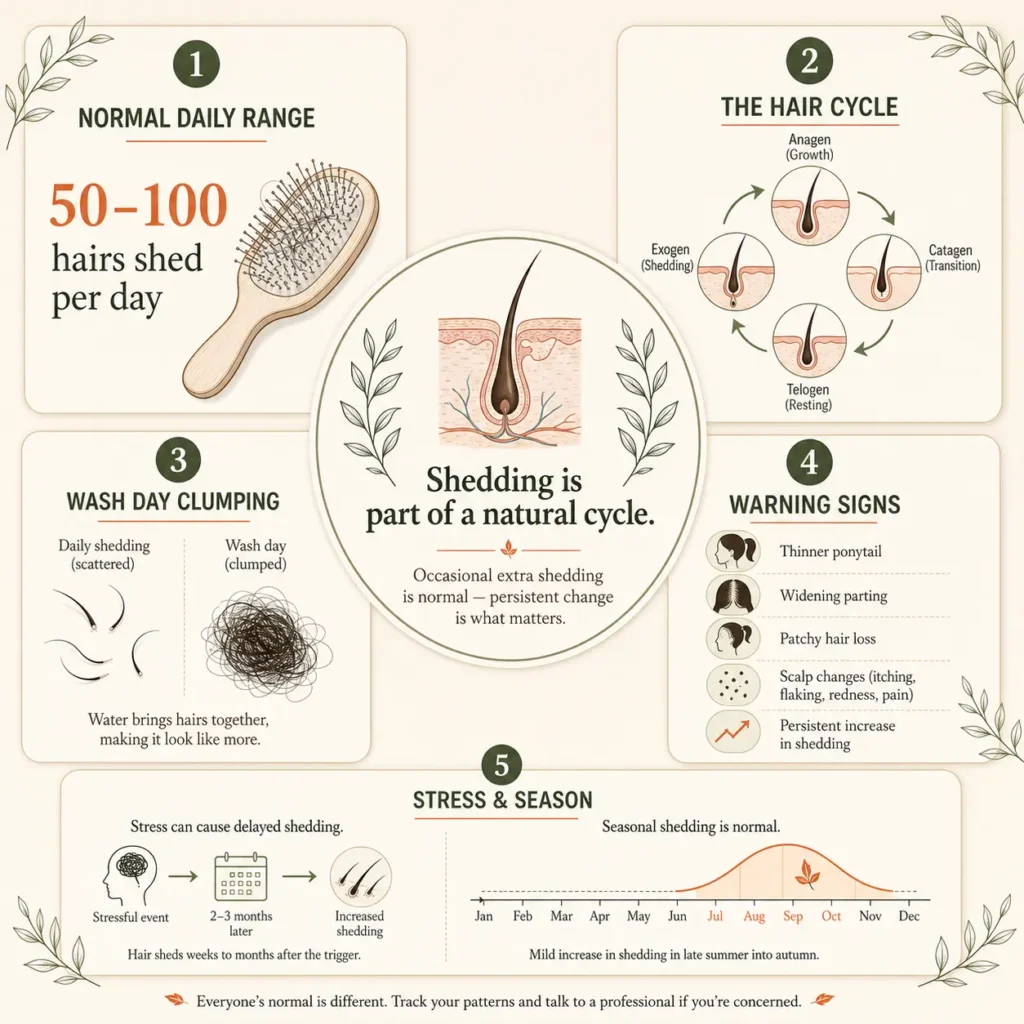
Quick answer: Most people shed around 50 to 100 hairs a day as part of the natural hair growth cycle. However, this is a general estimate, not a strict limit. The amount you notice can vary depending on your hair, grooming habits, and how often you wash it. Finding more hair than usual doesn’t automatically mean something is wrong; what matters more is whether your shedding has noticeably changed or your hair is becoming thinner.
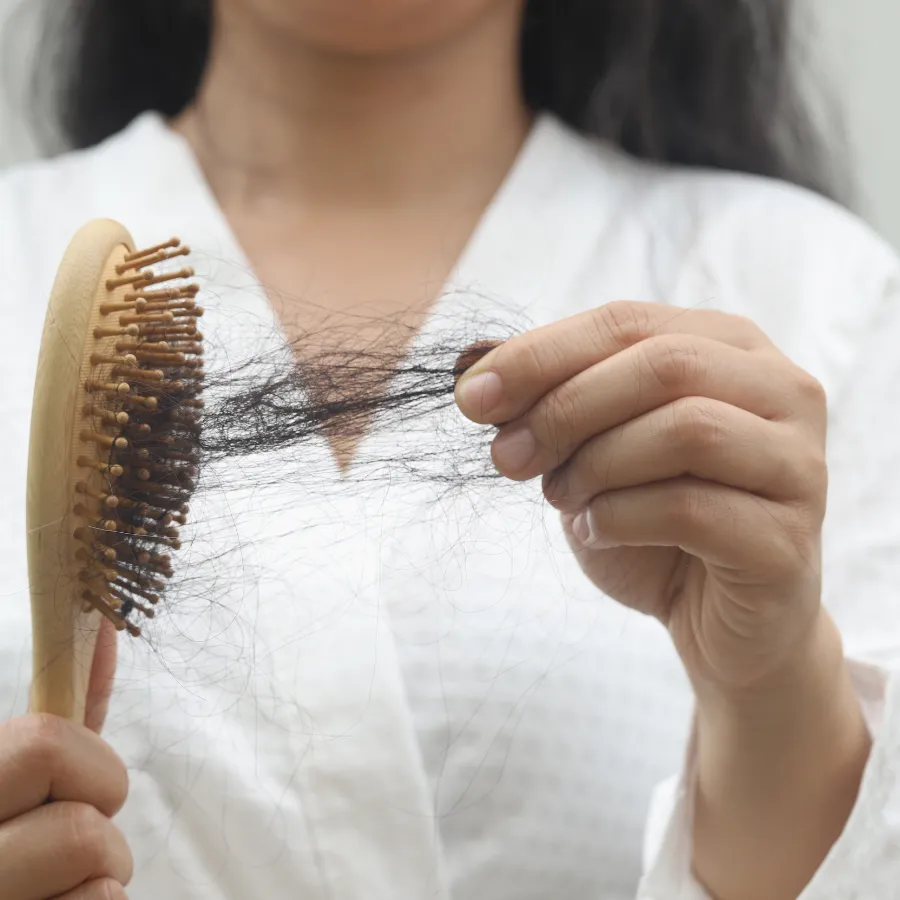
It’s easy to feel concerned when you find a clump of hair on your pillow, in the shower drain, or wrapped around your hairbrush. You might start wondering whether you’re losing too much or whether your hair will eventually become noticeably thinner.
The reassuring thing is that some hair shedding every day is completely normal. The challenge is knowing what’s typical for you and recognising when something has changed.
Let’s look at what those daily hair-loss numbers actually mean.
Why does your hair shed every day?
Your hair doesn’t grow continuously for the rest of your life. Each strand moves through a natural cycle of growth, transition, rest, and shedding.
The cycle has three main phases:
- Anagen (growth phase): The hair actively grows. This phase can last several years.
- Catagen (transition phase): Growth slows, and the follicle begins to transition. This stage usually lasts a few weeks.
- Telogen (resting phase): The hair rests before eventually shedding, making room for a new growth cycle.
Not every hair is at the same stage at the same time. While some hairs are growing, others are resting or naturally falling out.
That’s why you can lose hair every day without your overall hair density changing. Normal shedding is part of the process, not necessarily a sign that anything is wrong.
You can learn more about the stages and timing in our guide to the hair growth cycle.
So, how many hairs a day is normal?
The figure most commonly quoted is around 50 to 100 hairs a day. It’s useful as a general guide, but it shouldn’t be treated as a precise daily target or a medical cut-off point.
The amount you notice can vary for several reasons:
- Your natural hair characteristics: Hair density, length, and individual growth patterns affect how much loose hair you notice.
- How often you wash your hair: If you wash it every few days, loose hairs may accumulate and come away together on wash day.
- Your grooming routine: Brushing, detangling, and styling can release hairs that were already ready to shed.
- Normal variation: Shedding doesn’t happen in neat, identical amounts every day.
You might notice only a small amount of hair one day and considerably more the next. That doesn’t necessarily mean your hair loss has suddenly increased.
It’s also worth being careful with claims that people with long or thick hair can routinely lose 150 to 200 hairs a day and still be within a defined normal range. There isn’t a universally accepted higher daily limit based on hair length or thickness alone.
The key point is that 50 to 100 hairs is a rough estimate, not a number you need to count or stay below every day.
Why does so much hair come out when you wash it?
Have you ever washed your hair and wondered how so much of it could possibly have come out at once?
It can look alarming, especially if you wash your hair only two or three times a week.
Loose hairs can remain caught among the rest of your hair until washing, brushing or detangling releases them. When several days’ worth of loose hairs come away together, the amount can look much greater than it would if the hairs had fallen out gradually.
Long hair can also make a small amount of shedding look like a large clump simply because the strands wrap around one another.
What matters is whether this is your usual wash-day pattern or a noticeable change. If you’re consistently finding much more hair than you used to, it’s worth paying attention to the overall trend rather than judging it by one shower.
When does hair shedding become a concern?
There isn’t a single daily hair count that reliably separates normal shedding from a problem. Instead, look at whether your hair or scalp is changing.
Some patterns worth noticing include:
- Your hair looks less full: Your ponytail feels thinner, or your hair seems to have lost volume.
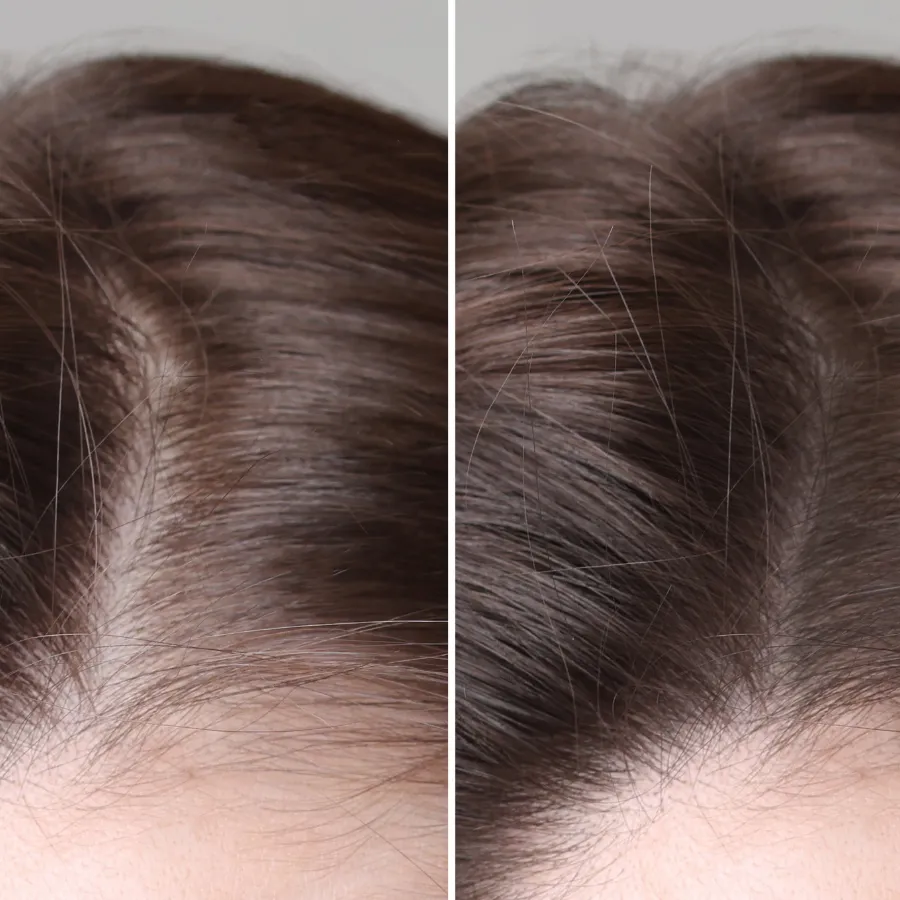
- Your parting is becoming wider: More of your scalp is visible than before.
- You’re losing hair in distinct patches: The loss is concentrated in particular areas rather than spread evenly across your scalp.
- Shedding has increased noticeably: You’re consistently finding more loose hair than you normally would.
- Your scalp feels or looks different: New redness, soreness, itching, or scaling appears alongside the hair loss.
- The change continues over time: Your hair keeps becoming thinner, or increased shedding doesn’t settle.
A thinner-looking ponytail can be one of the first changes you notice. Our article on why your ponytail might feel thinner explores what that change can mean.
None of these signs automatically points to a particular condition. However, a persistent change in hair density or a distinct pattern of hair loss is more informative than counting the strands on your brush.
Can stress make you lose more hair than usual?
Yes, significant physical or emotional stress can contribute to increased hair shedding.
One reason this can be confusing is that the shedding may not begin until several weeks or months after the stressful event. By then, you may have forgotten about the original trigger or assumed it couldn’t be connected.
Illness, a high fever, significant weight loss, and certain hormonal changes can also affect the hair growth cycle.
In some cases, the shedding is temporary and gradually settles. In others, more than one factor may be involved, or the hair loss may have a different explanation.
If you’ve noticed a sudden increase in shedding, think about whether anything significant changed in the previous few months. This may help put the timing into perspective, although it can’t confirm the cause by itself.
For more information, read our guide to whether stress can cause hair loss.
Does hair shedding change with the seasons?
Some people notice that their hair seems to shed more at certain times of the year, particularly in late summer or autumn.
Seasonal changes in hair shedding have been reported in research, although the pattern and extent can vary. Not everyone experiences it, and a seasonal explanation shouldn’t automatically be assumed when hair loss is substantial or persistent.
If you’ve noticed a recurring pattern around the same time each year, it may be useful to compare it with previous years rather than judging it by a single period.
Our article on autumn hair shedding looks at this seasonal pattern in more detail.
How can you tell whether your hair shedding is normal?
If you’re unsure, you don’t need to start counting every strand that falls out. That can be difficult to do accurately and may make you more anxious about something that naturally varies from day to day.
Instead, consider a few simple questions:
Has the amount changed noticeably?
Think about whether you’re seeing more hair than you usually do, rather than comparing yourself with an exact daily number.
Is your hair becoming visibly thinner?
Pay attention to changes in your parting, hairline, crown or overall volume.
Has the change continued?
One heavier wash day is different from a sustained increase in shedding over several weeks or months.
Are there other changes?
Notice whether you have bald patches, scalp symptoms or other changes that appeared around the same time.
Taking photographs of your parting or hairline every few weeks under similar lighting can help you compare changes more objectively. It can be easier to spot a gradual difference in photographs than to rely on memory alone.
If your hair is becoming noticeably thinner, you’re losing hair in patches, or the shedding is persistent or accompanied by scalp symptoms, don’t rely on a daily hair count to decide whether everything is fine. These changes may have different explanations and deserve appropriate attention.
Frequently Asked Questions
Is losing more than 100 hairs a day always a problem?
No. The commonly quoted figure of 50 to 100 hairs a day is only a general estimate. Shedding naturally varies, and the number you notice can depend on your washing and grooming habits. A sustained change from your usual pattern may be more meaningful than going over a particular number on one day.
Why does more hair come out when I wash it?
Loose hairs can remain caught among the rest of your hair between washes. Washing and detangling release them together, making shedding look more dramatic. This is particularly noticeable if you wash your hair less frequently.
Does having long hair mean I lose more hairs each day?
Not necessarily. Longer strands are more noticeable and can wrap around one another, making a small amount of shedding look like a larger clump. Hair length alone doesn’t establish how many hairs it’s normal for you to shed.
Can stress affect how much hair I shed?
Yes. Significant stress can contribute to temporary increased shedding, often with a delay of several weeks or months. However, stress isn’t the only possible cause of a change in hair shedding.
Is it normal to find hair on my pillow?
Finding a few hairs on your pillow is generally nothing unusual. What matters more is whether you’re noticing a substantial increase compared with your usual pattern or seeing visible changes in hair density.
Does hair shedding increase in autumn?
Some people report increased shedding in late summer or autumn, and seasonal patterns have been described in research. However, not everyone experiences this, and persistent or substantial hair loss shouldn’t automatically be attributed to the season.
When should I be concerned about daily hair shedding?
Pay attention to persistent increases in shedding, visible thinning, distinct bald patches or changes to your scalp. These signs are more useful than a daily count alone. If the changes continue or are particularly noticeable, seek appropriate medical advice.
The Bottom Line
Losing around 50 to 100 hairs a day is commonly considered part of normal hair shedding, but that figure isn’t a strict limit. Your daily shedding can vary, and the amount you see in the shower or on your hairbrush may not reflect exactly what’s happening throughout the day.
Rather than counting every strand, pay attention to what is normal for your hair and whether that pattern has changed.
A few extra hairs on wash day aren’t necessarily a reason to worry. A persistent change in shedding, visible thinning, or hair loss in distinct patches is more worth noticing.
Understanding the difference can help you put everyday shedding into perspective without worrying unnecessarily about every hair you find.