Thyroid dysfunction is one of the most common reversible causes of hair loss in women, and one of the most frequently missed. If your hair has been shedding or thinning and you have not had your thyroid properly assessed, it is worth doing so before drawing other conclusions.
The thyroid gland plays a central role in regulating metabolism throughout the body, and that includes the hair growth cycle. When thyroid function is disrupted, whether underactive or overactive, the effects on hair can be significant and are often one of the earliest visible signs that something is wrong.
Thyroid hormones, primarily thyroxine (T4) and triiodothyronine (T3), regulate the rate of cellular activity throughout the body. Hair follicles are among the most metabolically active structures in the body, and they are particularly sensitive to changes in thyroid hormone levels. In a proportion of patients, if the thyroid hormones are too low (hypothyroidism), the hair remains in the telogen stage longer and delays re-entry of the hairs into anagen. Understanding how the hair growth cycle works helps explain why visible changes can lag several months behind the original hormonal disruption.
Trichologists see hair loss associated with hypothyroidism far more commonly than hyperthyroidism. Hair loss in hyperthyroidism is often a later sign, and the condition has already been identified and treated.
An underactive thyroid (hypothyroidism) is the more common cause of thyroid-related hair loss in women, affecting around 2% of women in the UK, with many more estimated to have subclinical cases that go undetected.
Hair loss from hypothyroidism is typically diffuse, meaning it presents as an all-over reduction in density rather than patchy loss. It may be most visible at the crown and parting, where overall density is lower. Hairs may also become finer, drier, or more brittle as thyroid function declines.
A characteristic but often overlooked sign of hypothyroidism is thinning or loss of the outer third of the eyebrows. Not everyone with hypothyroidism develops this, but when it is present alongside scalp thinning, it is a useful clinical indicator.
Other symptoms of hypothyroidism that may accompany hair loss include fatigue, unexplained weight gain, feeling unusually cold, dry skin, constipation, and changes in mood or concentration. Hair loss is sometimes the symptom that prompts investigation in women who have not yet connected their other symptoms.
An overactive thyroid (hyperthyroidism) can also cause diffuse hair shedding, though it is less common than hypothyroid-related loss. The mechanism is different: in hyperthyroidism, hair loss is often a large sign.
Other symptoms of hyperthyroidism include unexpected weight loss, increased heart rate, heat intolerance, tremor, and anxiety. Graves’ disease is the most common autoimmune cause of hyperthyroidism in women.
There are two common reasons thyroid-related hair loss goes undetected. The first is the delay. Because hair loss typically follows thyroid dysfunction by two to three months, the connection is not always apparent. By the time shedding becomes noticeable, a thyroid test taken at that point may already show improving levels, particularly in women who have begun thyroid medication.
The second is the interpretation of results. The standard NHS reference range for TSH (thyroid-stimulating hormone) is broad. A result within the reference range can still represent suboptimal thyroid function for an individual, particularly where symptoms are present. Some clinicians working in hair loss assess TSH alongside free T4 and free T3 for a more complete picture of thyroid activity.
Our guide to nutrition and blood tests in hair loss explains why reference ranges do not always reflect what is optimal for hair health, and which markers are most useful to assess alongside thyroid function.
Thyroid dysfunction frequently coexists with other causes of hair loss and can either mimic or compound them. It is worth understanding the clinical picture clearly before attributing hair loss to any single cause.
Telogen effluvium triggered by the physiological stress of hypothyroidism can produce diffuse shedding that sits on top of any underlying pattern of thinning. Correcting thyroid function may resolve the shedding component while an androgenetic pattern continues underneath.
Thyroid dysfunction is also more common in women with PMOS and is a recognised factor in menopause-related hair changes. Given the overlap in symptoms between these conditions, a comprehensive blood panel and scalp assessment are more useful than investigating each factor in isolation.
Where female pattern hair loss is also present, addressing thyroid dysfunction may produce a meaningful improvement in shedding even if it does not fully resolve the underlying androgenetic pattern.
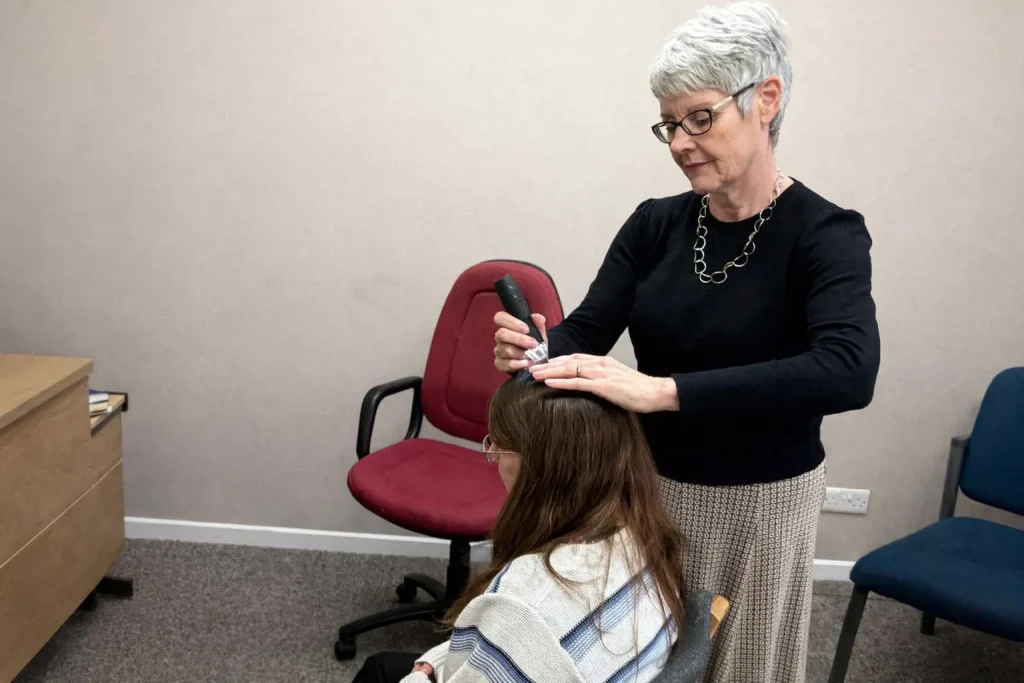
Assessment at the clinic combines scalp examination with a review of the wider clinical picture. Trichoscopy allows direct evaluation of the scalp and follicles, including the pattern and density of loss, the presence of follicular miniaturisation, and the health of the follicular openings.
Alongside the scalp assessment, relevant blood markers will be reviewed. Where these have not yet been tested, guidance on which specific markers to request and how to interpret results in the context of hair loss will be provided.
Key Thyroid Markers
Other markers assessed alongside thyroid function typically include ferritin, vitamin D, and sex hormones, as deficiencies in these commonly coexist with thyroid dysfunction and independently affect the hair cycle.
In most cases, yes. Thyroid-related hair loss is one of the more reversible causes of hair loss, provided thyroid function is identified and managed appropriately. Once thyroid levels stabilise, the hair cycle typically begins to normalise, and regrowth follows over several months.
The timeline for visible improvement varies. Most people notice a reduction in shedding within three to four months of thyroid function stabilising. Visible density improvement takes longer, usually six to twelve months, reflecting the pace of the hair growth cycle.
Where underlying androgenetic thinning is also present, regrowth from the thyroid component may be noticeable while the pattern component continues to require its own management. A clinical assessment distinguishes between the two and provides a realistic prognosis for each.
A trichological assessment is worth booking if:
The Hair & Scalp Clinic is based in Huntingdon, Cambridgeshire. Patients attend from Cambridge, Peterborough, and across the UK. Telehealth consultations are available. More detail on the full range of hair loss conditions assessed at the clinic is available on the conditions hub.
Thyroid dysfunction is one of the most treatable causes of hair loss. Getting an accurate assessment early means the thyroid component can be identified and addressed alongside any other contributing factors.
Yes. Both an underactive thyroid (hypothyroidism) and an overactive thyroid (hyperthyroidism) can cause diffuse hair shedding and thinning. Thyroid hormones regulate cellular activity throughout the body, including the hair growth cycle. When thyroid function is disrupted, more follicles shift out of the active growth phase, and shedding increases as a result.
In most cases, yes. Thyroid-related hair loss is one of the more reversible causes of hair shedding, provided thyroid function is managed appropriately. Shedding typically reduces within three to four months of levels stabilising, and visible density improvement follows over six to twelve months. Where an underlying pattern of androgenetic thinning is also present, that component may require separate management.
There is no single threshold that reliably predicts hair loss. Hair loss can occur across a range of thyroid function levels, including cases where TSH is within the standard reference range but suboptimal for the individual. This is one reason why symptoms and clinical findings should be assessed alongside blood results rather than relying on reference ranges alone.
Thyroid hair loss typically presents as diffuse all-over shedding, often with associated fatigue, dry skin, or changes in weight and temperature regulation. Eyebrow thinning, particularly at the outer edges, can also be a sign. However, these symptoms overlap with other causes of hair loss, and a clinical assessment combined with targeted blood testing is the most reliable way to identify the cause. A trichologist can help distinguish thyroid-related shedding from other conditions with similar presentations.
Any fluctuations in the thyroid hormones can cause hair shedding – it is not always evident whether these hormones are low or high until blood tests have been carried out.
Yes. The standard TSH reference range is broad, and a result within the range does not always mean thyroid function is optimal for that individual. In Hashimoto’s thyroiditis, antibody activity may be affecting the thyroid even when TSH is currently in range. Free T4 and, in some cases, free T3 and thyroid antibodies provide additional clinical information. If you have hair loss alongside thyroid symptoms and your TSH was described as normal, it may be worth requesting a more detailed thyroid panel.
Thyroid hair loss typically continues until thyroid function is properly managed. Once levels stabilise, shedding usually reduces within three to four months and visible regrowth follows over six to twelve months. If shedding has been prolonged, or if other factors such as low ferritin are also present, the recovery timeline may be longer. Regular monitoring as thyroid management is established helps track progress and identify any remaining contributing factors.

Follow Us
Copyright © 2026 The Hair & Scalp Clinic | Developed By