You may notice it when tying your hair back. Your ponytail just doesn’t feel as full as it once did. It is easy to wonder whether you are simply imagining the difference. But a change in ponytail thickness can sometimes be an early sign that your overall hair density has changed. That does not necessarily …

You may notice it when tying your hair back. Your ponytail just doesn’t feel as full as it once did.
It is easy to wonder whether you are simply imagining the difference. But a change in ponytail thickness can sometimes be an early sign that your overall hair density has changed. That does not necessarily mean you are losing hair permanently. Shedding, finer hair growth, breakage and changes affecting the hair follicles can all make a ponytail feel thinner.
So, what does a thinner ponytail actually tell you, and when is it worth having it checked?

A thinner ponytail does not always mean the same thing
Hair can feel thinner because you are shedding more hair than usual. It can also become thinner gradually because individual follicles are producing finer hairs.
These are different processes. Sudden, noticeable shedding across the scalp can occur with telogen effluvium. This is a reactive form of hair loss that can follow events such as illness, significant stress, weight loss or hormonal changes.
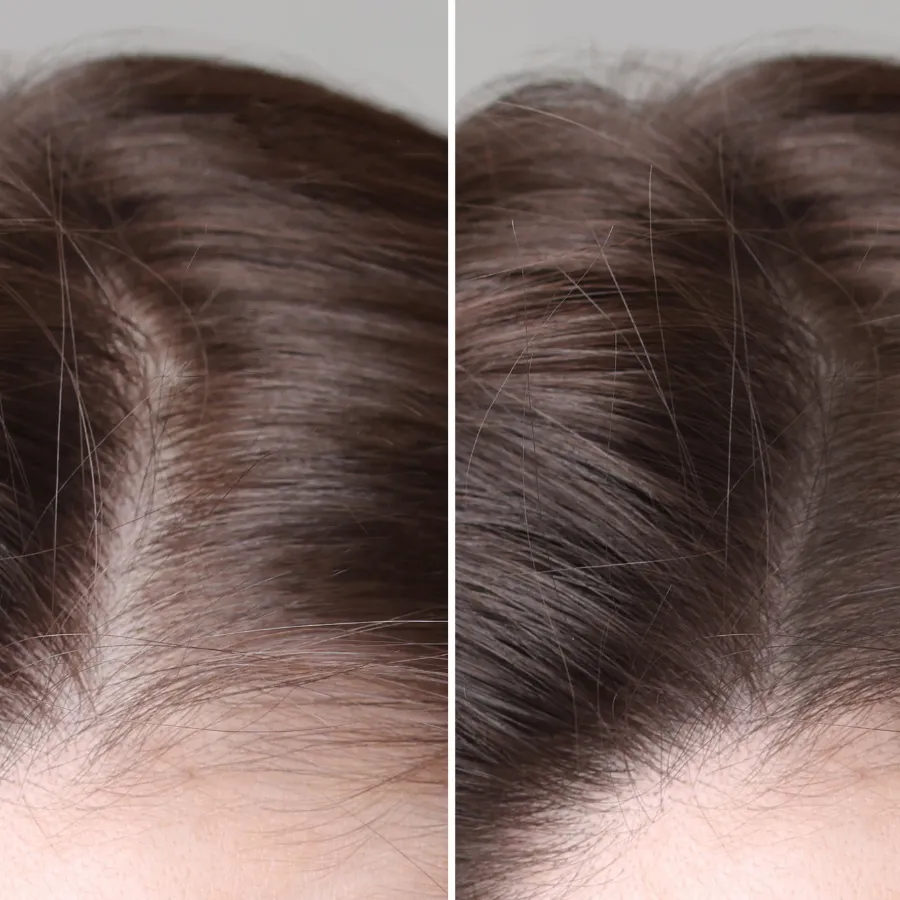
Female pattern hair loss tends to behave differently. The change is usually gradual, with follicles producing progressively finer hairs. A smaller ponytail, widening parting or increased scalp visibility can be early signs.
Look at what else has changed
Your ponytail is useful, but it is only one piece of the picture. I would want to know:
- Has your parting become wider?
- Can you see more scalp at the crown? Front of the scalp just behind the
- Hairline?
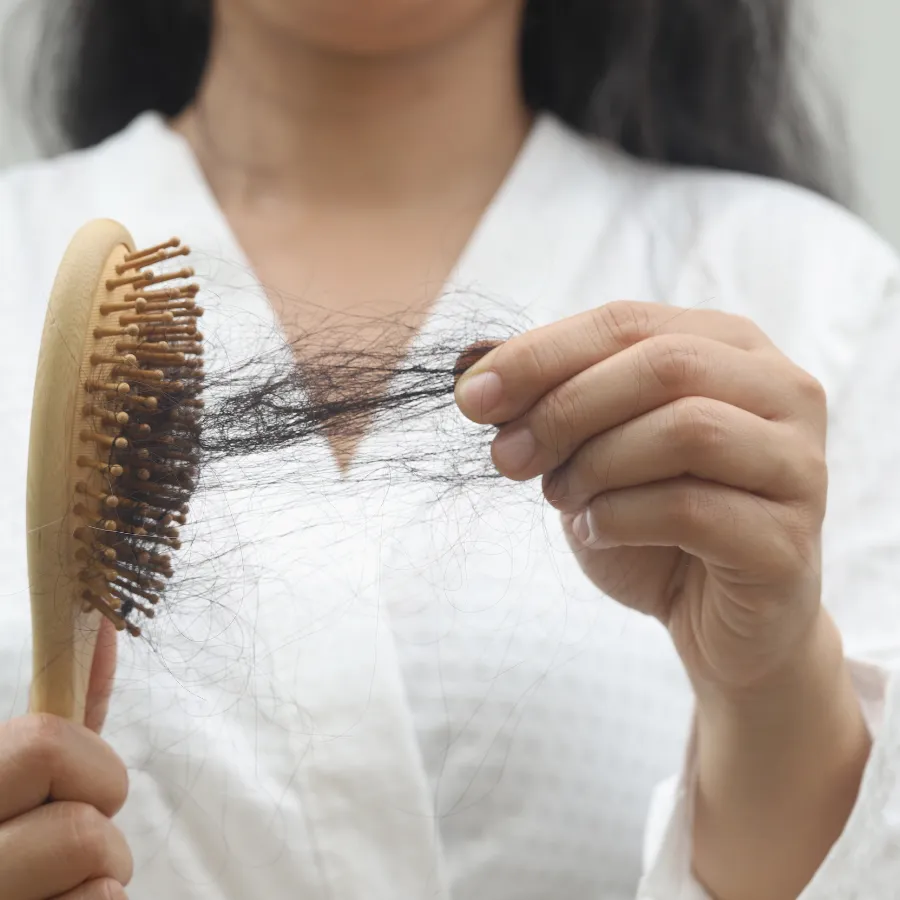
- Are you finding considerably more hair in the shower or on your brush?
- Does the hair around your temples or hairline feel less dense?
- Are new hairs coming through finer or shorter than before?
- Has the change happened suddenly, or gradually over several months?
- The pattern and timing can tell us much more than the ponytail alone.
Could it simply be breakage?
Sometimes the issue is not reduced follicle density at all.
Hair can look and feel thinner when the lengths have become damaged or are breaking. Chemical processing, heat, friction and repeated tension can all affect the hair shaft. This is particularly important if the hair looks shorter around certain areas rather than simply becoming less dense from the scalp.
Repeated tension can also affect the follicles themselves. Tight ponytails, buns, extensions and other styles that pull continuously on the hair can contribute to traction alopecia.
So, looking only at the ponytail does not give us the full answer.
What if the change has been very gradual?
This is where I would pay closer attention. Female pattern hair loss is often subtle at first. You may not notice individual hairs becoming finer. Instead, you notice that your parting looks different, your scalp is more visible under certain lighting, or your ponytail no longer has the volume it once did.
Because the change happens slowly, it can be easy to dismiss it as getting older, changing hairstyles or simply having a “bad hair day”.
It is worth investigating if the change is continuing.
What if your ponytail suddenly became much smaller?
A sudden change points us in a different direction.
Telogen effluvium can cause increased shedding across the whole scalp, often becoming noticeable several weeks or months after the event that triggered the change. The hair may feel generally less dense rather than thinning in one particular area.
The trigger may not be obvious. This is why taking a proper hair history is so important. Something that happened months earlier may be more relevant than something that happened last week.
Your ponytail is a clue, not a diagnosis
This is the important part. A smaller ponytail tells you that something may have changed. It does not tell you what has caused the change.
Hair shedding, female pattern hair loss, nutritional factors, hormonal changes, breakage and traction can overlap. In some cases, more than one process is occurring at the same time.
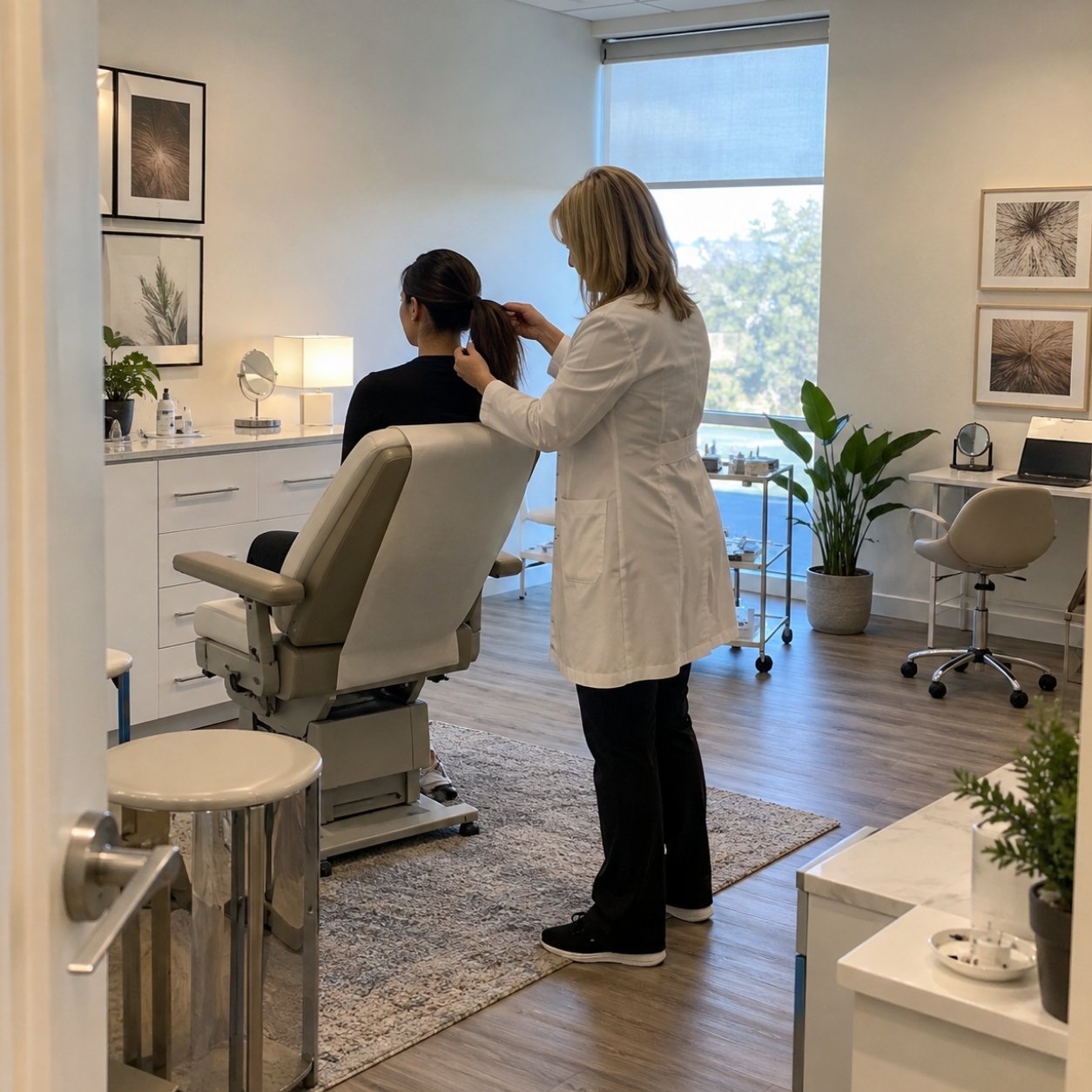
A clinical assessment allows the scalp and individual follicles to be examined rather than relying on appearance alone.
Trichoscopy can help identify patterns such as follicular miniaturisation and distinguish different forms of hair loss.
When should you have it checked?
If your ponytail has gradually become thinner and the change is continuing, I would not simply ignore it.
You do not need to wait until the thinning becomes obvious in photographs or other people start noticing it. Equally, a thinner ponytail does not mean you are inevitably going bald.
The useful question is not simply, “Am I losing hair?” but rather “Why has my hair density changed?” That is the question I would want to answer before making assumptions about what is happening.
Clinical assessment at The Hair & Scalp Clinic
At The Hair & Scalp Clinic, I assess hair and scalp concerns by looking at the wider picture of your hair history, the pattern of change and the condition of the scalp and follicles.
The clinic is based in Huntingdon, Cambridgeshire, with consultations also available for patients who cannot attend in person (although a scalp examination cannot be carried out if the consultation is conducted remotely). If your ponytail feels noticeably thinner and you are unsure whether it is shedding, breakage or genuine loss of density, a proper assessment can give you a much clearer answer.
Book your appointment online or call 07941530473 for your consultation.