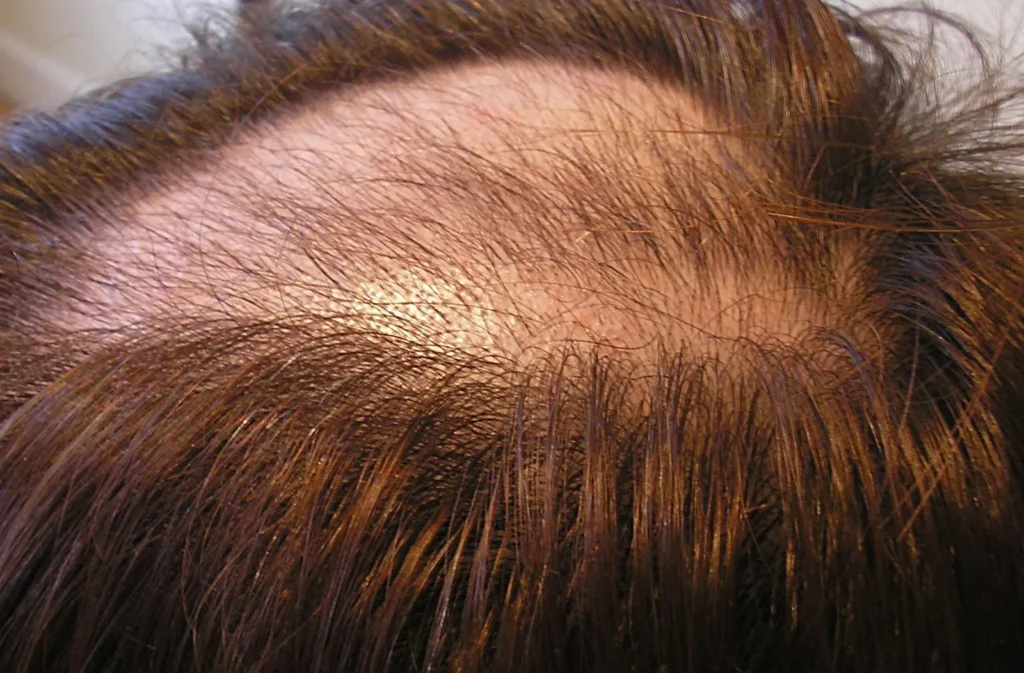
Trichotillomania is also known as trich or TTM and is a body-focused repetitive behaviour in which a person repeatedly pulls hair from the scalp, eyebrows, eyelashes, beard, or other areas of the body. This can lead to patchy or irregular hair loss and may cause significant distress, especially when the behaviour has continued for a long period.
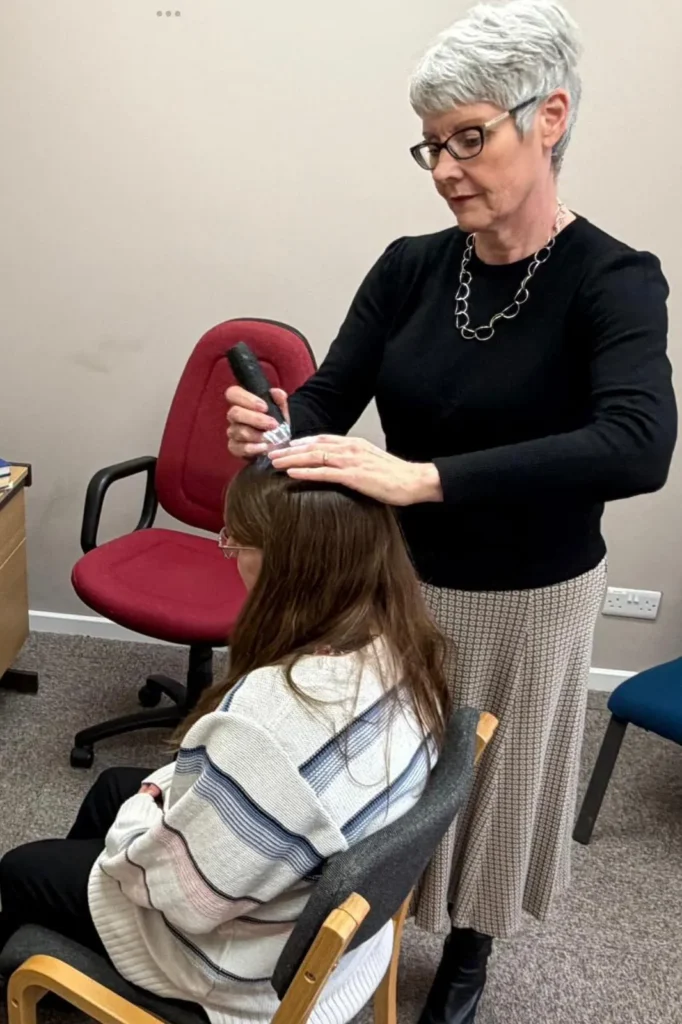
At The Hair & Scalp Clinic in Huntingdon, Tracey Walker FIT, Fellow of the Institute of Trichologists, provides specialist trichological assessment for patients experiencing hair loss related to pulling. With over 40 years of professional experience in hair and scalp health, clinical education, and expert witness work, Tracey offers careful scalp examination, trichoscopy assessment, and clear guidance on the physical condition of the follicles.
The consultation is confidential and non-judgemental. Many people with trichotillomania have never spoken openly about the condition before. A trichological assessment can provide a practical first step towards understanding the current state of the scalp and hair.
The Hair & Scalp Clinic supports patients from Huntingdon, Cambridge, Peterborough, St Ives, St Neots, Ely, Brampton, Godmanchester, and across Cambridgeshire.
Trichotillomania is classified as an obsessive-compulsive related disorder and is part of a wider group of body-focused repetitive behaviours. It can begin at any age, although the onset is most common during childhood or adolescence.
For some people, pulling is deliberate and linked to tension or distress. For others, it happens automatically during moments of boredom, concentration, tiredness, or stress. Because the behaviour may become habitual, the person affected may not always be fully aware of when or how often pulling occurs.
From a hair and scalp perspective, the concern is the repeated trauma to the follicles. Over time, ongoing pulling can affect follicular health and may increase the risk of permanent damage in areas where trauma has been repeated for many months or years.
Each hair grows from a follicle beneath the skin. When hair is pulled out repeatedly, the follicle is subjected to mechanical trauma. In early or mild cases, follicles often remain active and may continue to produce hair.
However, repeated pulling from the same area can lead to inflammation, distorted regrowth, and in some cases, internal scarring. If the follicle becomes permanently damaged, regrowth may be limited in that area.
This is why early assessment is useful. The aim is to understand whether the follicles remain active, whether scarring is present, and what expectations are realistic.
Trichotillomania can sometimes be confused with other types of patchy hair loss, including alopecia areata or traction alopecia, so clinical examination is important.
Trichotillomania may present differently from person to person. Common clinical features include:
In some cases, patients may also experience scalp soreness or irritation due to repeated pulling. Where inflammation or visible scaling is present, it may be useful to assess whether any scalp conditions are also contributing to discomfort.
Diagnosis is primarily clinical and is supported by scalp examination and trichoscopy.
During consultation, Tracey Walker may:
This assessment helps build a realistic picture of the physical impact of pulling on the scalp and follicles.
Where there is uncertainty or where additional medical or psychological support may be beneficial, referral to an appropriate healthcare professional may be advised.
Trichotillomania can resemble other hair loss conditions, but the clinical signs are different.
Alopecia areata usually causes smoother, well-defined patches without broken hairs. Trichotillomania often shows hairs broken at varying lengths.
Traction alopecia is caused by external tension from hairstyles or extensions, rather than self-pulling behaviour.
Lichen planopilaris and other scarring alopecias may cause permanent follicular loss, but they have different inflammatory patterns and require different medical management.
Accurate differentiation is essential because each condition has a different cause, prognosis, and management pathway.
Whether hair regrows after trichotillomania depends on how long pulling has been occurring and whether the follicles remain viable.
In general:
Trichoscopy helps assess follicular openings, broken hairs, and signs of active regrowth. This allows Tracey to provide a realistic prognosis rather than guesswork.
It may also be useful to understand the hair growth cycle, as visible regrowth can take time even when follicles remain active.
Trichological care for trichotillomania focuses on the physical health of the scalp and follicles. It does not replace psychological therapy, but it can work alongside it.
Depending on assessment findings, management may include:
For more details on nutrient markers, see our guide to nutrition and blood tests in hair loss.
If you are already working with a GP, CBT therapist, counsellor, or specialist body-focused repetitive behaviour service, trichological care can complement that support by monitoring the scalp and hair recovery aspect.
For a wider overview of clinic support, visit hair loss treatment and scalp management.
A confidential trichological assessment may be helpful if you:
The Hair & Scalp Clinic is based at 83a High Street, Huntingdon, and supports patients from Cambridge, Peterborough, St Ives, St Neots, Ely, Brampton, Godmanchester, and across Cambridgeshire.
You can book a confidential consultation directly with the clinic.
In many cases, hair can regrow if the follicles remain active and damage is limited. Long-standing pulling may cause scarring in some areas, which can restrict regrowth. Trichoscopy helps assess follicular viability and gives a more realistic prognosis.
Alopecia is the umbrella term for all types of hair loss. Trichotillomania is a form of traumatic alopecia caused by repeated self-pulling. Conditions such as alopecia areata have different causes and require different assessments.
No. You do not need to have stopped pulling before attending. The consultation is focused on understanding the current condition of the scalp and follicles and discussing appropriate next steps.
Diagnosis is usually clinical and supported by trichoscopy. Typical signs include broken hairs at irregular lengths, short regrowth, empty follicles, and a pattern of hair loss that differs from autoimmune or genetic hair loss.
Yes. Psychological therapy can support the behavioural side of pulling, while trichological care focuses on the physical impact on the scalp and follicles. These approaches can work together.
It can, especially when pulling has been repeated in the same area over a long period. Permanent loss is more likely if follicles have become scarred. Early assessment helps identify whether follicles remain active.
Yes. Consultations are private, confidential, and non-judgemental. Many patients feel anxious discussing hair-pulling, but the purpose of the appointment is to provide clarity and support, not criticism.

Follow Us
Copyright © 2026 The Hair & Scalp Clinic | Developed By