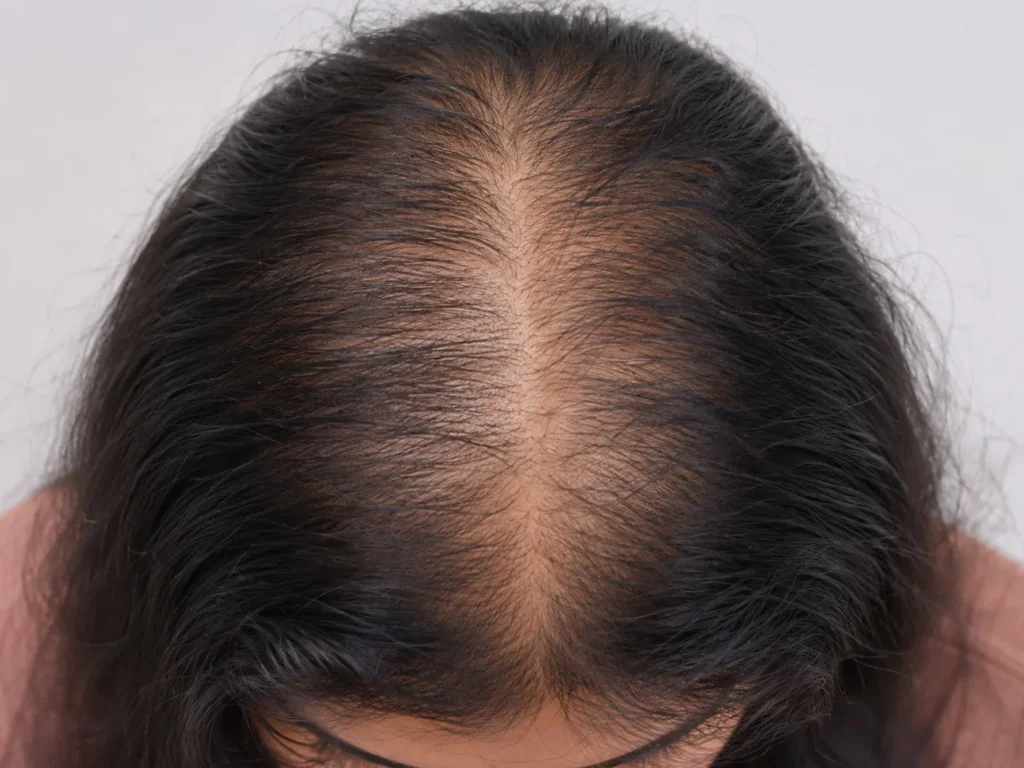
Hair thinning can be one of the most distressing and overlooked symptoms associated with polyendocrine metabolic ovarian syndrome, known as PMOS. This is the updated term for the condition previously known as polycystic ovarian syndrome, or PCOS.
Many women are aware that PMOS can affect menstrual cycles, skin, weight, and hormone balance, but changes in hair density can be just as significant.
PMOS-related hair loss is usually linked to hormonal imbalance, particularly increased androgen activity. In some women, this can affect the normal hair growth cycle and contribute to gradual thinning, most commonly across the crown and top of the scalp.
At The Hair & Scalp Clinic in Huntingdon, Tracey Walker FIT, Fellow of the Institute of Trichologists, provides specialist trichological assessment for women experiencing hair thinning associated with PMOS. With over 40 years of professional experience in hair and scalp health, clinical education, and expert witness work, Tracey offers careful assessment, scalp examination, blood result review where appropriate, and structured management guidance.
The focus is always on understanding the individual cause before recommending any management plan.
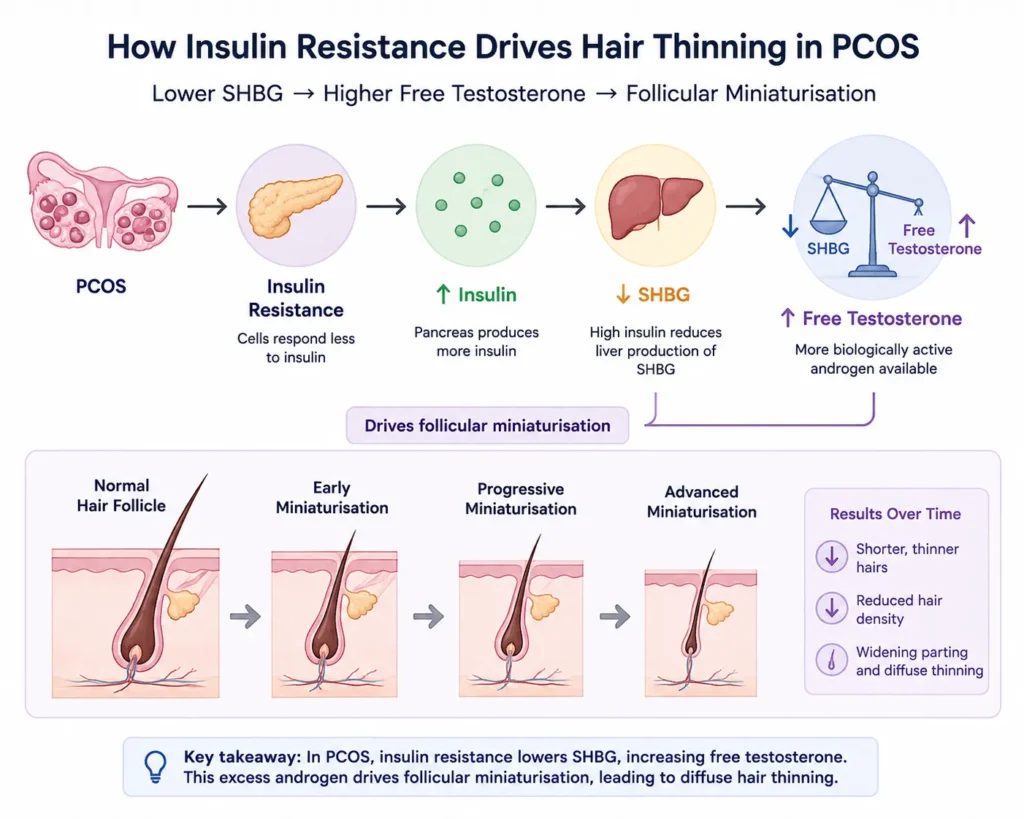
PMOS is commonly associated with higher levels of androgens, including testosterone. In some individuals, testosterone may be converted into dihydrotestosterone, or DHT, an androgen linked to follicular miniaturisation in genetically susceptible women.
When DHT affects sensitive follicles, the growth phase of the hair cycle may gradually shorten. Over time, hair may become finer, shorter, and less pigmented. This can lead to a reduction in visible density, particularly across the top of the scalp.
This hair thinning is commonly linked to female pattern hair loss.
Insulin resistance is common in women with PMOS and may contribute to increased androgen activity.
When the body becomes less responsive to insulin, the pancreas produces more insulin to compensate. Higher insulin levels can encourage the ovaries to produce more androgens. Insulin resistance may also affect levels of sex hormone-binding globulin, or SHBG, a protein that binds testosterone in the bloodstream.
When SHBG levels are lower, more testosterone may remain biologically active. This can increase the hormonal influence on sensitive hair follicles.
For this reason, blood markers such as free testosterone and SHBG may be more useful than total testosterone alone when assessing PMOS-related hair concerns.
PMOS-related hair thinning often develops gradually. It may not be obvious at first, but over time patients may notice:
Some women with PMOS also notice increased hair growth on the face, chin, abdomen, or other areas of the body while experiencing thinning on the scalp. This combination can be an important clinical clue that androgen activity may be involved.
If hair shedding began after illness, emotional stress, surgery, or another significant event, telogen effluvium may also be contributing. Stress-related shedding can coexist with PMOS-related thinning, so careful assessment is important.
Accurate assessment involves looking at both the scalp and the wider clinical picture. During consultation, Tracey Walker will take time to understand your symptoms, medical history, and the timeline of your hair changes.
Assessment may include:
The aim is to distinguish PMOS-related thinning from other causes, including hormonal hair loss, telogen effluvium, thyroid imbalance, iron deficiency, post-pregnancy shedding, and inflammatory scalp conditions.
Where PMOS-related hair loss is suspected, the following markers may be useful to review:
Blood testing does not diagnose hair loss on its own. Results must be interpreted alongside scalp findings, symptoms, medical history, and the pattern of thinning.
For more details, see our guide to nutrition and blood tests in hair loss.
PMOS-related hair loss usually requires a long-term management approach. The goal is not to offer a quick fix, but to understand the contributing factors and support scalp and follicular health as part of a wider clinical plan.
Management may involve discussion of the following areas.
Some patients may already be under the care of a GP, gynaecologist, endocrinologist, or dermatologist for PMOS. Where appropriate, Tracey can help you understand how hormonal factors may be affecting your hair and when further medical review may be needed.
Medical options sometimes discussed with the appropriate healthcare professional include:
These options are not suitable for everyone and require medical supervision.
Trichological management focuses on the condition of the scalp and follicles. Depending on your assessment, this may include:
If scalp symptoms are also present, such as itching, scaling, soreness, or inflammation, our page on scalp conditions may help explain how scalp health can influence comfort and hair shedding.
Nutritional imbalance can worsen shedding or reduce the body’s ability to support normal hair cycling.
A review may consider:
Supplementation should be based on confirmed need wherever possible. Taking high-dose supplements without guidance is not recommended.
For some women with PMOS, insulin resistance is an important part of the picture. Diet, weight changes, sleep, stress, and activity levels can influence insulin sensitivity and overall hormonal balance.
Lifestyle changes should never be framed as a cure for PMOS-related hair loss. However, when insulin resistance is present, improving metabolic health may support wider hormonal stability.
This is best approached as part of a joined-up plan involving your GP or relevant healthcare provider.
Hair changes linked to PMOS usually develop gradually, and management often requires patience. Because hair grows in cycles, any visible change can take several months to assess.
During follow-up, clinical monitoring may help track:
Not every follicle will respond in the same way. If miniaturisation has been present for a long time, some changes may be more difficult to influence. A realistic prognosis is an important part of the consultation.
To better understand why visible changes take time, see our guide to the hair growth cycle.
A trichological assessment may be helpful if you:
The Hair & Scalp Clinic is based at 83a High Street, Huntingdon, and supports patients from Cambridge, Peterborough, St Ives, St Neots, Ely, Brampton, Godmanchester, and across Cambridgeshire.
You can book a PMOS hair loss consultation directly with the clinic.
Yes. PMOS can contribute to hair thinning in women, usually through increased androgen activity. This may affect sensitive follicles and lead to gradual thinning across the crown or top of the scalp.
If a young patient attends The Hair & Scalp Clinic presenting with female pattern hair loss, PMOS will be considered as a causative factor.
Useful markers may include free and total testosterone, SHBG, LH, FSH, fasting insulin and glucose, ferritin, thyroid function, vitamin D, B12, and sometimes zinc. Testing should be discussed with a GP or an appropriate healthcare professional.
Managing PMOS may help reduce some contributing factors, particularly where androgen activity or insulin resistance is involved. However, outcomes vary, and hair changes should be assessed individually.
Diet may influence insulin resistance and overall metabolic health in PMOS. This can be relevant where insulin resistance is contributing to androgen activity. Dietary changes should be realistic, sustainable, and discussed with an appropriate professional where needed.
Topical minoxidil may be discussed in some cases of androgenetic-pattern thinning, but it is not suitable for everyone. It should be considered in the context of diagnosis, medical history, pregnancy plans, and wider management.
You may wish to seek assessment if shedding continues for more than three months, thinning is becoming visible, or you have PMOS symptoms alongside scalp hair changes. Early assessment can help clarify what is contributing.

Follow Us
Copyright © 2026 The Hair & Scalp Clinic | Developed By