A dry scalp can leave your skin feeling tight, itchy, or uncomfortable. You may also notice small white flakes on your hair or clothing, particularly after washing. Although these symptoms can be frustrating, they do not always mean you have dandruff. Dryness may be linked to your haircare routine, changes in the weather, or irritation …

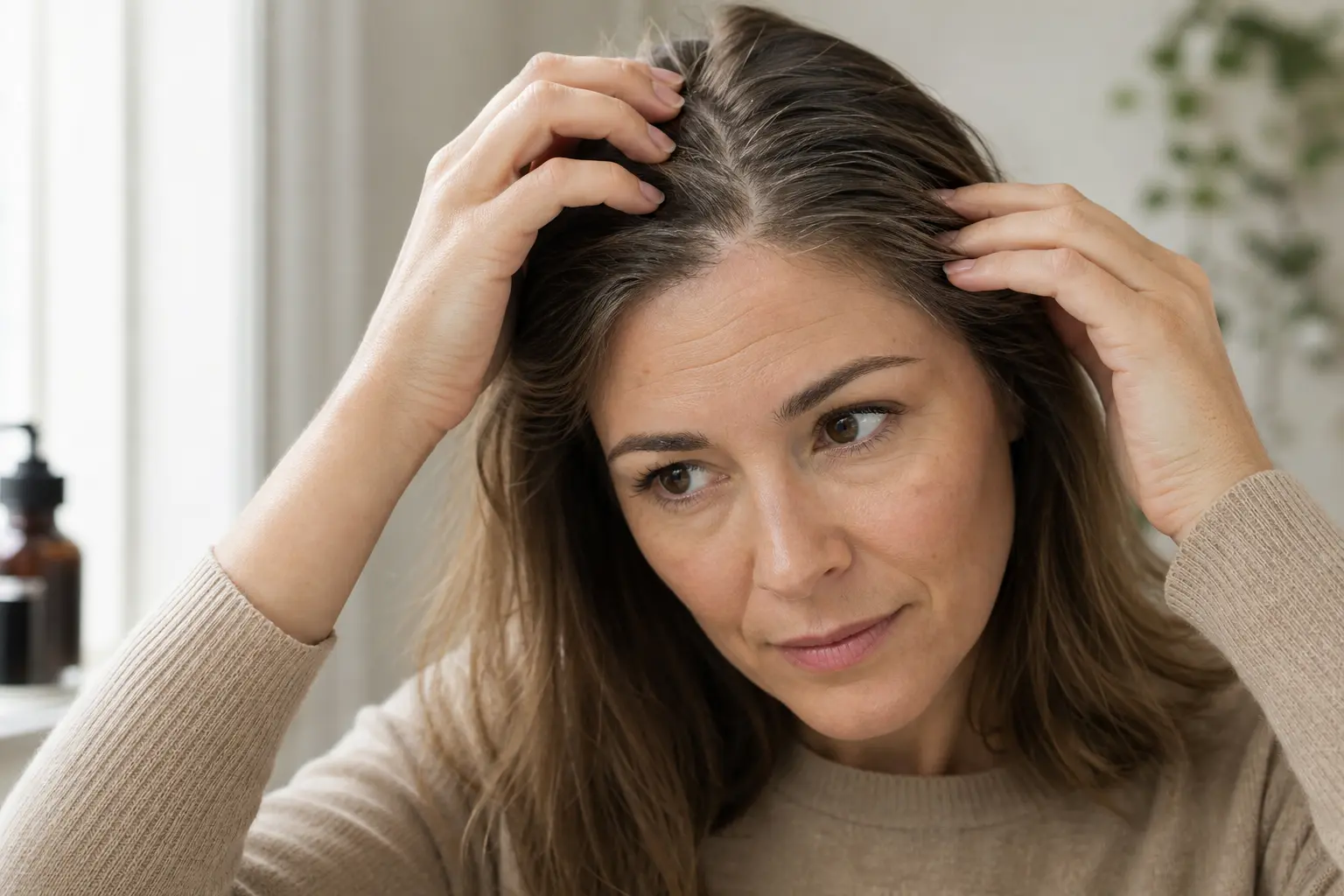
A dry scalp can leave your skin feeling tight, itchy, or uncomfortable. You may also notice small white flakes on your hair or clothing, particularly after washing. Although these symptoms can be frustrating, they do not always mean you have dandruff.
Dryness may be linked to your haircare routine, changes in the weather, or irritation from certain products. Other scalp conditions can cause similar symptoms, so it is worth considering the wider picture before trying different remedies.
This article looks at some common reasons for dry scalp, simple ways to reduce potential irritation, and signs that may warrant further advice.
What Does a Dry Scalp Look Like?
A dry scalp may produce fine, white flakes and leave the skin feeling tight or rough. Some people also experience mild itching, particularly after washing their hair.
You may notice that the symptoms become more noticeable during colder weather or after using a new shampoo. However, these signs are not exclusive to dryness.
If your scalp is persistently itchy, red, inflamed or covered in thicker patches of scale, another condition may be contributing to the problem.
What Can Cause a Dry Scalp?
Several factors may contribute to scalp dryness. The cause is not always obvious, and more than one factor may be involved.
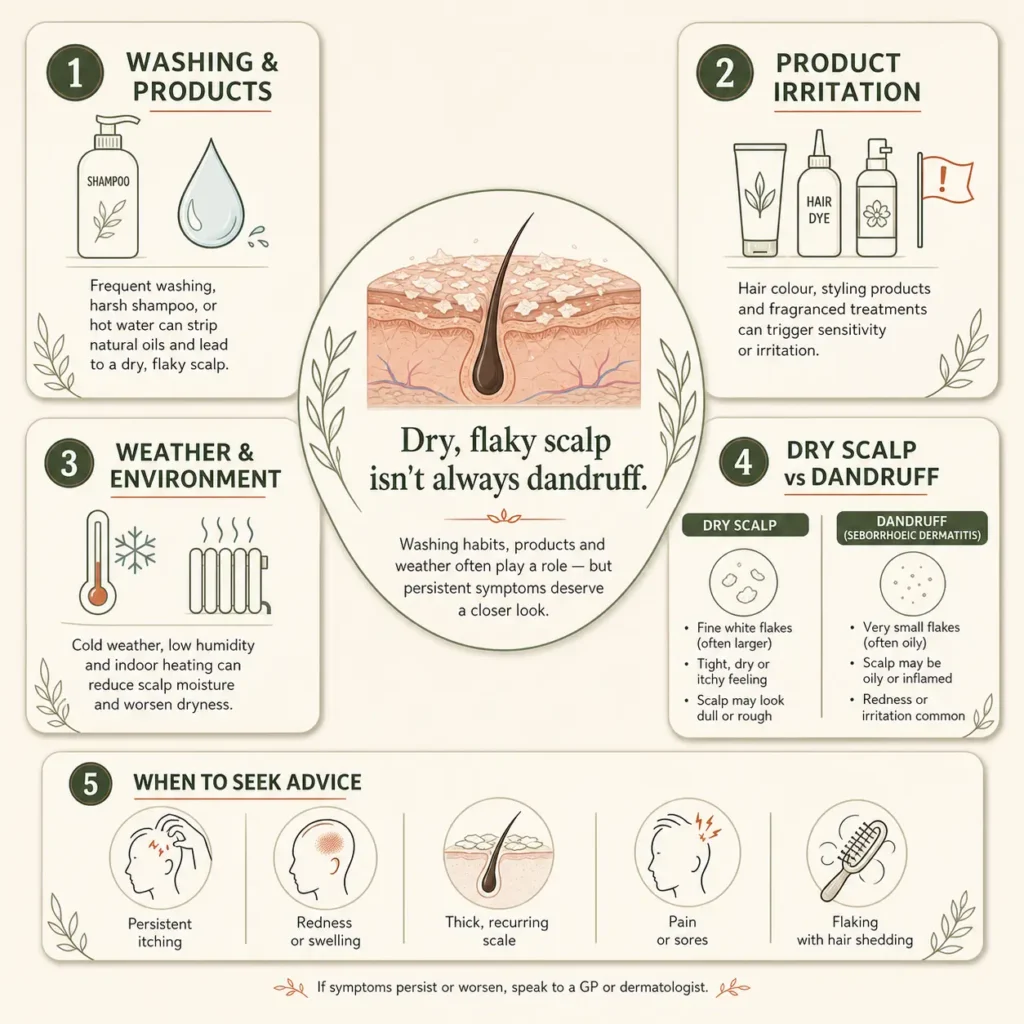
Frequent Washing or Harsh Shampoo
Washing your hair frequently with a shampoo that does not suit your scalp may leave the skin feeling dry or uncomfortable. Strong cleansing products can be particularly irritating for some people.
If your scalp regularly feels tight after washing, consider whether your shampoo or washing routine could be contributing.
Haircare Products That Cause Irritation
Shampoos, conditioners, hair dyes, and styling products contain ingredients that may not suit every scalp. Fragrance and certain other ingredients can trigger irritation or sensitivity in some people.
If the flaking started after you introduced a new product, review whether the timing could be relevant. Our page on scalp build-up and product sensitivity explains more about these concerns.
Cold Weather and Low Humidity
Cold weather, indoor heating, and dry air can contribute to skin dryness. You may notice more discomfort during winter or when spending time in heated indoor environments.
Weather is one possible factor, but recurring symptoms should not automatically be attributed to the climate.
Hot Water
Very hot water may aggravate dry or sensitive skin. Washing with comfortably warm water is a simple adjustment to consider if your scalp feels uncomfortable after showering.
Other Scalp Conditions
Flaking and itching can occur with several skin conditions, including contact dermatitis, psoriasis and seborrhoeic dermatitis.
For example, scalp psoriasis may cause thicker, clearly defined areas of scaling. Seborrhoeic dermatitis can also cause recurring flakes and irritation. Dandruff is a non-inflammatory dry scalp condition, which presents as non-itchy and is associated with small flakes of dry skin.
Because these conditions can look similar, persistent symptoms may need further assessment rather than repeated changes to your haircare routine.
Dry Scalp or Dandruff: What Is the Difference?
Dry scalp and dandruff are closely related. Dandruff is a non-inflammatory scalp condition that presents as a dry scalp, usually with very small flakes of dry skin and often no other symptoms.
If the scalp becomes oily, more noticeably flaky or inflamed, it is no longer termed dandruff but seborrhoeic dermatitis. This is a different condition and may need a different approach from simple dryness.
A dry scalp caused by the weather, washing habits or product irritation can also feel tight or itchy, so appearance alone cannot always establish the cause.
If you are unsure what is behind your symptoms, read more about itchy and flaky scalp.
What May Help if Your Scalp Feels Dry?
The most appropriate approach depends on the cause. For mild dryness, a few changes to your usual routine may help reduce unnecessary irritation.
Choose a Shampoo That Suits Your Scalp
Consider whether your current shampoo leaves your scalp feeling tight, dry or irritated. A gentler formula may be worth trying if you suspect your existing product is contributing to the discomfort.
There is no single shampoo that suits everyone, so pay attention to how your scalp responds rather than relying on broad product claims.
Review Your Haircare Routine
Think about any products you have recently introduced, including hair dyes, styling products and fragranced treatments.
If a particular product appears to trigger irritation, stop using it. If symptoms are severe or continue, seek appropriate advice.
Avoid Scratching and Forceful Scrubbing
Scratching may temporarily relieve itching, but it can further irritate the skin. Aggressive scrubbing and picking at flakes may also damage the scalp.
Try to clean your scalp gently rather than attempting to remove every visible flake.
Be Cautious with Home Remedies
Natural ingredients are not automatically gentle. Essential oils, fragranced mixtures and acidic ingredients may irritate sensitive skin.
Oils are not a universal solution either. Depending on the cause of the flaking, a product may be unsuitable or contribute to build-up. If your scalp is sore, inflamed, or cracked, avoid experimenting with home remedies.
Avoid Changing Everything at Once
Trying several new products together makes it difficult to identify what is helping or causing irritation. Where symptoms are mild, keeping your routine simple may make it easier to notice whether a particular product or habit is contributing.
If the problem continues, consider whether the cause might be something other than ordinary dryness.
When Should You Seek Advice?
Occasional mild dryness may settle after changes to your haircare routine. However, it is worth seeking advice from a qualified healthcare professional if you experience:
- Persistent or worsening itching
- Significant redness, swelling or discomfort
- Thick or recurring patches of scale
- Pain, sores, bleeding or signs of infection
- Symptoms that do not improve with gentle care
- Flaking accompanied by noticeable hair shedding or thinning
These symptoms can have different causes, and the appropriate approach depends on what is affecting your scalp.
You can explore our scalp care information to learn more about common scalp concerns.
Frequently Asked Questions
Why is my scalp dry but not dandruff?
Dryness may be associated with weather, washing habits, or irritation from haircare products. However, other scalp conditions can cause similar symptoms. If the flaking persists, consider seeking advice rather than assuming it is simple dryness.
Can washing my hair too often cause a dry scalp?
Frequent washing may contribute to dryness for some people, particularly when combined with harsh shampoo or hot water. Suitable washing frequency varies according to your hair, scalpand lifestyle.
Is oil good for a dry scalp?
Not necessarily. Some products may suit certain people, while others can cause irritation or contribute to build-up. The cause of the dryness matters more than whether a product is marketed as a moisturising oil.
Can a dry scalp cause hair loss?
Dryness does not necessarily cause hair loss. However, scratching can damage the skin, and some conditions that cause flaking may also affect scalp health. If you notice persistent shedding or visible thinning, seek appropriate advice.
How long does a dry scalp take to improve?
There is no fixed timeframe. Mild dryness may improve when an irritating product or environmental trigger is addressed, while an underlying skin condition may need a different approach. If symptoms continue or worsen, seek advice.
Final Thoughts
A dry scalp may be linked to washing habits, haircare products, or environmental conditions, but flaking and itching can also occur with other scalp conditions.
If the symptoms are mild, reviewing your routine and avoiding potential irritants may be a reasonable starting point. If the problem persists, becomes painful, or is accompanied by significant redness or thick scaling, it is worth finding out what is causing it.
For further information about common scalp concerns, visit our scalp care page or contact the clinic.