The more information you bring to your first trichology consultation, the more useful it will be. A good appointment isn't just about examining your scalp — it's about understanding the full picture of what's been happening and when. Here's exactly what to prepare. Most people arrive at their first trichology appointment with questions but not …


The more information you bring to your first trichology consultation, the more useful it will be. A good appointment isn’t just about examining your scalp — it’s about understanding the full picture of what’s been happening and when. Here’s exactly what to prepare.
Most people arrive at their first trichology appointment with questions but not much else. That’s fine — but arriving with a little preparation can make a significant difference to the quality of the assessment and the clarity of what comes out of it.
You don’t need to have everything on this list. Bring what you have. But understanding why each item is useful will help you gather what you can before your appointment.
Your Blood Test Results
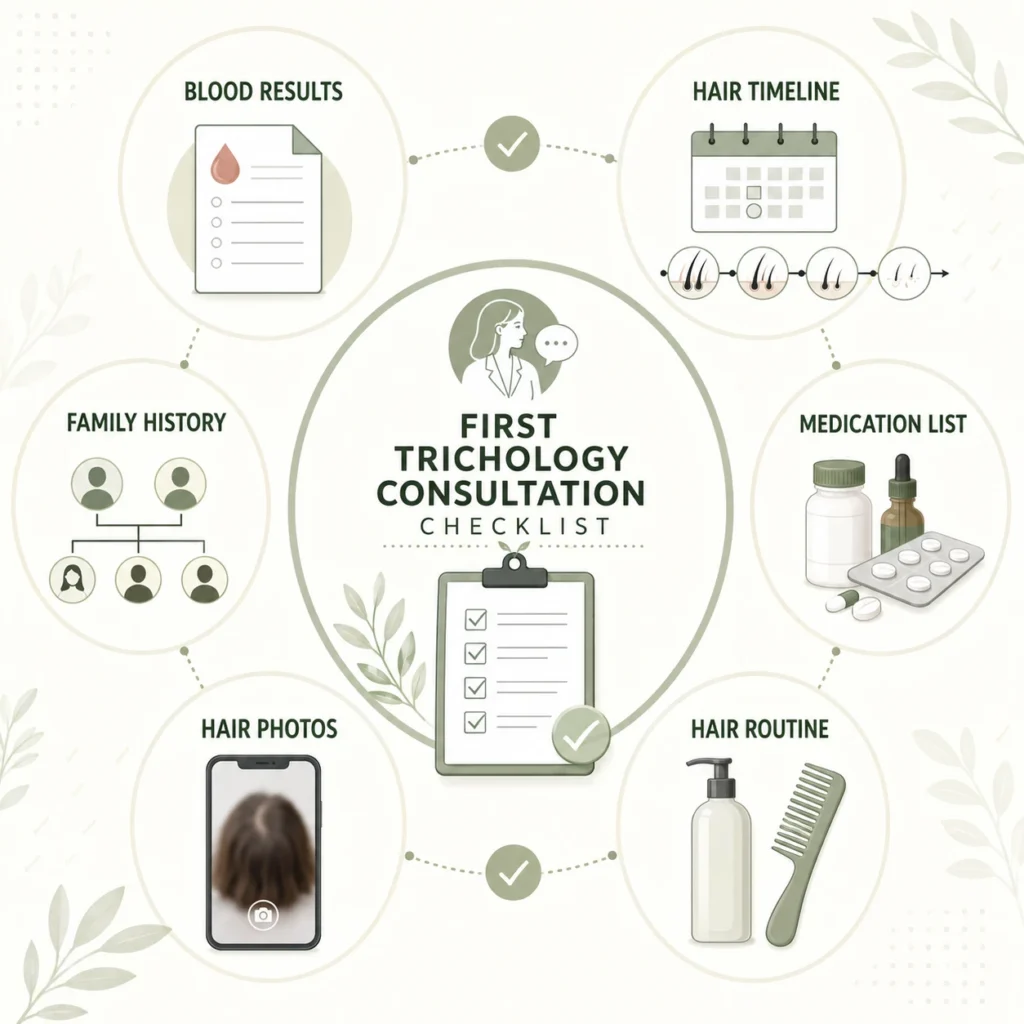
If you’ve had any blood tests done in the last twelve months — whether through your GP, a private provider, or a workplace health check — bring them. Even if you were told everything was normal.
As our guide to nutrition and blood tests in hair loss explains, ‘normal’ on a standard panel and ‘optimal for hair growth’ are not the same thing. A trichologist can look at your actual numbers — not just the flagged/unflagged designation — and identify whether ferritin, vitamin D, thyroid function, or other markers might be contributing to your hair changes.
If you haven’t had blood tests yet, don’t worry. The consultation will include advice on exactly which markers would be most useful to investigate and why.
A Timeline of When the Hair Loss Started
Hair loss is almost always connected to something that happened in the past — often two to three months before the shedding became noticeable. Having a rough sense of when you first noticed changes, and what was going on in your life around that time, is genuinely useful clinical information.
Think about: any significant illness, surgery, or hospitalisation; periods of high stress or bereavement; changes to your diet or weight; pregnancy or postpartum recovery; any changes to medication or contraception; and whether the hair loss came on suddenly or gradually.
You don’t need a precise diary — a rough sense of timing is enough. Understanding the hair growth cycle can help you understand why this lag matters and how it helps identify the trigger.
A List of Any Medications and Supplements
A number of medications — including some blood pressure treatments, antidepressants, anticoagulants, and acne medications — are associated with hair shedding. So are some supplements taken in high doses, particularly vitamin A. Knowing exactly what you’re taking allows the trichologist to consider whether any of these might be contributing.
Include: prescription medications, over-the-counter medications taken regularly, vitamins and supplements (including the dose), hormonal contraception, and any recent changes to any of the above.
Your Family History of Hair Loss
Female pattern hair loss is strongly heritable. If your mother, grandmother, or other close female relatives experienced hair thinning, this is relevant clinical context — particularly if your own thinning is concentrated at the crown or parting rather than presenting as all-over shedding.
For male pattern hair loss in male relatives, this can also be relevant — the genetic factors involved in female pattern hair loss are inherited from both sides of the family.
Photos of Your Hair Over Time
If you have photos from before the hair loss became noticeable — even casual holiday photos or old profile pictures — these are genuinely useful. They give the trichologist a reference point for your previous density and hair distribution, which can help assess the degree of change and the pattern of loss.
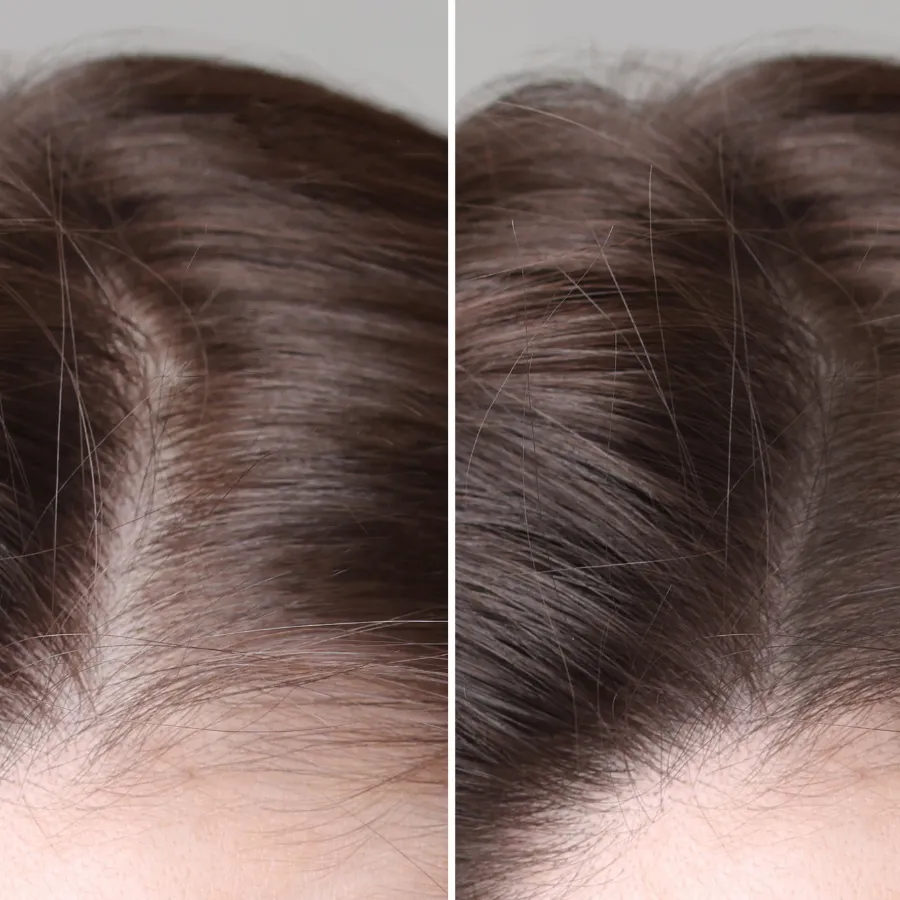
A few clear photos taken now — of the crown, the parting, and the overall volume — are also worth taking before your appointment. Lighting from directly above gives the clearest view of the parting and scalp visibility.
Your Hair Care Routine
How you care for your hair can affect the scalp and the follicle. Useful things to mention: how often you wash and heat-style, whether you use relaxers or colour regularly, whether you wear your hair in tight styles or extensions, and any products you use directly on the scalp.
If a scalp condition is involved — irritation, flaking, sensitivity — the products you’re using may be relevant to what’s causing or sustaining it.
Any Previous Assessments or Reports
If you’ve seen a dermatologist, GP, or another trichologist previously and have any written reports or referral letters, bring those too. Previous assessments — even if inconclusive — help avoid duplication and give useful background.
What You Don’t Need to Bring
You don’t need to arrive with a diagnosis, a theory, or a list of products you’ve already tried. You don’t need to have ‘figured it out’ before you come in. That’s what the assessment is for.
If you’ve been anxious about what you might hear — that’s understandable, and it’s common. But an accurate picture of what’s happening is always more useful than uncertainty. The consultation is about giving you clarity and a practical next step, whatever that looks like for your situation.
You can read more about what happens during an assessment and the range of approaches used on the treatment and management page.
The Hair & Scalp Clinic is based in Huntingdon, Cambridgeshire. Consultations are available in clinic and via telehealth for patients who cannot attend in person.
Book a Consultation — hairscalpclinic.co.uk/consultation