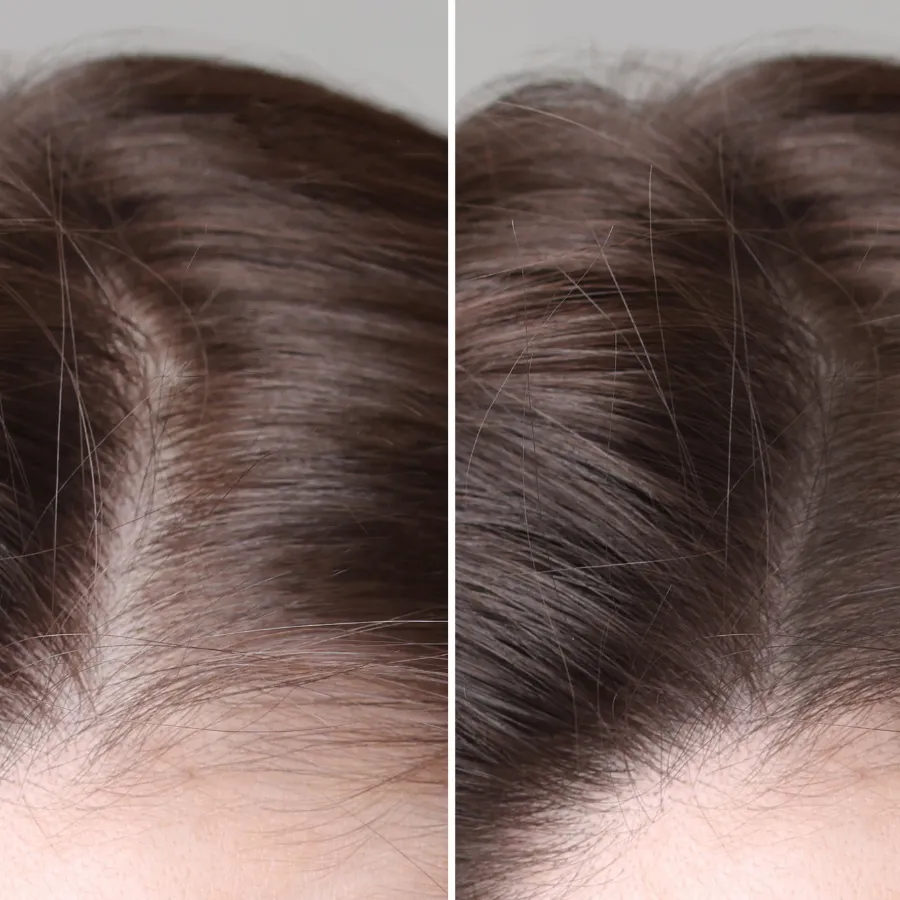
Postpartum hair loss is one of the most startling things a new mother can experience, and one of the least talked about. If you are finding alarming amounts of hair in the shower a few months after giving birth, you are not ill and you are not losing your hair permanently. Here is what is …

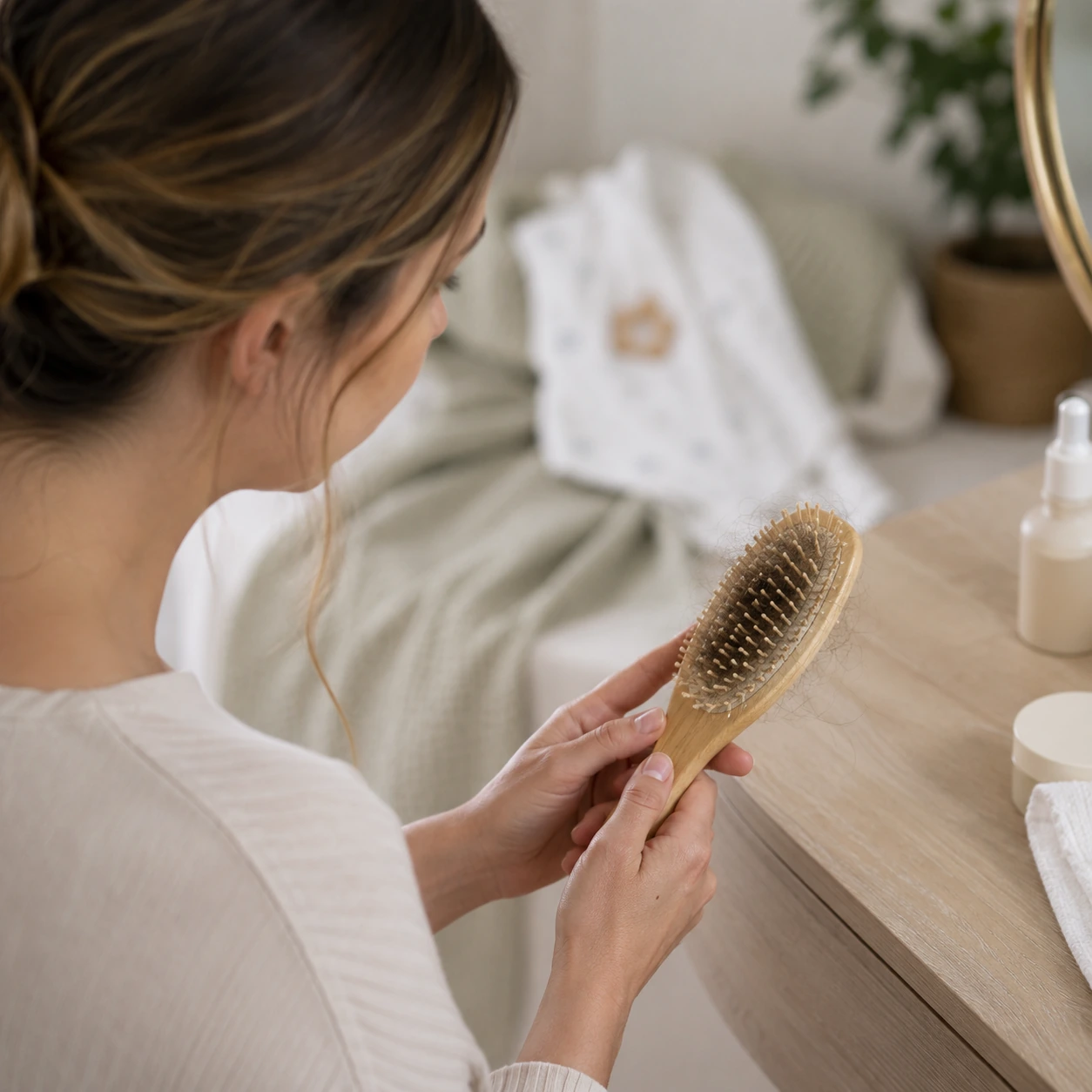
Postpartum hair loss is one of the most startling things a new mother can experience, and one of the least talked about. If you are finding alarming amounts of hair in the shower a few months after giving birth, you are not ill and you are not losing your hair permanently. Here is what is happening and what to expect.
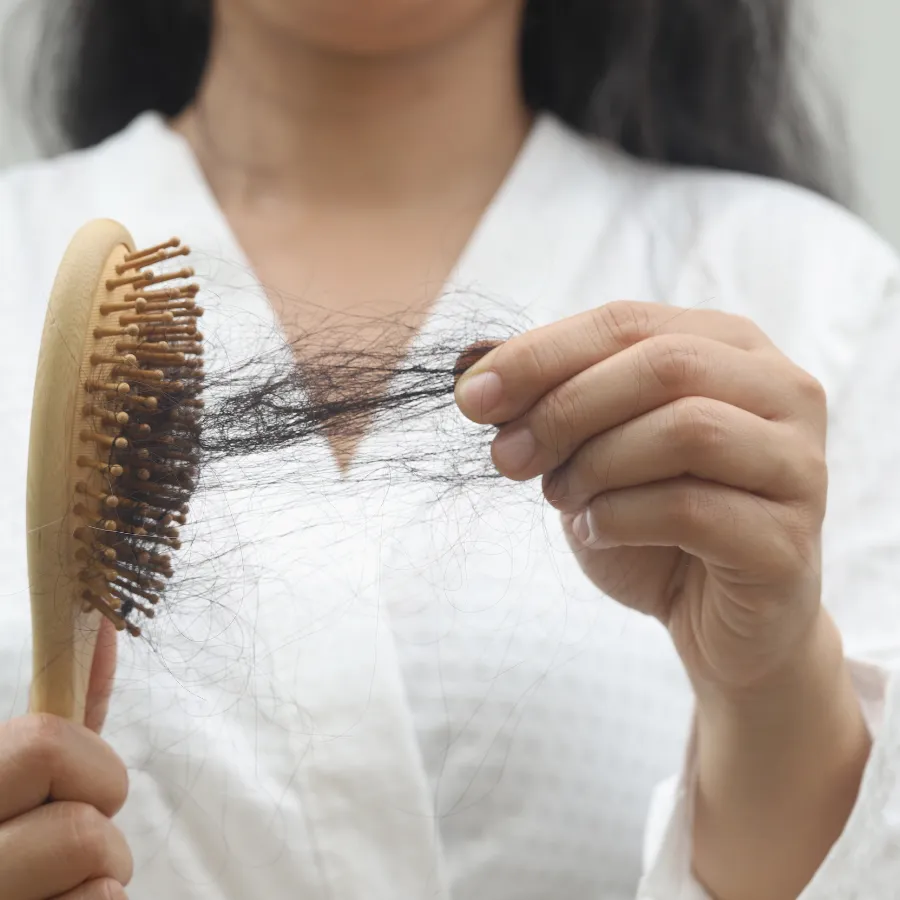
The shed can be dramatic. What felt like thick, beautiful pregnancy hair suddenly seems to come out in handfuls — on the pillow, in the plug hole, in your hands when you wash it. It tends to happen around three to four months postpartum, which is late enough that many women do not immediately connect it to the birth.
Understanding why it happens makes it considerably less frightening.
Why Hair Grows So Well During Pregnancy
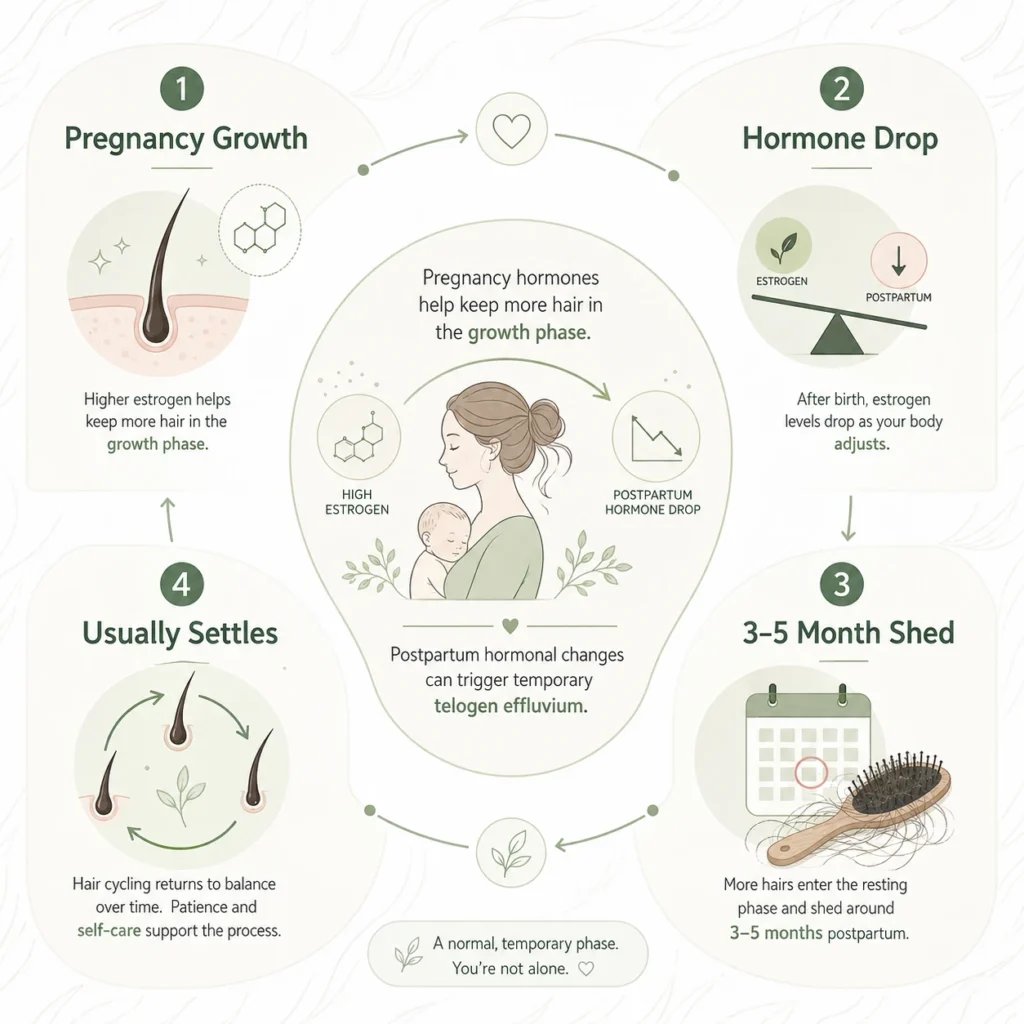
During pregnancy, elevated oestrogen and progesterone extend the active growth phase of the hair growth cycle. Normally, around 5 to 15 percent of your hairs are in their resting phase at any given time. Pregnancy hormones keep far more hairs in the growth phase for longer, which is why many women notice their hair feeling fuller and thicker during pregnancy.
Those hairs are not lost. They are simply being held in the growth phase. And after delivery, when hormone levels drop sharply, they do not stay there.
What Happens After Birth
In the weeks after delivery, oestrogen and progesterone fall rapidly. The hairs that were being held in the extended growth phase are now released, and they all move into the resting phase together. After the resting phase ends, typically two to three months later, they shed.
This is telogen effluvium, a temporary reactive shedding episode. In the postpartum context it is sometimes called postpartum alopecia, though it is not true alopecia. The follicles are completely intact. The shed is simply the hair that was overdue catching up all at once.
When Does It Peak and When Does It Stop?
For most women, postpartum shedding peaks around three to five months after delivery, then gradually settles. By six to nine months, the shedding has usually reduced significantly. Most women return to their previous density by twelve months after giving birth.
Breastfeeding can extend the hormonal shifts slightly. Some women notice that shedding continues a little longer while breastfeeding, or picks up again when they stop. This is a normal hormonal response, not a sign that something is wrong.
Postpartum hair loss is temporary in the vast majority of cases. The follicles are healthy and the hair will come back. But several months of noticeable change is still distressing, and if it is worrying you, it is worth getting a clear picture of what is happening.
What Can Make It Worse
A few factors can intensify or prolong postpartum shedding beyond what is typical:
- Low ferritin: iron stores are commonly depleted during pregnancy and childbirth, and low ferritin independently impairs the hair cycle. This is one of the most common reasons postpartum shedding is heavier or lasts longer than expected
- Vitamin D deficiency: widespread in the UK and commonly low in the postpartum period
- Thyroid changes: postpartum thyroiditis affects around 5 to 10 percent of women in the year after delivery and can cause significant shedding. It is often temporary but worth checking if shedding is prolonged
- Sleep deprivation and physical depletion: the body is under sustained demand in the early months, which sustains the physiological stress that drives shedding
Our guide to nutrition and blood tests in hair loss explains which markers are most useful to check and why a normal result on a standard panel is not always the same as optimal for hair growth.
When Is It Not Just Postpartum Shedding?
For most women, postpartum hair loss is entirely temporary and self-resolving. But there are situations where what starts as postpartum shedding uncovers something else worth investigating:
- Shedding is still heavy at nine to twelve months with no clear improvement
- Thinning is concentrated at the crown or parting rather than presenting as all-over shedding
- Other symptoms have appeared alongside the hair loss, including fatigue, weight changes, mood changes, or irregular periods
- There is a family history of female pattern hair loss and the pattern looks more like gradual thinning than a shedding episode
Female pattern hair loss and hormonal hair loss can both be triggered or accelerated by the hormonal shifts of the postpartum period. Both benefit from early identification and management.
What to Do in the Meantime
- Get your ferritin checked and ask for the actual number, not just a normal or abnormal verdict
- Eat well where possible: protein, iron-rich foods, and zinc all support healthy hair cycling
- Be gentle with your hair and avoid tight styles and excess heat while shedding is at its peak
- Try not to panic about the shed. The follicles are fine
For a full clinical overview of postpartum hair changes, see our dedicated page on post-pregnancy hair loss.
The Hair & Scalp Clinic is based in Huntingdon, Cambridgeshire. Patients attend from Cambridge, Peterborough, and across the UK. Telehealth consultations are available.
Book a Consultation — hairscalpclinic.co.uk/consultation