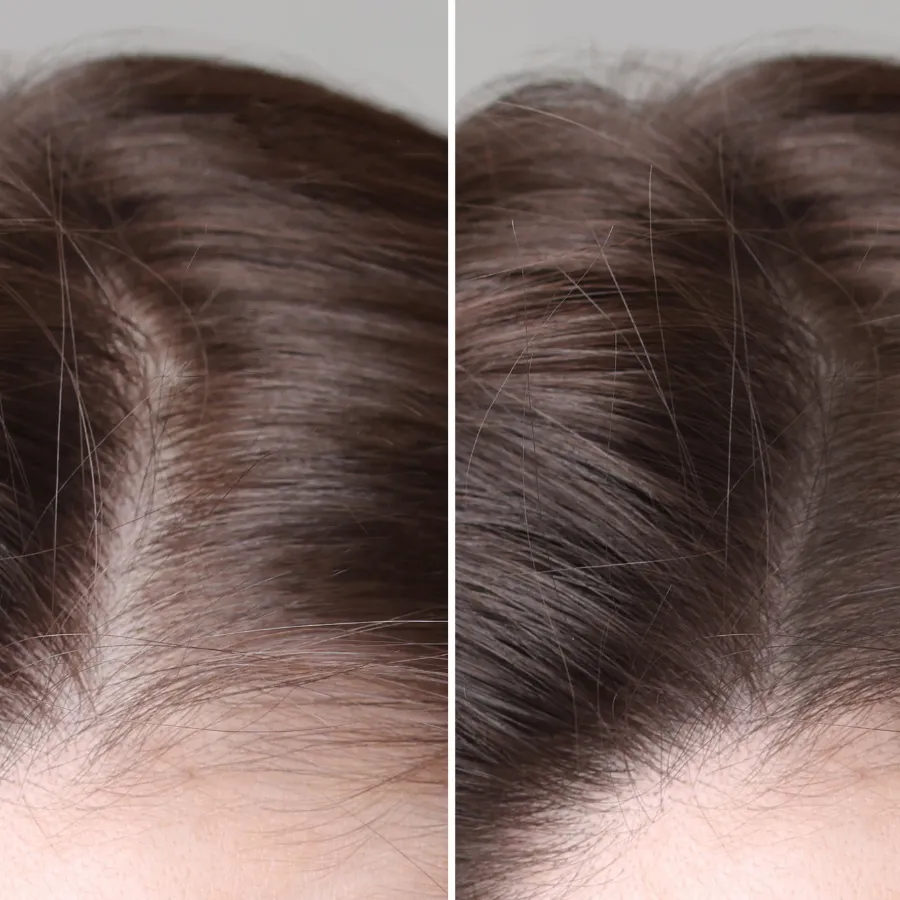
Hormone replacement therapy is often mentioned as a potential option for menopausal hair changes, but the evidence on how much it actually helps with hair specifically is more mixed than many women are led to believe. Here is an honest look at what research currently shows. Menopausal hair thinning is common, and it is understandable …

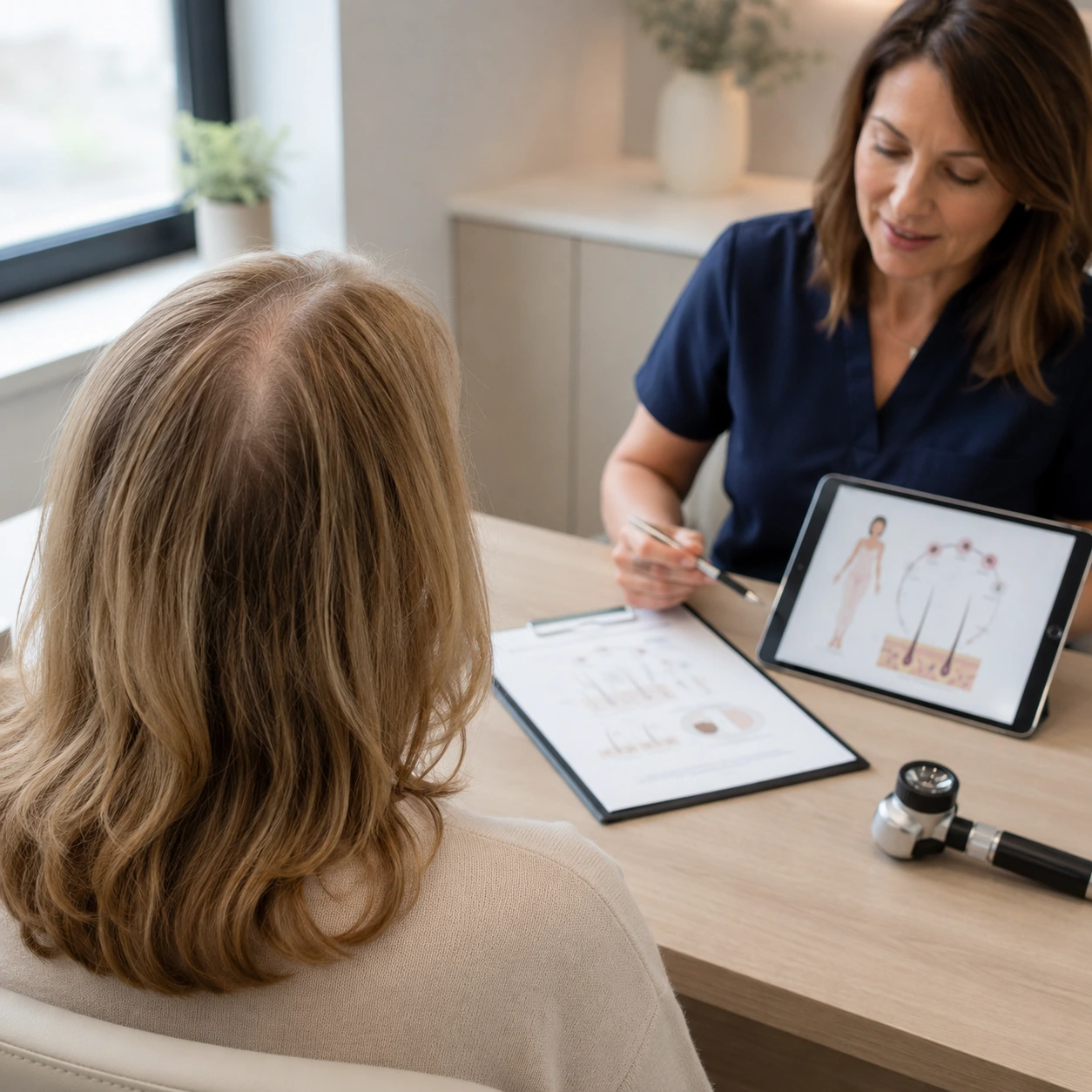
Hormone replacement therapy is often mentioned as a potential option for menopausal hair changes, but the evidence on how much it actually helps with hair specifically is more mixed than many women are led to believe. Here is an honest look at what research currently shows.
Menopausal hair thinning is common, and it is understandable that HRT comes up as a possible answer, since it addresses the hormonal shift widely believed to drive the change. The reality is more nuanced, and worth understanding before treating HRT as a solution for hair specifically.
Why Might HRT Affect Hair at All?
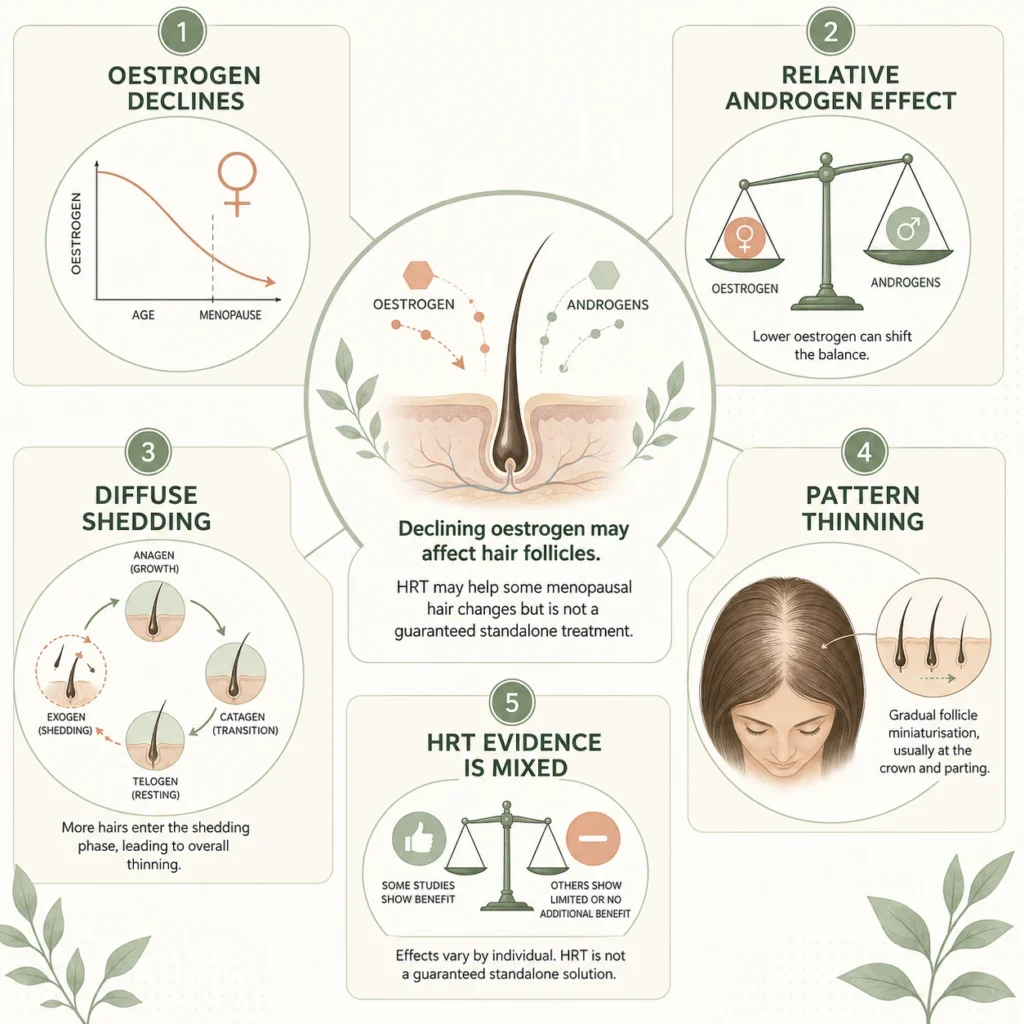
The theory behind HRT helping with hair is reasonably sound. Menopause hair loss is closely linked to declining oestrogen. Oestrogen has a counterbalancing effect on androgens, and as oestrogen falls, the relative influence of androgens on hair follicles increases. This can accelerate or unmask a pattern of thinning similar to female pattern hair loss.
Because HRT restores oestrogen levels, it is reasonable to hypothesise that it might help slow or partially reverse this hormonal component of hair thinning. This is the basis for the widespread assumption that HRT is generally beneficial for hair during menopause.
What Does the Research Actually Show?
The evidence is considerably less conclusive than the theory suggests. Clinical studies specifically examining HRT’s effect on scalp hair density and thickness are limited in number, and results have been mixed.
Some studies and clinical observations report improvements in hair thickness or reduced shedding in women using HRT, particularly where hair changes were closely tied to the menopausal transition itself. Other research has found no significant difference in hair density between women using HRT and those who are not, suggesting that hormonal replacement alone does not reliably reverse androgenetic-pattern thinning once it has become established.
A key distinction in the literature is between hair changes driven primarily by the drop in oestrogen and those driven primarily by relative androgen excess. HRT is more likely to help with the former. Where genetic androgen sensitivity is the dominant driver, similar to female pattern hair loss in younger women, HRT alone tends to have a more limited effect, and additional anti-androgen or topical approaches are often needed alongside it.
HRT is not currently established in the research as a reliable standalone treatment for menopausal hair loss. Where it does help, the effect tends to be modest, and it is more likely to be effective for shedding related to the hormonal transition itself rather than established pattern thinning.
What About Shedding Specifically?
A distinction worth making is between diffuse shedding, a telogen effluvium-type response to the hormonal fluctuation of perimenopause, and gradual crown thinning driven by longer-term androgen sensitivity.
HRT has a more plausible role in the former. Stabilising hormone levels during a turbulent perimenopausal transition may help settle a shedding episode that was triggered by hormonal fluctuation. For established pattern thinning that has been developing over years, the evidence for HRT alone producing meaningful regrowth is weaker.
What Else Should Be Considered Alongside HRT?
Because the evidence for HRT as a standalone hair treatment is limited, most trichological approaches to menopausal hair loss look at the wider picture rather than relying on hormone therapy in isolation:
- Iron and vitamin D status: both are commonly suboptimal in perimenopausal and postmenopausal women, and both independently affect hair cycling
- Thyroid function: thyroid changes become more common around midlife and can compound or mimic menopausal hair changes
- Topical treatments: minoxidil is a well-established option for androgenetic-pattern thinning and can be used alongside HRT where appropriate
- Scalp health: inflammation or sensitivity at the scalp level can independently affect shedding regardless of hormonal status
Our guide to nutrition and blood tests in hair loss explains which markers are worth reviewing alongside any hormonal treatment.
Should You Start HRT for Your Hair?
This is a decision best made with your GP or menopause specialist, considering the full range of menopausal symptoms rather than hair alone. HRT carries benefits and risks that extend well beyond hair, and it should not be started or avoided on the basis of hair changes in isolation.
If you are already on HRT and have not seen the hair improvement you expected, this does not necessarily mean something is wrong. It may simply reflect the genuine limits of what HRT alone can achieve for hair, and indicate that additional trichological support would be worth exploring alongside it.
When to Book a Consultation
A trichological assessment is useful whether or not you are on HRT, particularly if you:
- Have noticed hair thinning during perimenopause or menopause and want to understand what is driving it
- Are on HRT but have not seen the hair changes you expected
- Want to understand whether your pattern of thinning is primarily hormonal, androgenetic, or a combination of both
- Would like a realistic picture of what additional support, alongside any hormonal treatment, might help
The Hair & Scalp Clinic is based in Huntingdon, Cambridgeshire. Patients attend from Cambridge, Peterborough, and across the UK. Telehealth consultations are available.
This content reflects the current state of published research and is not a substitute for individual medical advice. Decisions about HRT should always be made with your GP or a menopause specialist. Book a Consultation — hairscalpclinic.co.uk/consultation