Crown thinning in women is one of the most common hair concerns, and one of the most frequently misattributed. Not all crown thinning is the same condition and not all of it is managed the same way. Here is what might be behind yours. The crown and top of the scalp is where most pattern-related …

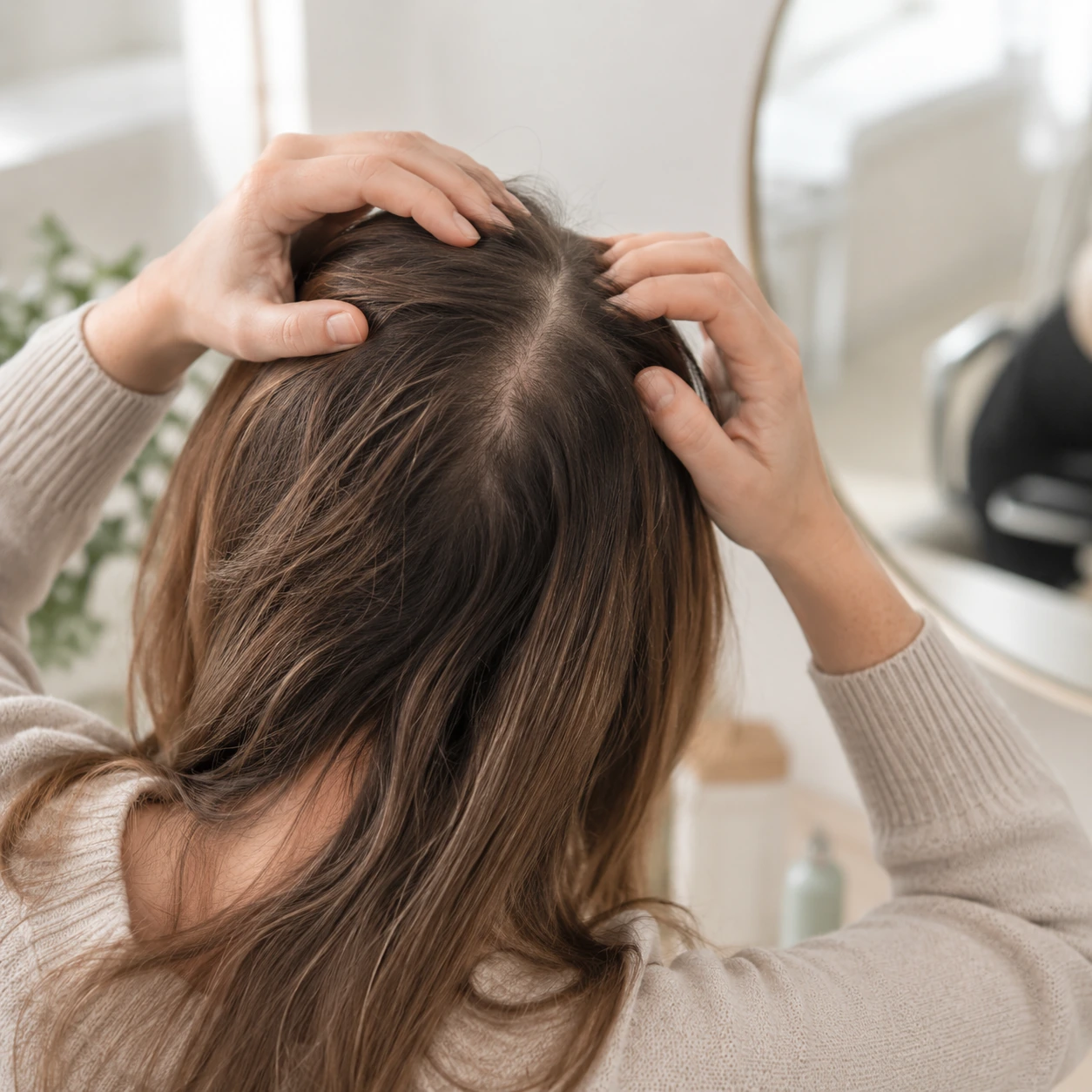
Crown thinning in women is one of the most common hair concerns, and one of the most frequently misattributed. Not all crown thinning is the same condition and not all of it is managed the same way. Here is what might be behind yours.
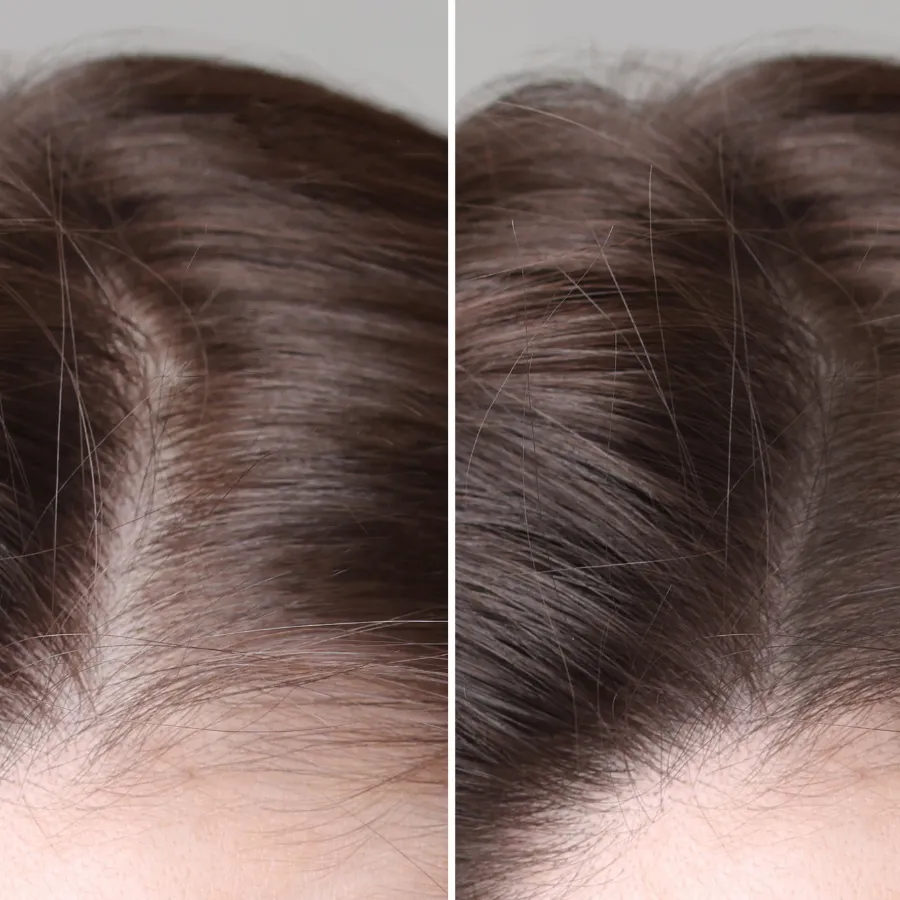
The crown and top of the scalp is where most pattern-related hair loss in women first becomes visible. A widening parting, a scalp that seems more exposed than it used to, a ponytail that feels noticeably thinner. These are the early signs that something is changing. What is causing that change is a separate question, and the answer shapes everything about what to do next.
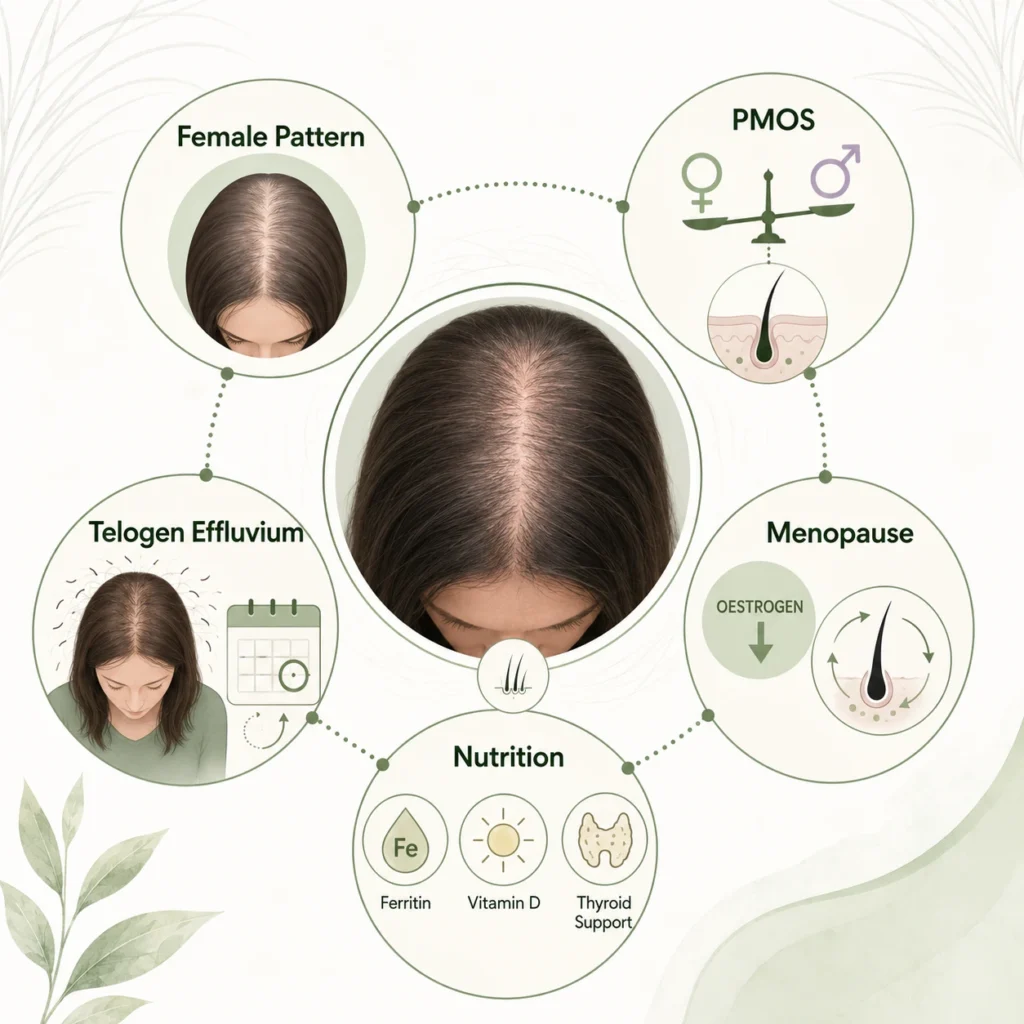
Below are the five most common causes of crown thinning in women, with the key features that distinguish each one.
1. Female Pattern Hair Loss
The most common cause of crown thinning in women. Female pattern hair loss is driven by a genetic sensitivity to androgens, specifically DHT, which gradually miniaturises follicles at the crown and top of the scalp over successive hair cycles.
The key features: gradual onset over months to years; thinning concentrated at the crown and along the central parting with the frontal hairline relatively preserved; individual hairs becoming progressively finer before disappearing; often a family history on either side.
It is progressive, meaning it does not resolve on its own. But it responds well to early management. The earlier it is identified, the more can be preserved.
2. PMOS-Related Hair Loss
For women of reproductive age, PMOS (Polyendocrine Metabolic Ovarian Syndrome) is one of the most important hormonal drivers of crown thinning. Elevated androgens, common in PMOS, accelerate the same follicular miniaturisation process seen in female pattern hair loss.
The pattern looks similar to female pattern hair loss and can be easy to confuse clinically. The key difference is the underlying driver. PMOS-related thinning is connected to a correctable hormonal imbalance, which means addressing that imbalance can meaningfully slow or stabilise the loss. Key indicators include irregular periods, acne, facial hair, or other androgenic features alongside the scalp thinning.
3. Telogen Effluvium Concentrated at the Crown
Generalised telogen effluvium produces all-over shedding, but its effects are often most visible at the crown where hair density tends to be lower to begin with. Women may notice crown thinning following a stressful event, illness, surgery, or significant nutritional deficiency, even though the underlying shedding is diffuse.
The key distinction: if the thinning appeared relatively quickly following a clear trigger, and if shedding is noticeable throughout the scalp rather than exclusively at the crown, telogen effluvium is a strong candidate. Unlike pattern hair loss, it is usually fully reversible once the trigger resolves and nutritional foundations are restored.
4. Menopause-Related Hair Loss
The hormonal shift of perimenopause and menopause, particularly declining oestrogen, often accelerates or unmasks crown thinning. Oestrogen has a counterbalancing effect on androgens. As oestrogen declines, the relative androgen influence on follicles increases, producing a pattern of loss that mirrors female pattern hair loss.
Many women in their late 40s and 50s notice crown thinning for the first time during this period. In some cases it is entirely menopausal and partially responsive to HRT. In others, it reveals an underlying genetic tendency that was previously kept in check. Our page on menopause hair loss covers the distinction in more detail.
5. Nutritional Deficiency
Low ferritin is the most common nutritional contributor to crown thinning, though it is worth noting that ferritin-related shedding tends to produce diffuse loss rather than a strictly patterned crown distribution. Where nutritional deficiency is the primary driver, crown thinning is usually part of an overall reduction in density rather than a localised pattern.
Vitamin D deficiency, low zinc, and thyroid imbalance can all contribute similarly. Nutritional factors frequently coexist with androgenetic causes and can make patterned thinning significantly worse. Identifying and addressing them is an important part of any hair loss assessment. Our guide to nutrition and blood tests in hair loss explains which markers matter most.
How to Know Which One You Are Dealing With
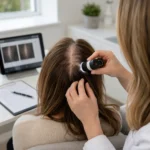
Clinical assessment, including a scalp examination with dermoscopy and a review of relevant blood markers, is the most reliable way to distinguish between these causes. Some require quite different approaches, and the nuances between female pattern loss and PMOS, or between telogen effluvium and early androgenetic thinning, are difficult to assess accurately from the outside.
That said, a few things are useful to consider:
- Has the thinning come on suddenly over weeks to months, or gradually over years? Sudden diffuse loss suggests telogen effluvium. Gradual progressive crown thinning suggests a patterned cause
- Is the thinning exclusively at the crown, or is overall density reduced across the scalp? Diffuse overall loss is more consistent with telogen effluvium or nutritional deficiency
- Is there a family history of thinning? A strong hereditary pattern points toward female pattern hair loss
- Are there other androgenic features such as acne, facial hair, or irregular periods? These point toward hormonal causes including PMOS
- Are you in perimenopause or post-menopause? Hormonal changes at this stage frequently drive or accelerate crown thinning
If you are unsure, or if the thinning is progressing, getting an accurate picture early gives you the most options. See our hormonal hair loss page for further context on the conditions that drive this pattern.
The Hair & Scalp Clinic is based in Huntingdon, Cambridgeshire. Patients attend from Cambridge, Peterborough, and across the UK. Telehealth consultations are available.
Book a Consultation — hairscalpclinic.co.uk/consultation