PMOS-related hair loss and female pattern hair loss can look almost identical on the surface. Both cause gradual thinning at the crown, and both are driven by androgen sensitivity in the follicles. But the underlying cause is different in each case, and that difference matters for how the thinning is best approached. This is one …

PMOS-related hair loss and female pattern hair loss can look almost identical on the surface. Both cause gradual thinning at the crown, and both are driven by androgen sensitivity in the follicles. But the underlying cause is different in each case, and that difference matters for how the thinning is best approached.
This is one of the most common sources of confusion in hormonal hair loss, and it is genuinely difficult to distinguish the two without a proper assessment. Understanding what each condition involves is a useful starting point.
What Do the Two Conditions Have in Common?
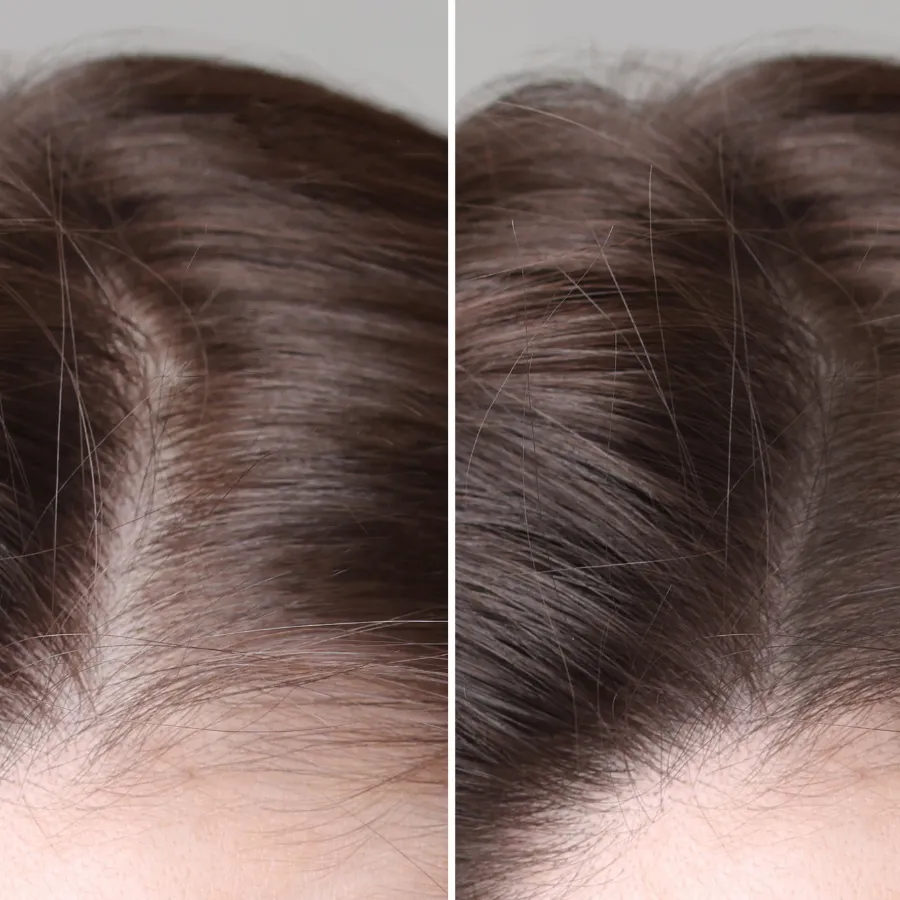
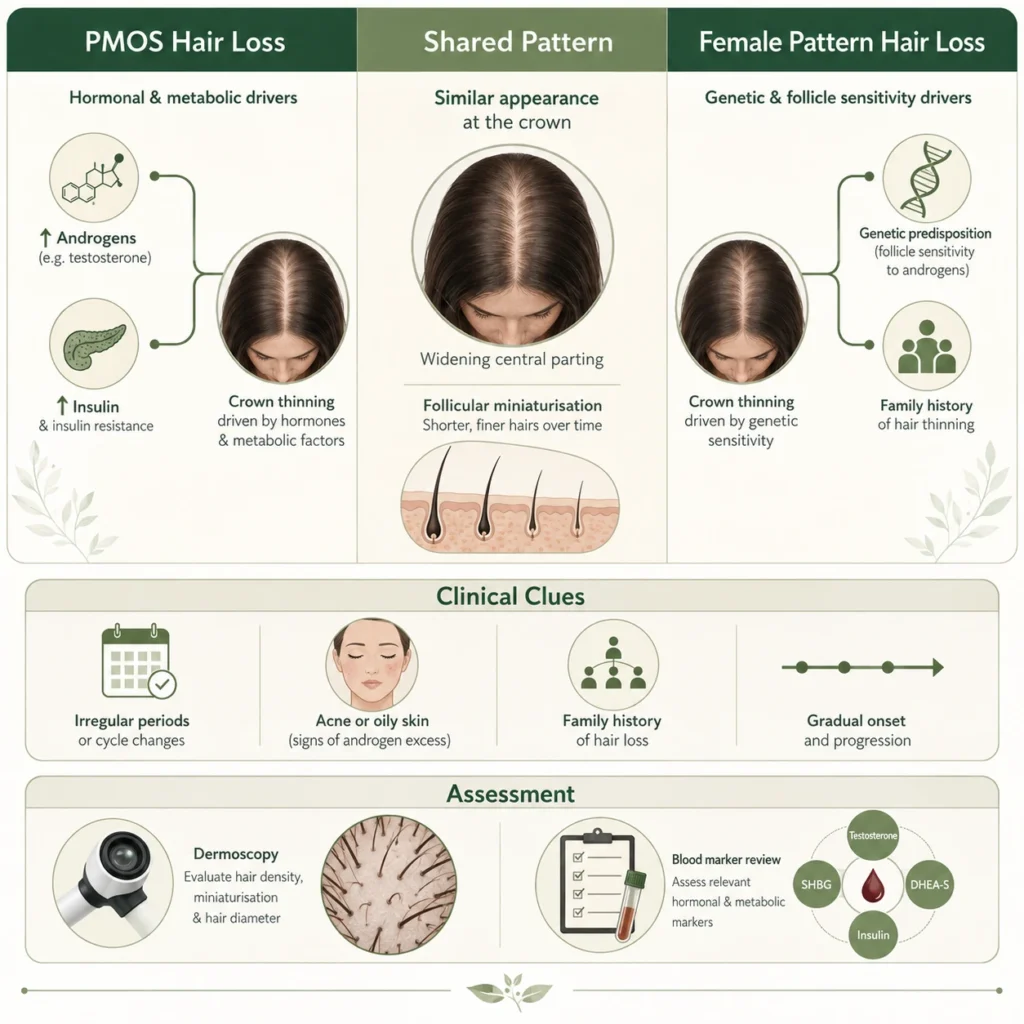
Both PMOS-related hair loss and female pattern hair loss share the same basic mechanism at the follicle level. Androgens, particularly DHT, bind to receptors in genetically susceptible follicles and gradually shorten the active growth phase. Over successive cycles, affected hairs become finer, shorter, and less pigmented, producing diffuse thinning most noticeable at the crown and along the central parting.
Because the follicular process is essentially the same, the visual pattern of thinning looks very similar in both conditions. This is precisely why the two are so often confused, including sometimes in clinical settings without a full assessment.
What Is Different?
The key difference lies in what is driving the androgen activity in the first place.
Female pattern hair loss is primarily genetic. It reflects an inherited sensitivity to normal androgen levels, meaning the follicles themselves are unusually reactive even though circulating hormone levels are typically within a standard range. Family history is often present on either side.
PMOS-related hair loss, by contrast, is driven by a broader hormonal imbalance in which androgen levels themselves tend to be elevated, often alongside insulin resistance. The follicular sensitivity may or may not be as pronounced, but the higher circulating androgens produce a similar effect regardless. This is a meaningful distinction: PMOS-related thinning is connected to a correctable hormonal driver, whereas the genetic sensitivity behind pure female pattern hair loss cannot be corrected in the same way.
Because PMOS involves elevated androgen levels rather than just increased follicular sensitivity, addressing the hormonal imbalance can meaningfully influence the hair loss. Female pattern hair loss driven purely by genetic sensitivity is managed differently, since the androgen levels themselves are not the primary issue.
Clinical Clues That Point Toward PMOS
Certain features alongside the hair thinning point more strongly toward PMOS as a contributing factor:
- Irregular or absent periods
- Acne, particularly along the jawline
- Increased hair growth on the face, chin, or abdomen occurring alongside scalp thinning
- Difficulty managing weight, or a pattern of weight gain around the midsection
- Onset of thinning at a younger age than typically expected for family history alone
None of these on their own confirms PMOS, but their presence alongside crown thinning is a strong indication that hormonal investigation is worthwhile.
Clinical Clues That Point Toward Female Pattern Hair Loss
Features that suggest a primarily genetic pattern include:
- A strong family history of thinning, particularly in a mother or grandmother
- Regular menstrual cycles with no other androgenic symptoms
- Gradual onset over years rather than a more sudden change
- No accompanying acne, excess facial hair, or metabolic symptoms
Can You Have Both at Once?
Yes, and this is more common than many people realise. A woman with a genetic predisposition to female pattern hair loss who also develops PMOS may experience thinning that is more severe or arrives earlier than either condition would cause alone. In these cases, addressing the PMOS-related hormonal component can help slow the overall rate of progression, even though the underlying genetic sensitivity remains.
How Is the Distinction Made Clinically?
Accurate differentiation combines scalp assessment with relevant blood testing.
Scalp Examination
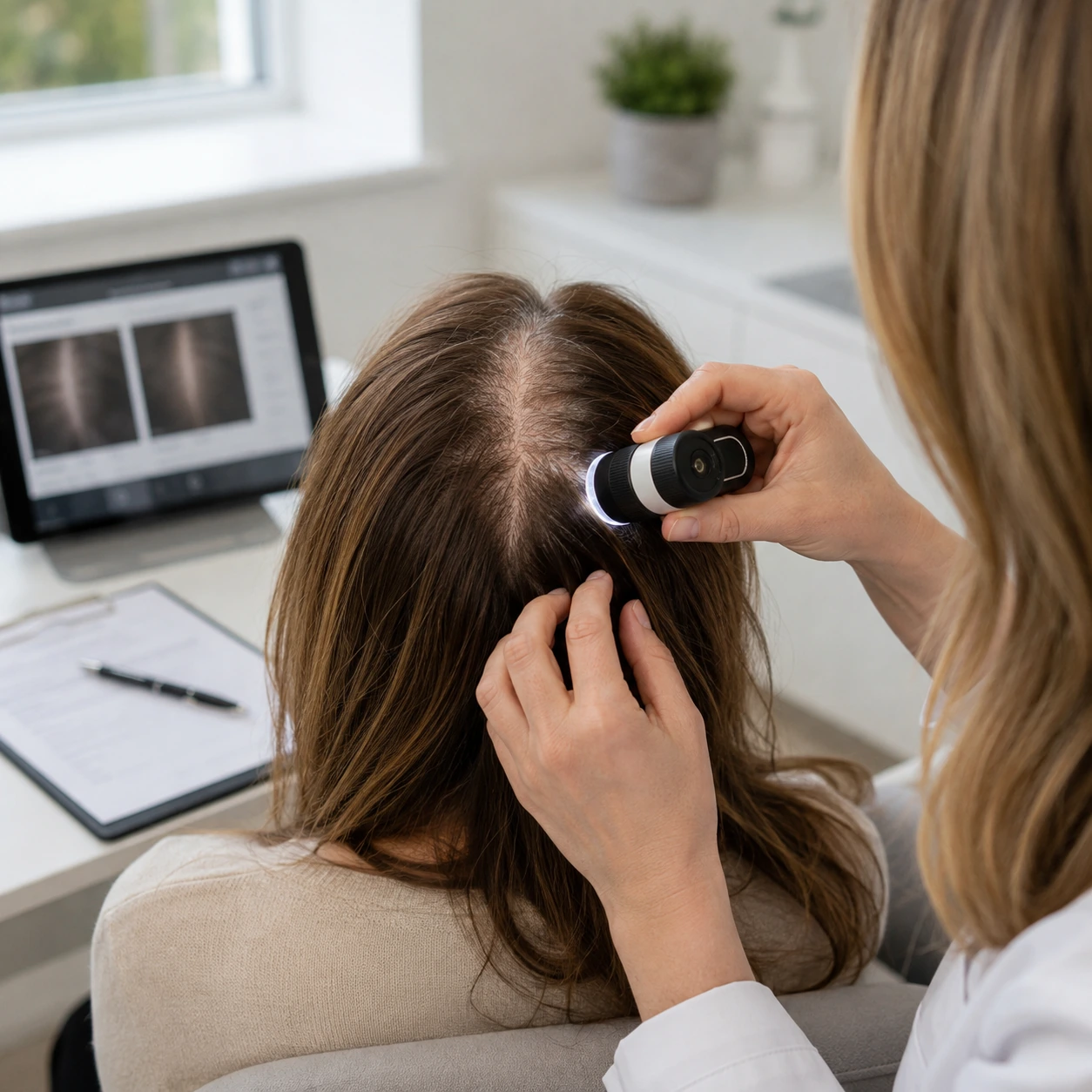
Dermoscopy allows direct assessment of follicular miniaturisation, hair shaft diameter variation, and the pattern of thinning. While the visual pattern is similar in both conditions, the degree and distribution of miniaturisation can offer clues, particularly when combined with the wider clinical picture.
Blood Markers
Relevant tests typically include free and total testosterone, SHBG, LH and FSH, fasting insulin and glucose, and thyroid function. Elevated androgens combined with an abnormal LH:FSH ratio and signs of insulin resistance point toward PMOS. Hormone levels within a standard range, alongside a strong family history, point more toward genetic female pattern hair loss. Our guide to nutrition and blood tests in hair loss explains these markers in more detail.
It is also worth ruling out other contributors that can mimic either pattern, including telogen effluvium and the hormonal shifts of menopause, both of which can present with similar crown thinning.
Why Getting the Right Diagnosis Matters
The two conditions are managed differently. Female pattern hair loss driven by genetic sensitivity typically focuses on topical treatments that support the hair cycle directly, such as minoxidil. PMOS-related thinning benefits from addressing the underlying hormonal and metabolic picture, alongside similar topical support where appropriate.
Treating one as though it were the other can mean missing an opportunity to address a correctable driver, or conversely, expecting a hormonal intervention to resolve thinning that is primarily genetic in origin. An accurate diagnosis makes the management plan considerably more targeted.
When to Book a Consultation
A trichological assessment is worthwhile if you:
- Have crown thinning and are unsure whether it is genetic, hormonal, or both
- Have PMOS symptoms such as irregular periods or acne alongside hair thinning
- Have a family history of hair loss but want to rule out a hormonal component
- Have had blood tests already but are unsure how to interpret them in relation to your hair
The Hair & Scalp Clinic is based in Huntingdon, Cambridgeshire. Patients attend from Cambridge, Peterborough, and across the UK. Telehealth consultations are available.
The Hair & Scalp Clinic is based in Huntingdon, Cambridgeshire. Consultations are available in clinic and via telehealth for patients who cannot attend in person.
Book a Consultation — hairscalpclinic.co.uk/consultation