If your hair seems to be shedding more than usual as the weather turns, you are not imagining it. Seasonal hair shedding is a well-recognised pattern, and for most people it is temporary and self-resolving. Many women notice a change in their hair around September and October each year. More strands on the brush, in …

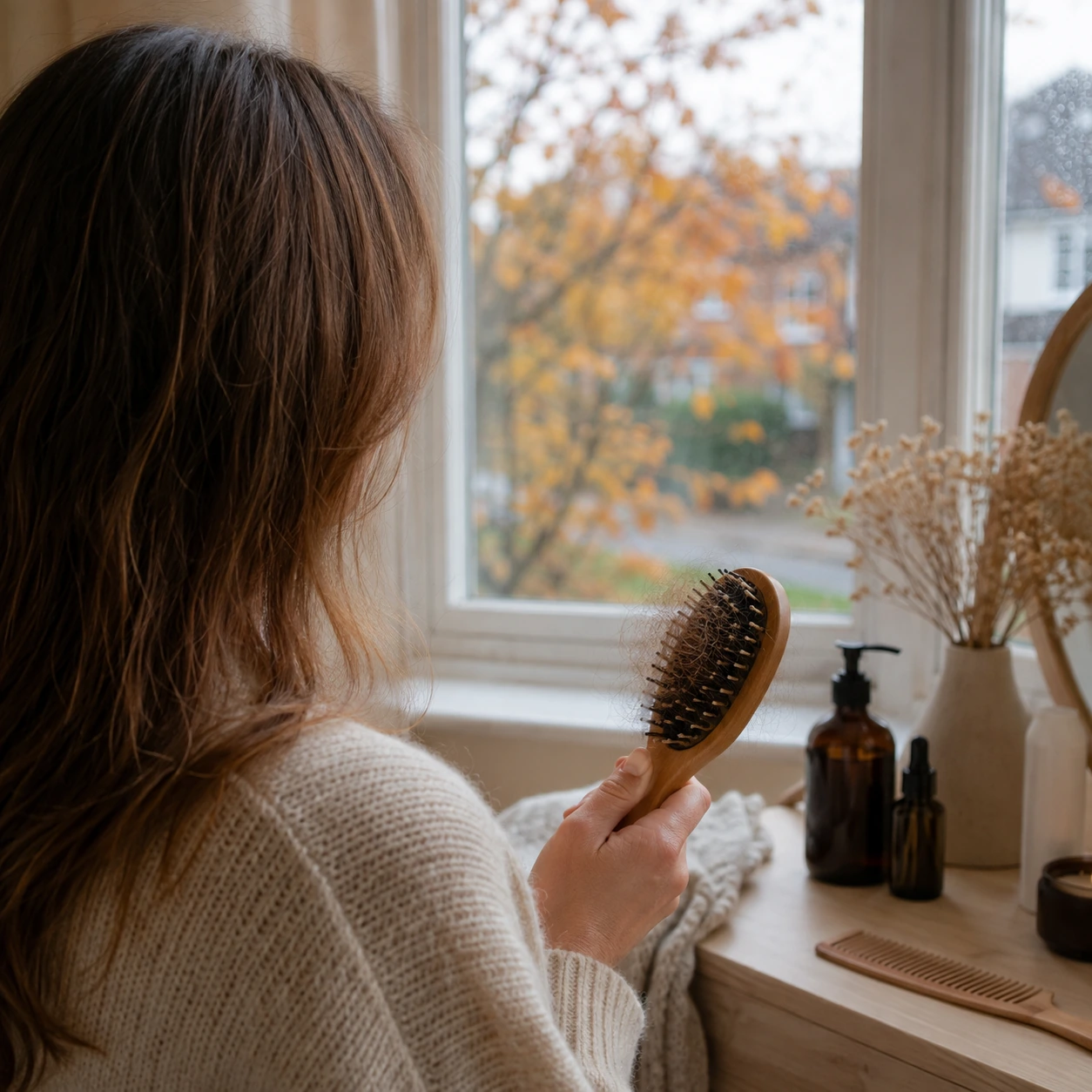
If your hair seems to be shedding more than usual as the weather turns, you are not imagining it. Seasonal hair shedding is a well-recognised pattern, and for most people it is temporary and self-resolving.
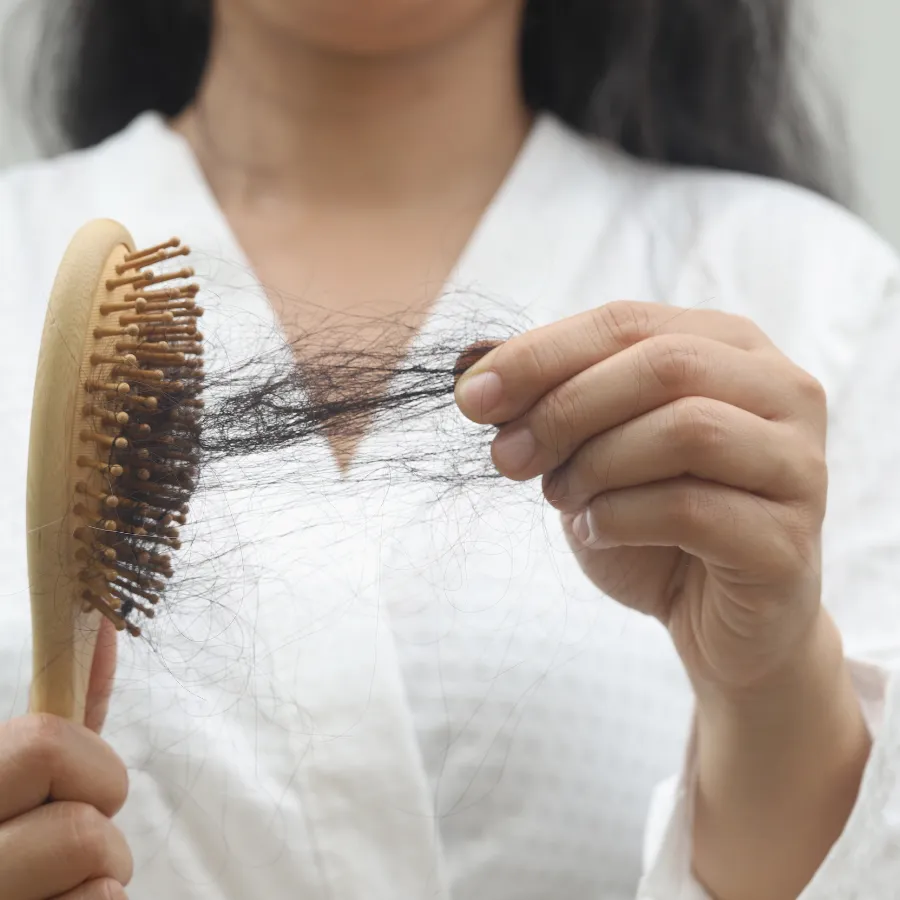
Many women notice a change in their hair around September and October each year. More strands on the brush, in the shower, or on the pillow. It can feel alarming, particularly if it seems to arrive with no obvious trigger. Understanding why it happens tends to make it considerably less worrying.
Is Seasonal Hair Shedding a Real Thing?
Yes. Research into seasonal variation in the hair growth cycle has found that hair density and shedding rates fluctuate across the year, with a noticeable increase in shedding commonly reported in late summer through early autumn. This pattern has been observed in several studies looking at hair density across different seasons.
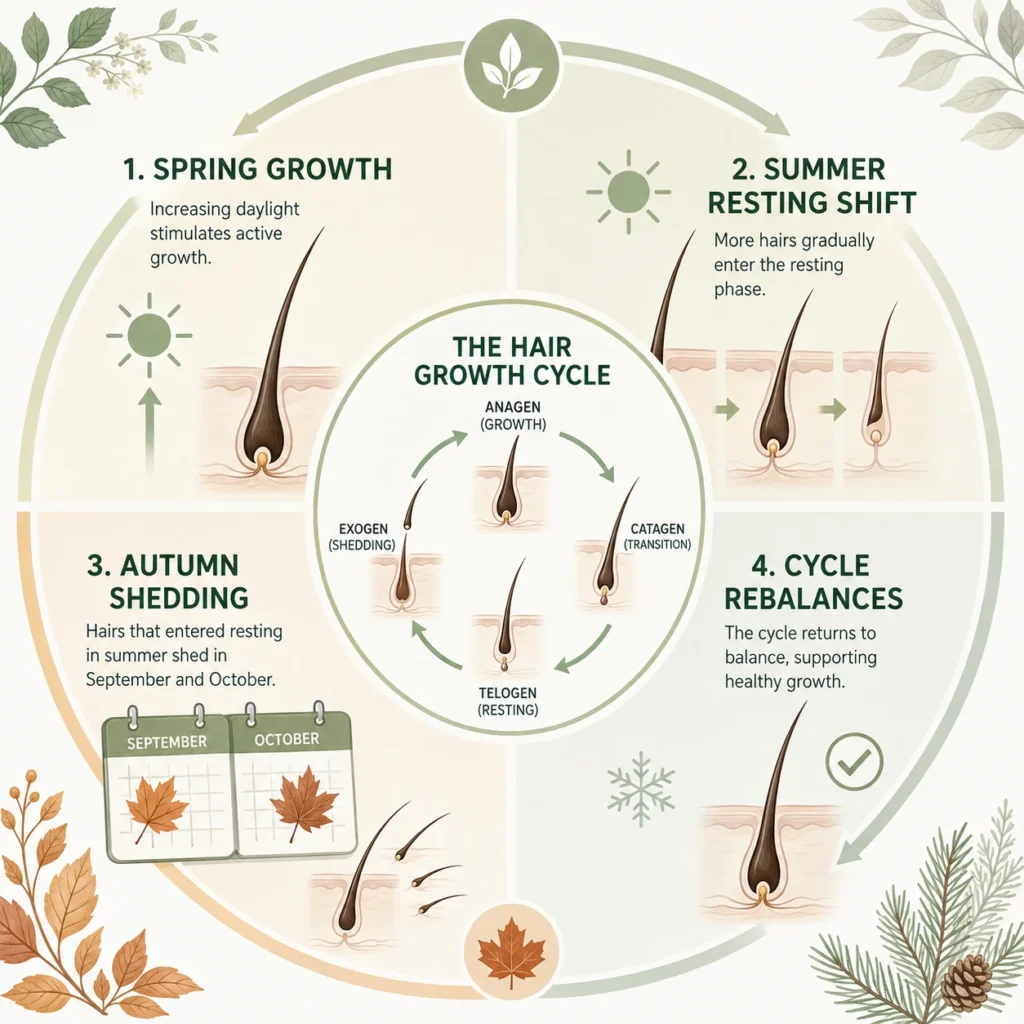
The proposed explanation relates to the proportion of hair follicles in the resting phase of the cycle. Some researchers suggest that longer daylight hours in spring and summer may support a higher proportion of hairs remaining in active growth, with more hairs shifting into the resting phase as daylight reduces. Those resting hairs then shed some weeks later, producing the noticeable autumn increase.
Why Does the Shedding Feel So Sudden?
As with most causes of increased shedding, there is a delay between the trigger and the visible result. The resting phase of the hair cycle typically lasts around two to three months, so hairs that shifted into resting mode during the height of summer are likely to shed in September and October.
This is the same underlying mechanism as telogen effluvium, reactive shedding triggered by a physiological change some weeks earlier. Seasonal shedding is essentially a milder, cyclical version of the same process, rather than a distinct condition in its own right.
How Much Extra Shedding Is Typical?
Most people lose somewhere between 50 and 100 hairs a day as part of ordinary cycling. During the autumn peak, this can increase noticeably, though the degree varies considerably between individuals. For most women, the increase is modest and settles within a few weeks without any intervention.
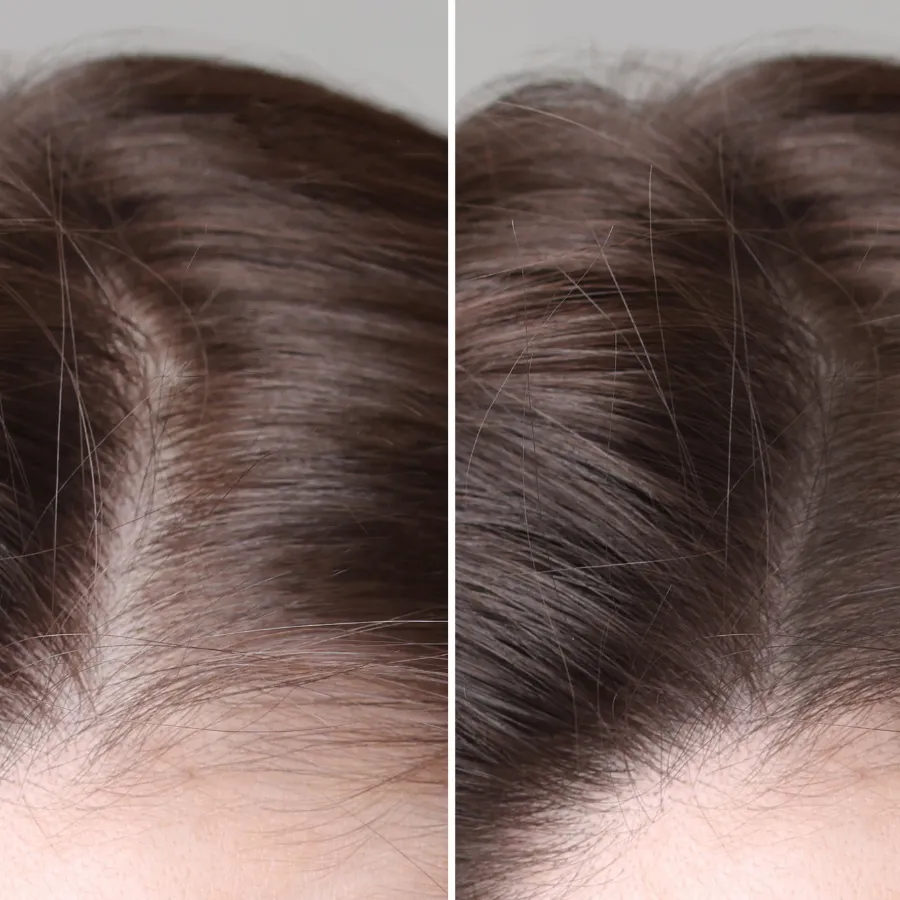
Seasonal shedding is not the same as ongoing hair loss. It is a temporary increase in the normal shedding rate, and the follicles themselves are not affected. Density typically returns to its usual baseline once the seasonal peak has passed.
What Can Make Autumn Shedding Feel Worse Than It Should?
A few factors can compound seasonal shedding and make it feel more significant than a typical year:
- Low ferritin: iron stores that are already borderline can make any shedding phase, including a seasonal one, feel heavier and last longer
- Summer stress or illness: a demanding summer, travel, or an illness picked up on holiday can independently trigger telogen effluvium that overlaps with the seasonal pattern
- Sun exposure and heat styling: increased UV exposure and heat styling over summer can leave hair more fragile going into autumn, making shedding more visible even if the underlying rate has not changed dramatically
- Vitamin D changes: levels typically peak at the end of summer and begin to decline through autumn; vitamin D is relevant to hair cycling and its decline may coincide with, though not necessarily cause, seasonal shedding
Our guide to nutrition and blood tests in hair loss explains which markers are worth checking if shedding feels heavier than a typical seasonal pattern.
How Long Does It Last?
For most people, seasonal shedding peaks in September and October and gradually settles over the following four to six weeks. By late November or December, hair density is generally back to its usual baseline for that individual.
If shedding continues well beyond this window, or if it is accompanied by visible thinning rather than simply more hair on the brush, it is worth getting an assessment rather than assuming it will resolve on its own.
When Should You Get It Checked?
A trichological assessment is worth considering if:
- Shedding continues for more than eight to ten weeks without any sign of settling
- You notice thinning at the crown or a widening parting, rather than all-over shedding
- The shedding coincides with other symptoms such as fatigue, changes in periods, or noticeable weight change
- You have a family history of female pattern hair loss and are unsure whether this autumn’s shedding is seasonal or something more persistent
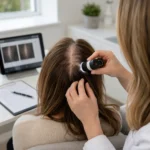
A scalp examination can distinguish a normal seasonal pattern from a shedding episode that needs further investigation, and can rule out anything that would benefit from earlier attention.
The Hair & Scalp Clinic is based in Huntingdon, Cambridgeshire. Patients attend from Cambridge, Peterborough, and across the UK. Telehealth consultations are available.
Book a Consultation — hairscalpclinic.co.uk/consultation