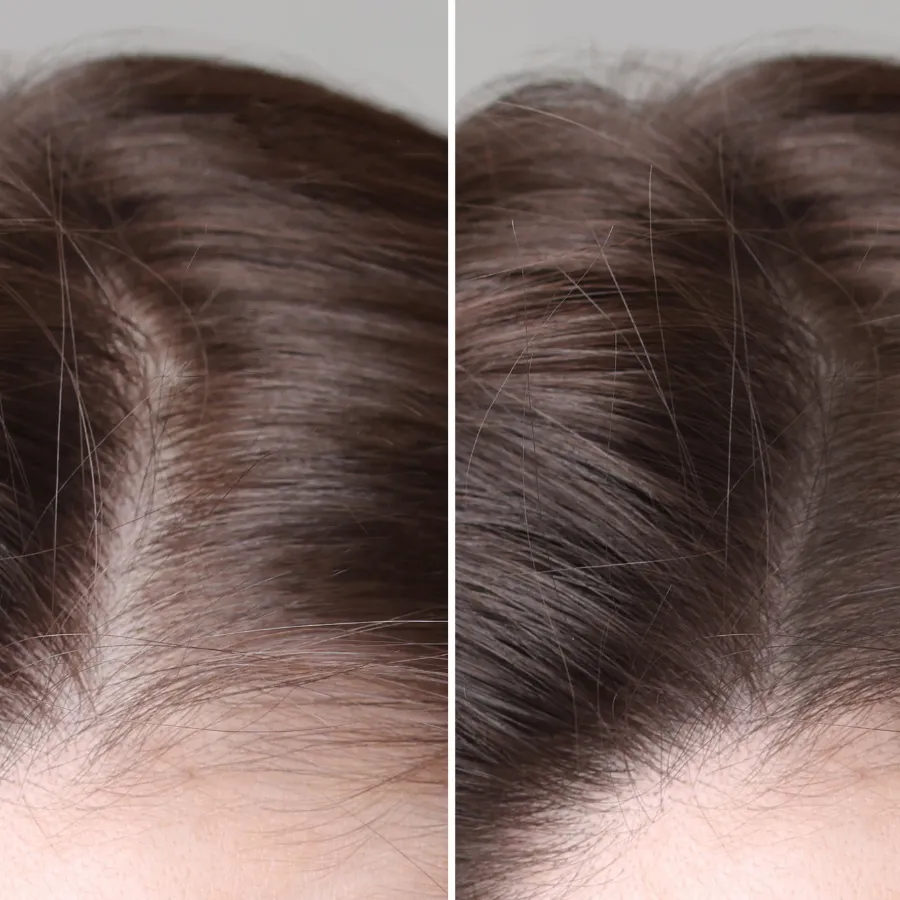
Stress hair loss is real — but it doesn't work the way most people imagine. You don't shed hair while you're stressed. The hair you're losing now is most likely a response to something that happened two to three months ago. Here's the science behind it, and what it means for your hair. If you've …


Stress hair loss is real — but it doesn’t work the way most people imagine. You don’t shed hair while you’re stressed. The hair you’re losing now is most likely a response to something that happened two to three months ago. Here’s the science behind it, and what it means for your hair.
If you’ve noticed a lot more hair in the shower, on your brush, or on your pillow, and you’ve had a stressful few months behind you — the connection is very likely real. Understanding exactly what’s happening tends to make it feel considerably less alarming.
The Hair Cycle Is Behind the Delay
Hair doesn’t grow continuously. Each strand goes through a cycle: a growth phase (anagen), a transitional phase (catagen), and then a resting phase (telogen), after which the hair sheds naturally. At any given time, most of your hairs are in the growth phase — only a small proportion are resting and shedding. This is why you don’t notice much loss day to day.
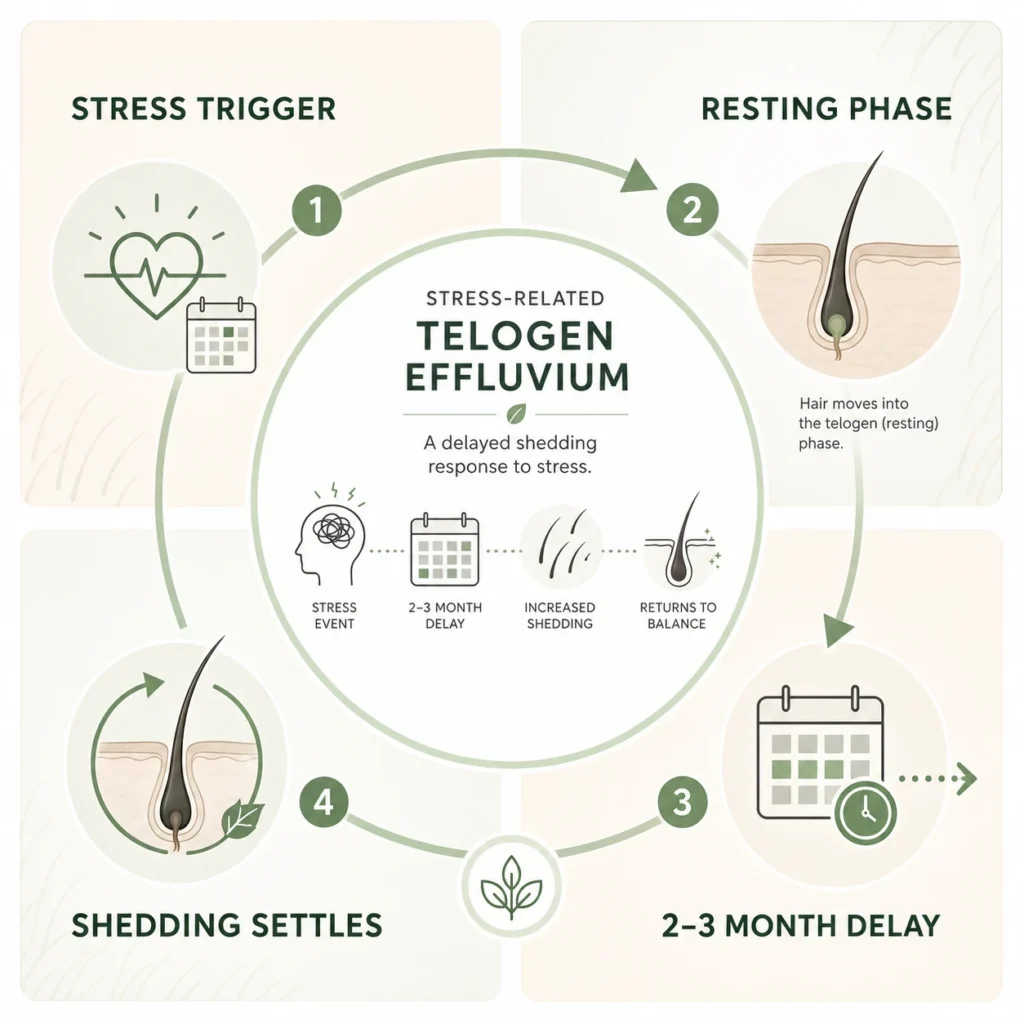
Under normal circumstances, around 5–15% of your hair is in the resting phase at once. Stress disrupts this balance. When the body experiences significant stress — physical or emotional — it can push a much larger proportion of hairs into the resting phase at the same time. Those hairs then shed together, two to three months later, when the resting phase ends.
This is telogen effluvium — the most common form of stress-related hair loss, and the reason people often can’t connect the shedding to its cause. The stressful event is already in the past by the time the hair starts falling out.
What Counts as ‘Stress’ for the Hair?
The triggers for telogen effluvium are broader than most people realise. It’s not just emotional stress — the body responds to a wide range of physical demands in the same way:
- Emotional stress — bereavement, relationship breakdown, job loss, caring responsibilities, prolonged anxiety
- Illness — particularly fever, infection, or anything requiring significant immune response
- Surgery or hospitalisation
- Rapid or significant weight loss
- Nutritional deficiency — particularly low ferritin, which the body treats as a physiological stressor
- Pregnancy and postpartum recovery — hormonal shifts after delivery are one of the most common triggers; see our page on post-pregnancy hair loss for more
- Crash dieting or very restrictive eating
- Prolonged poor sleep
This is also why identifying the trigger matters. The body doesn’t distinguish between a difficult divorce and a major illness — both are significant demands, and both can produce the same hair response.
Why the Delay Can Be Misleading
The two to three month lag between the trigger and the shedding is the source of most confusion around stress hair loss. People often can’t identify what caused it because by the time the hair falls out, life may feel relatively normal again.
It also means that trying to stop the shedding once it starts is largely futile — those hairs were already in their resting phase before the shedding began. What you can do is address any ongoing nutritional or physiological factors that might be sustaining it, and understand whether the follicles are still healthy.
The follicles are almost always intact in telogen effluvium. The hairs fall out, but the follicles remain — and new hair growth begins in their place. This is why stress hair loss is almost always temporary when the underlying trigger has resolved.
How Long Does It Last?
For most people, stress-related shedding peaks around three to four months after the triggering event and then gradually settles as the hair cycle restores its normal balance. By six months, many people notice a significant improvement. By twelve months, most have returned to their previous density.
However, shedding that continues beyond six months, or that doesn’t seem to have a clear trigger, warrants assessment. In some cases, what presents as stress shedding is actually the unmasking of an underlying pattern — female pattern hair loss, for example, can be accelerated by a period of heavy shedding and may not fully resolve without its own management.
What Actually Helps
There’s no shortcut to stopping a telogen effluvium episode that’s already under way. But there are things worth doing:
- Address nutritional foundations — ferritin, vitamin D, and zinc are among the most common factors that sustain shedding beyond the initial episode. Our guide to nutrition and blood tests in hair loss explains what to look for
- Reduce ongoing stressors where possible — sustained cortisol elevation can keep more hairs in the resting phase for longer
- Be gentle with your hair — heat styling and tight hairstyles add physical stress on top of systemic stress
- Get checked if shedding is prolonged, heavy, or if you’re unsure what’s driving it
When to Get Your Scalp Assessed
A trichological assessment is worth booking if:
- Shedding has been significant for more than three to four months
- You can’t identify a clear trigger, or the shedding started without an obvious cause
- The shedding is accompanied by thinning at the crown or parting — rather than all-over loss
- You’ve had blood tests that came back normal but the shedding continues
- You want to understand whether your follicles are healthy and what regrowth to expect
A scalp examination can distinguish stress shedding from other causes, assess the health of the follicles, and identify any nutritional or hormonal factors worth addressing. You can read more about the science on our dedicated stress and hair loss page.
The Hair & Scalp Clinic is based in Huntingdon, Cambridgeshire. Patients attend from Cambridge, Peterborough, and across the UK. Telehealth consultations are available.
Book a Consultation — hairscalpclinic.co.uk/consultation