Finding flakes on your shoulders or noticing white specks in your hair can be frustrating. You might assume you have dandruff, but not every flaky scalp is caused by dandruff. Dry skin, product build-up, irritation, and certain skin conditions can also cause visible scaling. Because these concerns can look similar, understanding the differences can help …

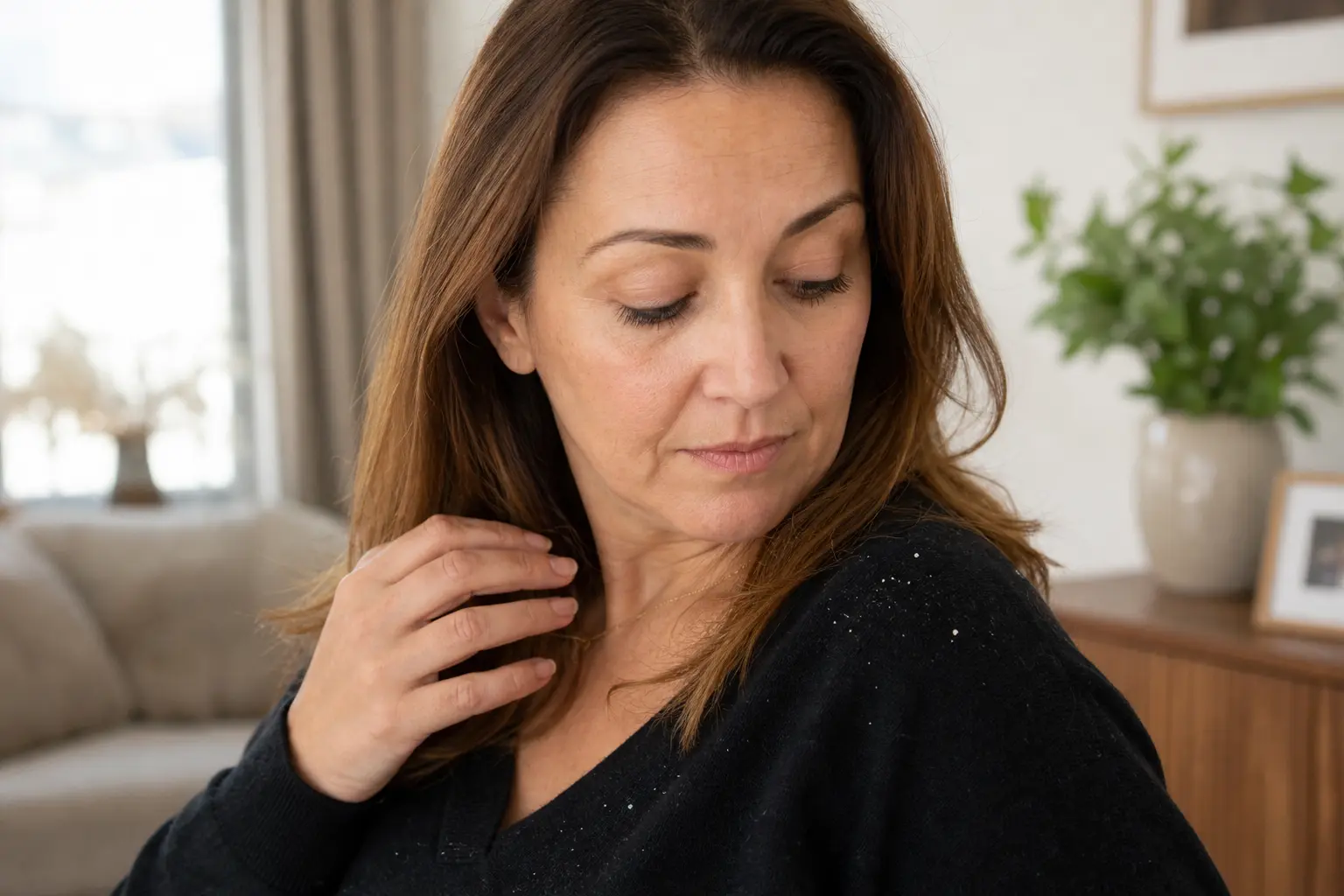
Finding flakes on your shoulders or noticing white specks in your hair can be frustrating. You might assume you have dandruff, but not every flaky scalp is caused by dandruff.
Dry skin, product build-up, irritation, and certain skin conditions can also cause visible scaling. Because these concerns can look similar, understanding the differences can help you decide what to do next.
In this guide, we explain how a flaky scalp differs from dandruff, what may cause each problem, and when it is worth seeking further advice.
What Is a Flaky Scalp?
A flaky scalp describes a symptom rather than a specific diagnosis. It means small or large pieces of skin shed from the scalp and become visible in your hair or on your clothing.
Flakes may be:
- Fine, white and powdery
- Larger and more noticeable
- Dry or slightly greasy
- Accompanied by itching, redness, or tightness
The appearance of flakes can offer clues, but it cannot always reveal the cause. A flaky scalp may result from simple dryness, dandruff, product irritation,n or another skin condition.
What Is Dandruff?
Dandruff is a common scalp concern associated with recurring flaking. It is a non-inflammatory scalp condition. It is often linked to the scalp’s natural oils and a yeast that normally lives on the skin.
If dandruff becomes more persistent or inflamed, it is termed seborrhoeic dermatitis, which can affect areas such as the scalp, eyebrows, and sides of the nose.
Read more about dandruff and seborrhoeic dermatitis.
Flaky Scalp vs Dandruff: The Main Differences
Although the two can overlap, these features may help you understand the difference.
| Feature | Flaky scalp caused by dryness | Dandruff |
| Flake appearance | Often small, fine, and dry | Can be larger, more noticeable,e or slightly greasy |
| Scalp sensation | May feel tight or dry | May feel itchy or irritated |
| Skin appearance | May look rough or dry | Can appear oily or mildly inflamed |
| Possible triggers | Dry weather, frequent washing, irritating products | Often associated with scalp oil and seborrhoeic dermatitis |
| What may help | Gentle care and avoiding triggers | Care appropriate to the cause of recurring flaking |
These are general patterns, not a reliable way to diagnose a scalp condition. Dandruff can produce fine flakes, and dryness can occur alongside other scalp concerns.
Please can we take out the above comparison? By its nature, dandruff is a non-inflammatory, non-itchy flaking of the scalp. The flakes are very small, almost ‘brandy’ rather than flaky
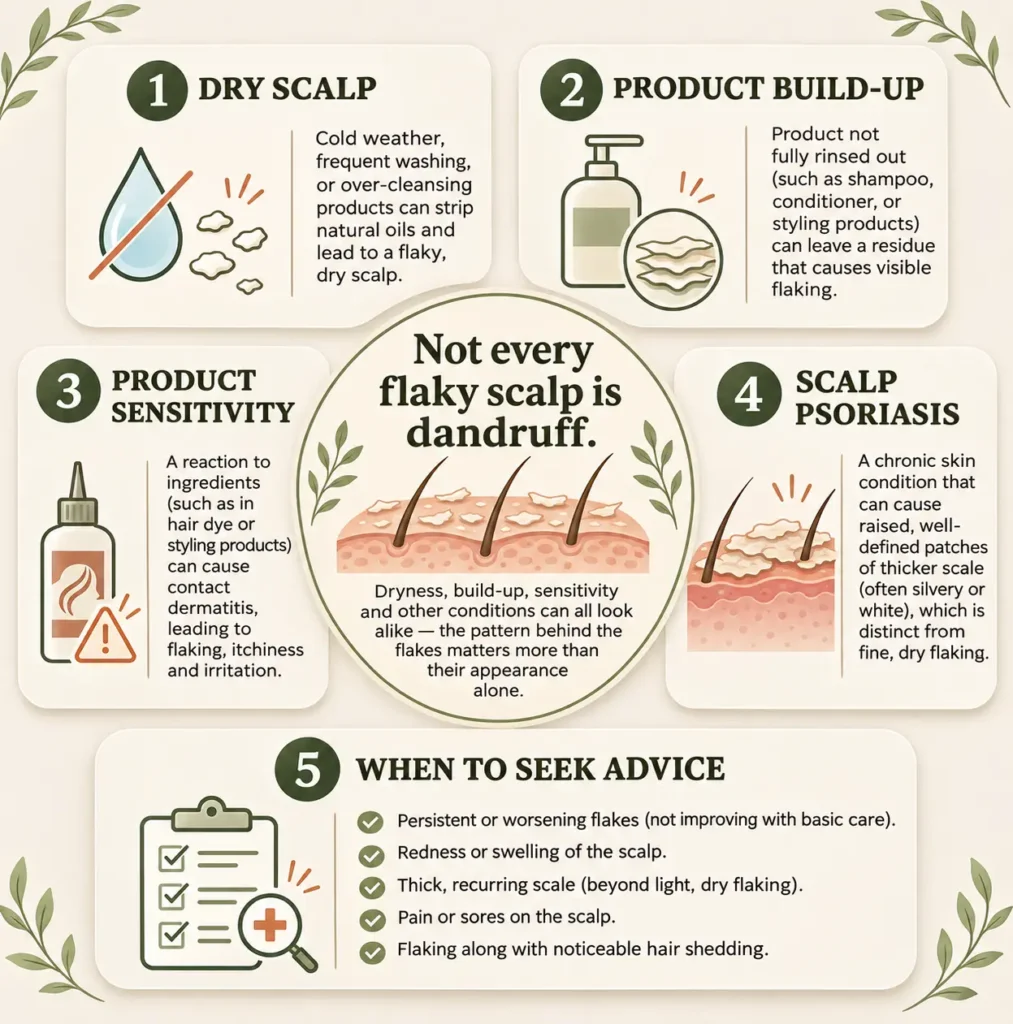
Why Is My Scalp Flaky (but Not) As Opposed to Having Dandruff?
If you have a flaky scalp but do not think you have dandruff, several other explanations are possible.
1. Dry Scalp
Dryness may cause fine, white flakes alongside a tight or uncomfortable feeling. It can be associated with cold weather, low humidity, frequent washing, or products that remove too much of the scalp’s natural oil.
If your scalp feels especially dry after washing, reviewing your shampoo and washing routine may be a useful starting point.
2. Product Build-Up
Haircare products can accumulate on the scalp, particularly when they are not removed effectively. This may leave visible residue or contribute to discomfort.
Build-up and irritation are not the same thing, although they can occur together. Learn more about scalp build-up and product sensitivity.
3. Product Sensitivity or Contact Dermatitis
Some people develop irritation after exposure to particular ingredients in shampoos, conditioners, hair dyes, or styling products.
Possible symptoms include itching, redness, dryness, and flaking. If symptoms began after introducing a new product, consider whether it may be contributing.
4. Scalp Psoriasis
Scalp psoriasis can cause raised, well-defined patches covered with thicker scales. The affected areas may be itchy or uncomfortable and can extend beyond the hairline.
Its appearance can overlap with other scalp conditions, so persistent or thick scaling should not automatically be treated as ordinary dandruff.
See our page on scalp psoriasis.
5. Other Skin Conditions
Several skin conditions can cause flaking or irritation. The location, appearance, and duration of symptoms may provide useful clues, but an assessment may be needed to establish the cause.
For more information, visit our guide to itchy and flaky scalp.
Flaky Scalp Treatment: What Can You Do?
The right approach depends on why your scalp is flaking. If symptoms are mild, a few careful adjustments may help.
Review Your Shampoo
Consider whether your shampoo leaves your scalp feeling tight, dry, or irritated. A gentler formula may be more suitable if your current product appears to cause discomfort.
Avoid Scratching
Scratching or picking at flakes can irritate the skin and may cause small breaks in the skin’s surface. Try to avoid forcefully removing scales.
Review Recently Introduced Products
Think about any new shampoos, conditioners, hair dyes, or styling products you have started using. If a product appears to trigger a reaction, stop using it and seek advice if the symptoms persist or are significant.
Avoid Applying Too Many Remedies
Using several oils, scrubs, masks, and shampoos at the same time can make it harder to identify the cause of irritation. Some ingredients may worsen symptoms, particularly on sensitive skin.
A simple routine can make it easier to notice whether a particular product or habit is contributing.
Choose Care Based on the Likely Cause
A dry scalp and dandruff may need different approaches. If you are unsure which applies to you, repeatedly switching products may not solve the problem.
Explore our scalp care information for further guidance on common scalp concerns.
When Should You Seek Advice About a Flaky Scalp?
Consider seeking professional advice if you notice:
- Persistent or worsening flakes
- Significant itching, redness, or swelling
- Thick or recurring patches of scale
- Pain, sores, bleeding, or signs of infection
- Symptoms that continue despite gentle haircare
- Flaking accompanied by noticeable hair shedding or thinning
These symptoms may have causes other than simple dryness or dandruff. A qualified healthcare professional can help assess what may be happening and whether further care is needed.
Frequently Asked Questions
Is every flaky scalp dandruff?
No. Flaking is a symptom that can have several causes, including dryness, product build-up, irritation, and skin conditions such as psoriasis.
How can I tell whether my scalp is dry or I have dandruff?
Dryness may be associated with fine flakes and a tight feeling, while dandruff can cause recurring flakes and itching. However, the symptoms overlap, so appearance alone cannot always distinguish them.
Why do I have white flakes in my hair but no itching?
Flakes can occur without itching. Possible explanations include dryness or product residue, but the cause depends on other symptoms and your haircare routine.
Can product build-up look like dandruff?
Yes. Residue from haircare products can sometimes resemble flakes. Reviewing your product use and how thoroughly you rinse your hair may help, but persistent scaling may have another cause.
Should I use oil for a flaky scalp?
Oil is not a universal solution. Depending on the cause, a product may be unsuitable or contribute to build-up or irritation. It is better to understand what is causing the flakes before trying multiple remedies.
When should I be concerned about scalp flakes?
Seek advice if the flaking persists, worsens, becomes painful, or occurs with marked redness, swelling, sores, es or noticeable hair loss.
Final Thoughts
A flaky scalp does not automatically mean you have dandruff. Dryness, product build-up, sensitivity, and other skin conditions can all cause visible flakes, and their symptoms sometimes overlap.
Pay attention to how your scalp feels, whether symptoms began after a change in your routine, and whether the problem keeps returning. Gentle care may help with mild irritation, but persistent or severe symptoms deserve further assessment.
For more information about scalp concerns and available care options, explore our scalp care page or contact the clinic.