If you've recently come off hormonal contraception and noticed a sudden increase in hair shedding, you're not imagining it — and you're far from alone. Post-pill hair loss is real, it's common, and it's almost always temporary. Here's what's happening and what you can do about it. For many women, the connection between stopping the …

If you’ve recently come off hormonal contraception and noticed a sudden increase in hair shedding, you’re not imagining it — and you’re far from alone. Post-pill hair loss is real, it’s common, and it’s almost always temporary. Here’s what’s happening and what you can do about it.
For many women, the connection between stopping the pill and hair loss takes a while to click. The shedding doesn’t start straight away — it often begins six to twelve weeks after you’ve stopped, sometimes longer. By that point, most people have forgotten they made any change at all, which makes the whole thing feel sudden and unexplained.
But there’s a clear reason why it happens, and understanding it tends to make it feel considerably less frightening.
What’s Going On with Your Hair?
Hair grows in cycles. Each strand spends a period in active growth, then transitions into a resting phase before eventually shedding to make way for a new hair. Under normal circumstances, only a small proportion of your hairs are in the resting and shedding phase at any one time, so you don’t notice much loss day to day.
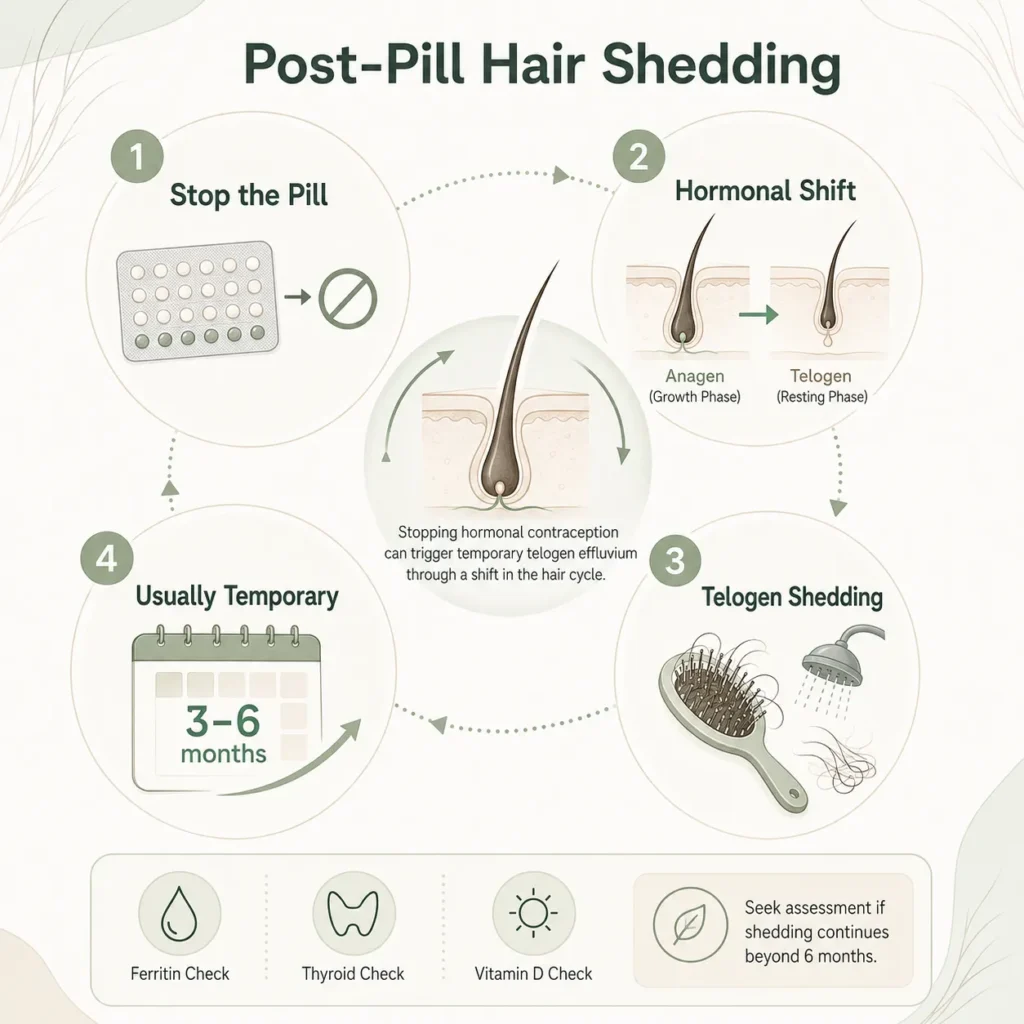
Hormonal contraceptives — the combined pill in particular — contain synthetic oestrogen, which can extend the active growth phase and keep more hairs in that phase for longer. When you stop taking the pill, your hormone levels shift. The hairs that were being held in the growth phase may now move into the resting phase together, and then shed together.
This wave of shedding is called telogen effluvium. It’s a delayed reaction to a hormonal change, not a sign that something has gone permanently wrong with your hair.
Why Is There a Delay?
The resting phase of the hair cycle typically lasts around two to three months. So the hairs that moved into their resting phase when your hormones shifted won’t actually shed until that phase is complete — hence the lag between stopping the pill and noticing the loss.
This is also why many women are confused when their hair seems fine for weeks after stopping, and then suddenly appears to be falling out all at once.
How Much Shedding Is Normal?
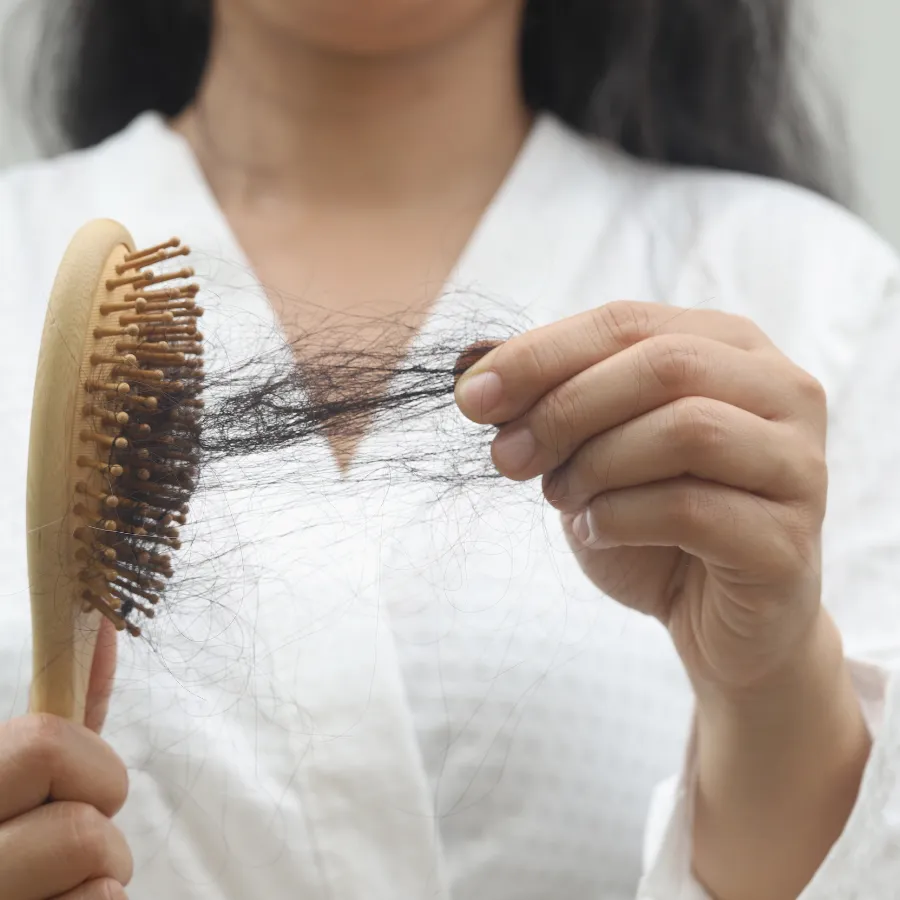
Most people lose between 50 and 100 hairs a day as part of normal cycling. During a telogen effluvium episode, that number can increase noticeably — you might find more in the shower drain, on your pillow, or when you run your hands through your hair.
For most women, post-pill shedding peaks around three to four months after stopping, then gradually settles as the hair cycle normalises. By six months, things are often much improved. By twelve months, the majority of women have returned to their previous hair density.
Post-pill shedding is temporary for most women. But ‘temporary’ can still mean several months of noticeable loss — and that’s distressing. You don’t have to just wait it out; there are things you can do to support your hair through the process.
What If Something Else Is Going On?
While post-pill shedding is common, stopping the pill can also unmask an underlying hormonal condition that the pill was previously keeping in check — most notably female pattern hair loss (androgenetic alopecia) or a condition like PCOS.
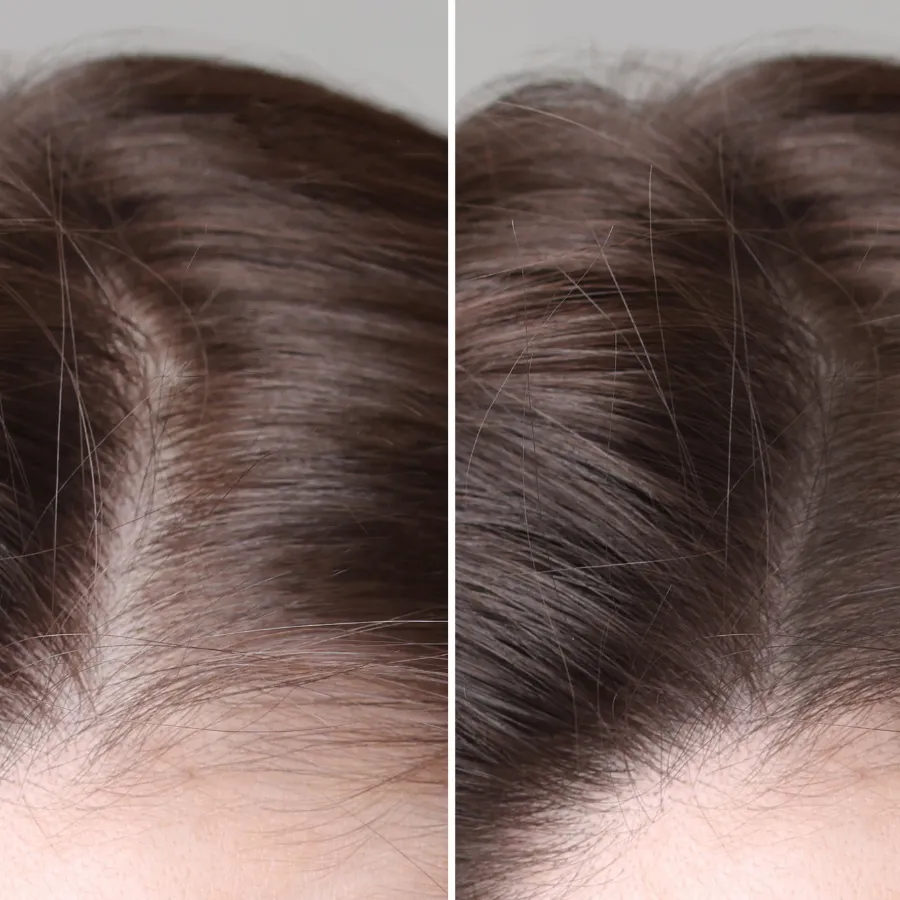
If your hair loss feels like it’s coming from all over the scalp but is particularly noticeable at the crown and parting, if there’s a family history of thinning, or if the shedding is still significant after six months, it’s worth getting a proper assessment. These patterns can indicate something beyond a straightforward post-pill reaction.
Other things worth checking: iron levels, thyroid function, and vitamin D. All are common contributors to hair shedding, and all can be knocked about by hormonal changes. A trichologist will assess your scalp directly and can advise on whether blood tests are warranted.
What Can You Actually Do?
First — try not to panic. A sudden increase in shedding feels alarming, but the follicles themselves are almost certainly intact. The hairs will come back.
That said, supporting your hair through a shedding phase is sensible:
- Keep on top of your nutrition — iron (ferritin in particular), vitamin D, zinc, and protein are all foundational for hair growth. If your diet has been inconsistent, this is worth addressing.
- Be gentle with your hair — avoid heat styling and tight hairstyles while shedding is at its peak.
- If shedding is heavy or prolonged, get your ferritin and thyroid levels checked — these are among the most common causes of hair loss in women and are frequently below optimal even when a GP says they’re ‘normal’.
- See a trichologist if things haven’t improved by the six-month mark, or sooner if the pattern doesn’t feel like typical all-over shedding.
When Should You Come In?
A trichological assessment is worth booking if:
- Your shedding is still heavy after five or six months
- You’re noticing thinning at the crown or parting specifically, rather than all-over shedding
- You have other symptoms alongside the hair loss — irregular periods, skin changes, fatigue — that suggest a hormonal picture worth investigating
- You want an accurate picture of what’s happening to your scalp, rather than a ‘wait and see’ approach
At the Hair & Scalp Clinic, Tracey Walker will examine your scalp directly, review your history, and give you an honest assessment of what’s driving the shedding — and what’s likely to happen next.
The Hair & Scalp Clinic is based in Huntingdon, Cambridgeshire. Patients attend from Cambridge, Peterborough, and across the UK. Telehealth appointments are available.
Book a Consultation — hairscalpclinic.co.uk/consultation