You've had your bloods done. Your GP told you everything is 'normal'. But your hair is still falling out. If this sounds familiar, your ferritin level might be the missing piece — and the threshold that matters for hair is very different from the one on your blood test result. Low iron is one of …


You’ve had your bloods done. Your GP told you everything is ‘normal’. But your hair is still falling out. If this sounds familiar, your ferritin level might be the missing piece — and the threshold that matters for hair is very different from the one on your blood test result.
Low iron is one of the most common and most overlooked contributors to hair loss in women. But the confusion usually isn’t about whether iron is being tested — it’s about what the results actually mean for your hair specifically.
What Is Ferritin and Why Does It Matter?
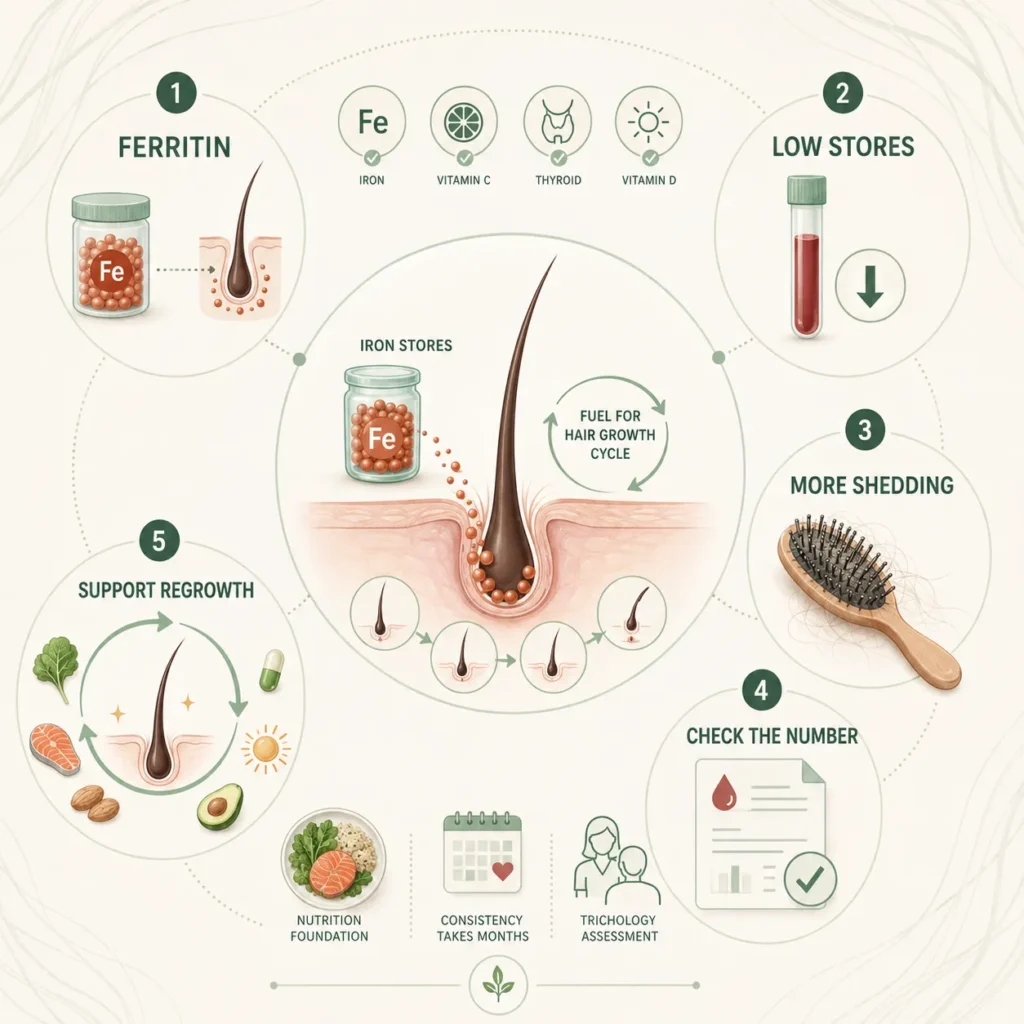
Ferritin is a protein that stores iron in your body. It’s the most reliable marker of your overall iron reserves — more so than serum iron alone, which can fluctuate day to day. When ferritin is low, it means your body’s iron stores are depleted, even if you’re not technically anaemic.
Hair follicles are some of the most metabolically active cells in the body. They need a steady supply of iron to sustain the hair growth cycle. When iron stores run low, the body prioritises its most essential functions — and hair growth, while important to us, is not the body’s top priority. The hair cycle slows, more hairs move into the resting phase, and shedding increases.
This is telogen effluvium triggered by nutritional deficiency — and it’s remarkably common in women, particularly those with heavy periods, restricted diets, or high physical demands.
‘Normal’ and ‘Optimal’ Are Not the Same Thing
Here is where things get important. The standard laboratory reference range for ferritin in women is typically somewhere between 12 and 150 micrograms per litre (µg/L), with the lower end varying slightly between labs. A result of, say, 14 or 18 µg/L will come back flagged as ‘normal’ — and a GP reviewing a long list of results will often move on without comment.
But for active hair growth, ‘normal’ and ‘optimal’ are not the same number.
A ferritin level that supports healthy hair growth is generally considered to be above 70 µg/L. Some trichologists and hair specialists work to a threshold of 80 to 100 µg/L for women experiencing hair loss. A result of 14 µg/L is technically ‘in range’ — but it is a long way from where your hair needs it to be.
This gap between the population reference range and the level needed for hair growth is the source of enormous confusion and frustration for women who’ve been told their bloods are fine. For a fuller explanation of why blood results need to be read in context of hair health, see our guide to nutrition and blood tests in hair loss.
What Does Low-Ferritin Hair Loss Look Like?
Iron-deficiency hair loss typically presents as:
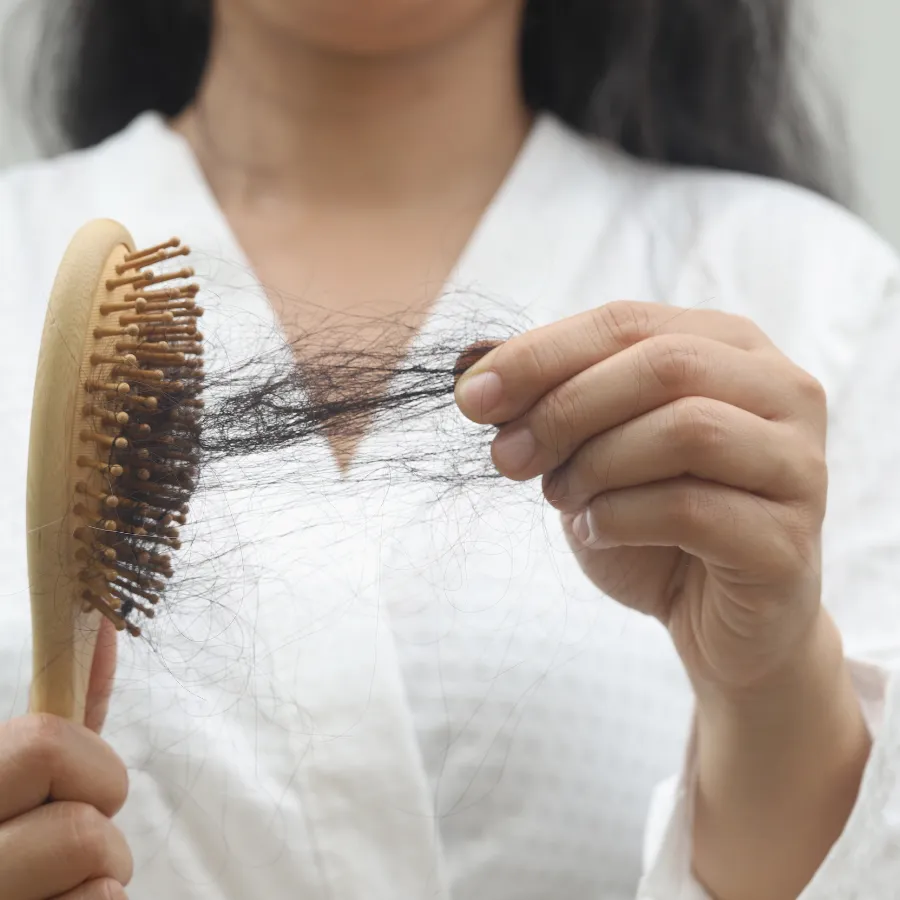
- Diffuse shedding — increased hair on your brush, pillow, or in the shower
- All-over thinning rather than a specific bald patch
- Hair that feels finer or more fragile than before
- Slow regrowth after a shedding phase
- Persistent shedding that doesn’t seem to resolve on its own
It’s worth noting that low ferritin rarely acts in isolation. Vitamin D deficiency, thyroid dysfunction, and hormonal hair loss are all common companions — which is why a single result can’t always tell the full story.
Why Don’t GPs Flag It?
To be fair to GPs, they’re working with population-level reference ranges, and hair health is not what those ranges were designed to assess. A ferritin of 14 µg/L is not going to cause organ failure. It will, however, have a significant impact on your hair — and that connection is not always made in a standard appointment.
GP blood panels also don’t always include ferritin as standard — sometimes serum iron or a full blood count is checked instead, neither of which gives as clear a picture of iron stores. It’s worth asking specifically for ferritin to be tested, and worth asking for the actual number rather than just a ‘normal’ or ‘abnormal’ verdict.
How Do You Raise Ferritin?
If your ferritin is low, raising it takes time — typically several months of consistent supplementation before levels improve meaningfully. Some things that help:
- Iron supplementation — the form matters; ferrous bisglycinate tends to be better tolerated than ferrous sulphate and causes less digestive discomfort
- Eating iron-rich foods alongside vitamin C, which enhances absorption — red meat, lentils, dark leafy greens, pumpkin seeds
- Avoiding tea, coffee, and calcium-rich foods around iron-supplement times, as these can inhibit absorption
- Addressing any underlying cause of low iron — particularly heavy periods, which can deplete stores faster than they’re being replenished
Importantly, raising ferritin doesn’t produce instant hair results. Even after your levels improve, it takes time for the hair cycle to normalise and for new growth to become visible. Patience — combined with regular monitoring — is important.
Should You Self-Supplement Without Testing?
It’s always better to know your actual level before supplementing. Iron is one of those nutrients where both too little and too much can cause problems — and supplementing when levels are already adequate won’t improve your hair and may cause other issues.
Getting tested first, knowing your number, and then supplementing to a clear target is a much more effective approach than guessing.
Getting the Full Picture
Ferritin is one piece of the puzzle. If your hair is shedding or thinning, a trichological assessment will look at your scalp directly — examining the pattern and degree of loss — and can help you build a complete picture of what’s driving it, whether that’s iron, something hormonal, or a combination of factors.
You can arrive with blood test results already in hand, or the clinic can advise on exactly what testing would be most useful for your situation.
The Hair & Scalp Clinic is based in Huntingdon, Cambridgeshire. Telehealth consultations are available for patients who can’t attend in person.
Book a Consultation — hairscalpclinic.co.uk/consultation