Noticing your hair thinning in your thirties can feel alarming — it's not something you expected to be dealing with yet. But hair loss in your 30s is more common than most women realise, and in the majority of cases, there's a clear, identifiable reason for it. The good news is that your 30s are …

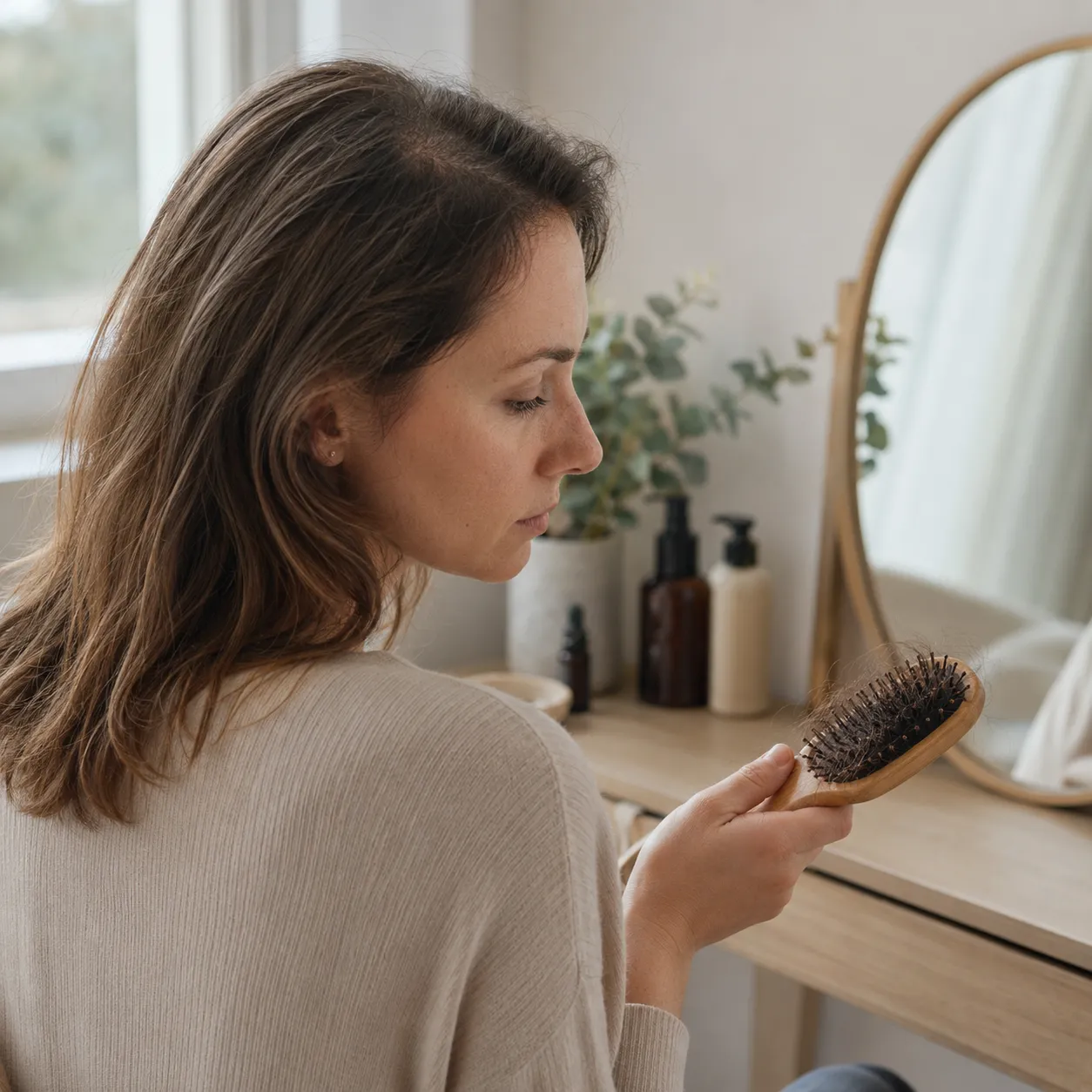
Noticing your hair thinning in your thirties can feel alarming — it’s not something you expected to be dealing with yet. But hair loss in your 30s is more common than most women realise, and in the majority of cases, there’s a clear, identifiable reason for it.
The good news is that your 30s are also an ideal time to address it. Most causes of hair loss in this age group respond well to early attention, and the earlier you understand what’s happening, the more options you have.
First — Is It Actually Hair Loss, or Just Shedding?
It’s worth starting here, because the two feel very similar but mean different things.
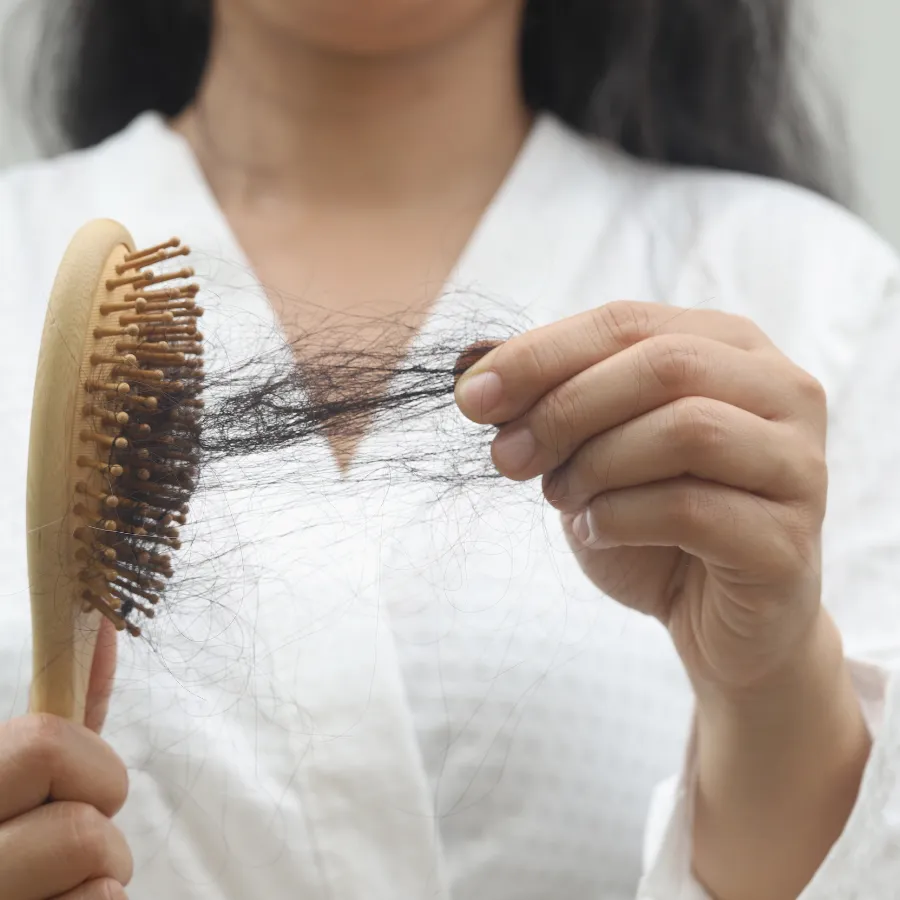
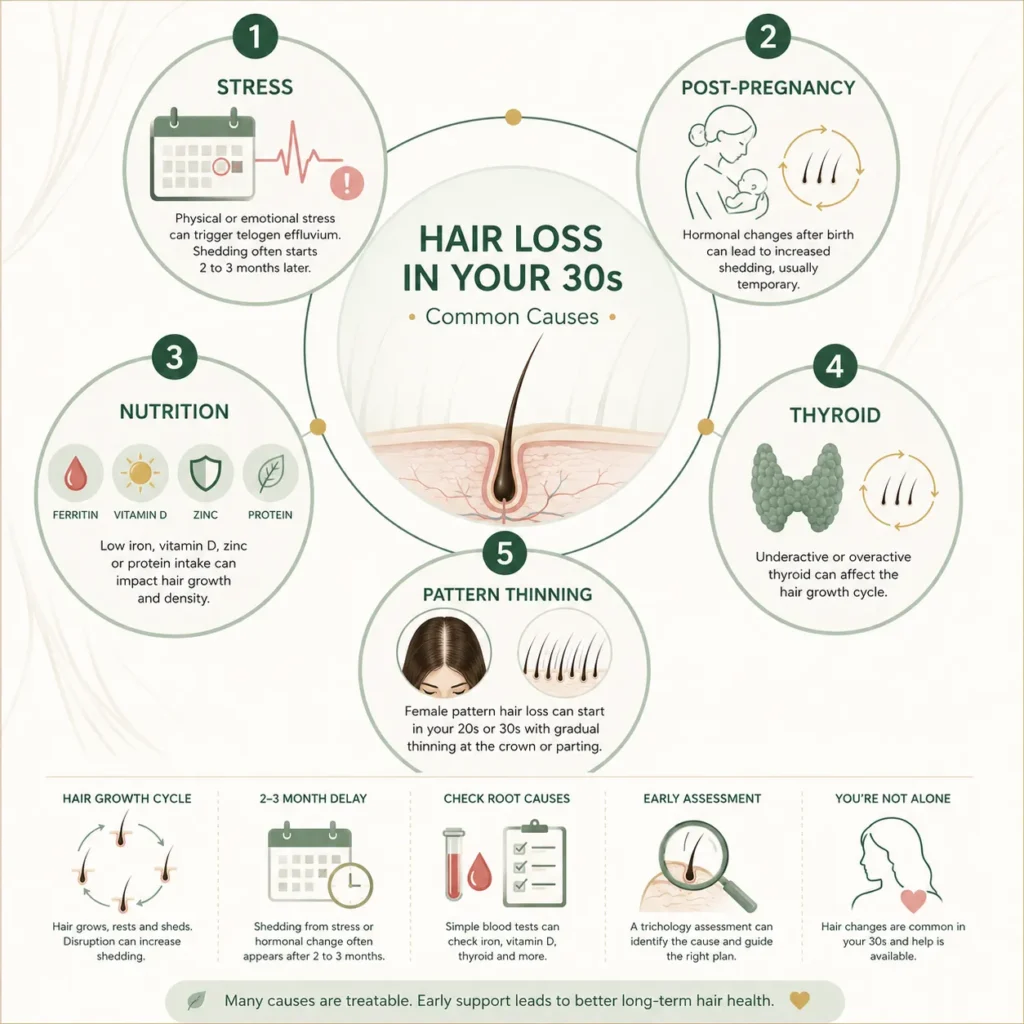
Everyone sheds hair continuously as part of the normal hair growth cycle. A noticeable increase in shedding — more on your brush, in the shower, on your pillow — is usually a reaction to something that happened two to three months earlier: stress, illness, a change in diet, a hormonal shift. This kind of shedding (called telogen effluvium) is almost always temporary.
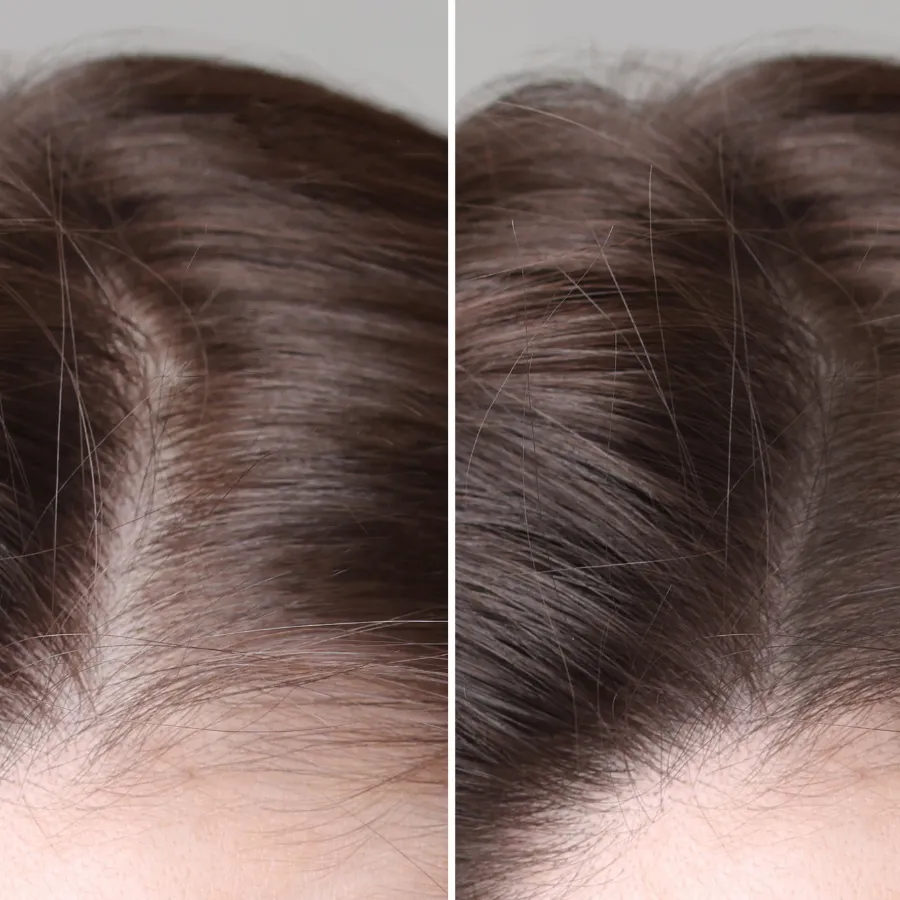
Actual hair loss — where the density at the crown or parting reduces over time, or where hair becomes progressively finer and shorter — is a different process, driven by the follicles themselves becoming smaller and less active. This can also be addressed, but the approach is different.
The distinction matters because it affects what you do next. A trichologist can tell you definitively which you’re dealing with.
Common Reasons Women Lose Hair in Their 30s
Stress — emotional or physical
Your 30s often bring a particular cluster of stressors: career pressure, relationship changes, pregnancy and postpartum recovery, moving house, caring for ageing parents. Any significant physical or emotional stress can trigger a shedding episode two to three months later. Our guide to stress and hair loss explains exactly how this happens.
This includes physical stressors like surgery, a serious illness, rapid weight loss, or even a prolonged period of poor sleep. The body responds to significant demand by diverting resources away from non-essential functions — hair growth being one of them.
Post-pregnancy hair loss
One of the most common reasons women notice significant shedding in their 30s. During pregnancy, elevated hormones keep hairs in the growth phase for longer than usual. After delivery — and particularly once breastfeeding reduces — those hairs move into the resting phase and shed, often in large quantities.
This is normal and expected, and it typically resolves within six to twelve months. But if shedding is very heavy, prolonged, or accompanied by thinning at the crown, it’s worth checking whether there’s an additional nutritional or hormonal factor at play. Our page on post-pregnancy hair loss covers what’s normal and when to seek further assessment.
Nutritional deficiencies
Low ferritin (iron stores), vitamin D deficiency, and low zinc are three of the most common contributors to hair loss in women in their 30s — and all three are frequently missed or dismissed because standard blood test reference ranges don’t account for what the hair specifically needs.
A ferritin level that a GP describes as ‘normal’ can still be well below the threshold needed to support active hair growth. If you’ve had bloods done and been told everything is fine but your hair is still shedding, our guide to nutrition and blood tests in hair loss explains what to look for and why the numbers matter.
Thyroid changes
Both an underactive and an overactive thyroid can cause diffuse hair shedding and thinning. Thyroid conditions can develop at any age, and they’re significantly more common in women — particularly in the 30s and 40s. Hair loss is often one of the first signs.
If you’re also experiencing fatigue, changes in weight, feeling unusually cold or unusually warm, or changes in your mood and energy, thyroid function is worth checking. This is covered as part of hormonal hair loss assessment at the clinic.
Female pattern hair loss
Female pattern hair loss can begin in the 30s — earlier than many women expect. It tends to run in families and presents as a gradual widening of the central parting and diffuse thinning across the top of the scalp, rather than a receding frontal hairline.
It’s driven by a sensitivity to androgens (male hormones, which women produce in smaller amounts) and is a progressive condition — meaning the earlier it’s identified and managed, the better the outcome. Waiting tends to make it harder to address. You can read more on our female pattern hair loss page.
Hormonal contraception changes
Starting, stopping, or switching hormonal contraception can all trigger a shedding episode. Stopping the combined pill in particular — which contains synthetic oestrogen that can artificially extend the growth phase — can lead to a wave of shedding two to three months later as the hair cycle adjusts.
This is almost always temporary. But if shedding persists beyond six months after stopping the pill, or if the pattern suggests thinning rather than all-over shedding, it’s worth investigating further.
What Should You Do?
The most useful first step is to get a proper assessment — not to guess at what’s causing it, and not to try a string of products before you know what you’re dealing with.
A trichological assessment will look at your scalp directly, identify the pattern of loss, and give you an honest picture of what’s driving it. From there, a targeted plan is far more effective than a scattergun approach.
In the meantime:
- Don’t panic about the shedding itself — the follicles are very likely still intact, even if the hair isn’t there
- Check whether you’ve had any significant stress, illness, or dietary change in the past three to four months that might have triggered shedding
- If you’ve had blood tests, ask for the actual ferritin number — not just ‘normal’
- Avoid tight hairstyles and excessive heat while you’re shedding heavily
When Should You Book an Appointment?
Any of the following are worth getting assessed:
- Shedding that’s been heavy for more than three months
- Visible thinning at the crown or along the parting
- Hair that seems finer or shorter than it used to be
- Hair loss accompanied by other symptoms — irregular periods, skin changes, fatigue, weight changes
- You’ve already had blood tests that came back ‘normal’ but the shedding continues
The 30s are genuinely a good age to get on top of this. Most conditions that cause hair loss in this age group respond well to early attention, and the follicles are in good shape. Early assessment gives you the best possible starting point.
The Hair & Scalp Clinic is based in Huntingdon, Cambridgeshire. Patients attend from Cambridge, Peterborough, and across the UK. Telehealth consultations are available.Book a Consultation — hairscalpclinic.co.uk/consultation