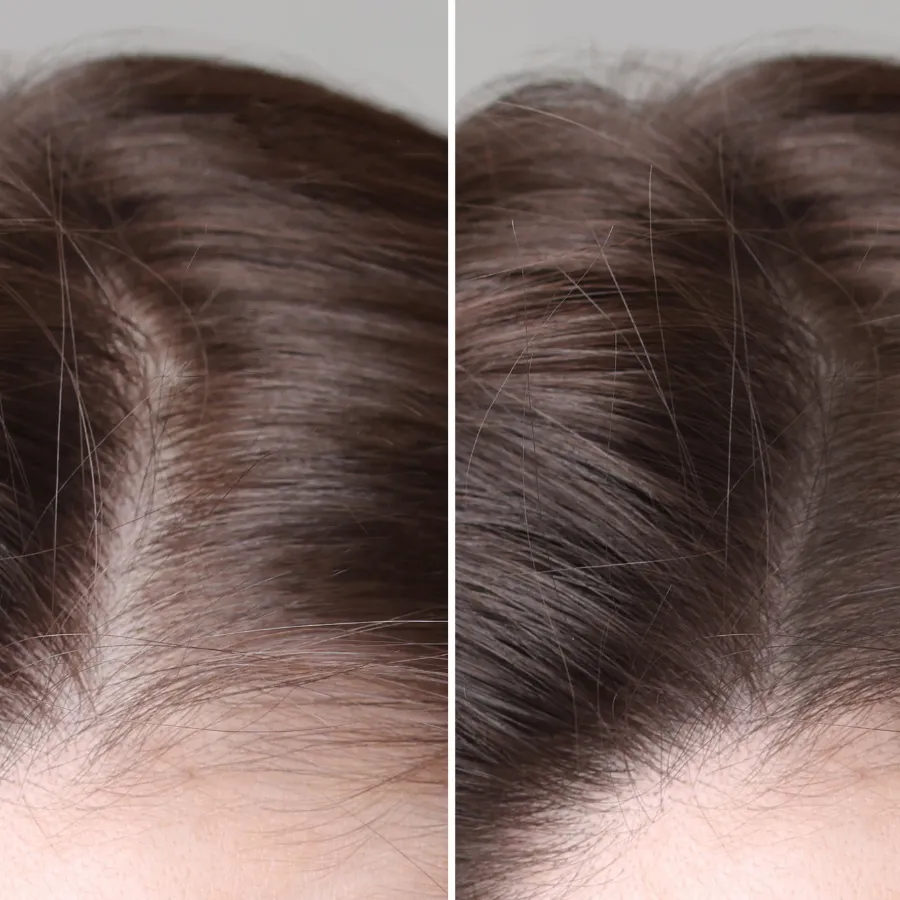
Rosemary oil has become one of the most widely discussed hair-care ingredients in the UK. You may have seen it recommended on social media, used in scalp oils, added to rosemary water sprays, or included in “before and after” hair growth routines. But does rosemary oil actually work for hair? The honest answer is that …


Rosemary oil has become one of the most widely discussed hair-care ingredients in the UK. You may have seen it recommended on social media, used in scalp oils, added to rosemary water sprays, or included in “before and after” hair growth routines.
But does rosemary oil actually work for hair?
The honest answer is that there is some evidence, but it should not be viewed as a miracle treatment. Rosemary oil may support scalp comfort and may be helpful for some people as part of a consistent routine, but it should not be presented as a guaranteed way to reverse hair loss.
This guide explains what rosemary oil may help with, what it cannot do, how to use it more safely, and when it is better to seek professional advice.
Quick Answer: Is Rosemary Oil Good for Hair?
Rosemary oil may support scalp comfort, shine, and the appearance of healthier hair. Some research has explored rosemary oil for pattern hair loss, including a 2015 study comparing rosemary oil with 2% minoxidil over six months.
However, the evidence remains limited, and results are not guaranteed.
For everyday hair care, rosemary oil is best understood as a supportive ingredient rather than a medical treatment.
Why Has Rosemary Oil Become So Popular?
Rosemary oil has become popular because it sits at the meeting point of several trends.
People are looking for more natural hair-care routines. Scalp care has become part of wider beauty and wellness conversations. Social media has also made rosemary oil appear to be a simple answer to complex hair concerns.
The problem is that hair growth, shedding, breakage, scalp irritation, and genetic thinning can all have different causes. A viral oil routine cannot identify which one applies to you.
This is why rosemary oil should always be discussed in balance.
What the Evidence Actually Says
The most commonly cited study is a 2015 randomised comparative trial that looked at rosemary oil and 2% minoxidil in people with androgenetic alopecia over six months. The study reported increased hair count in both groups after six months.
That sounds encouraging, but there are important limitations.
The study was relatively small. It looked at a specific type of hair loss. It compared rosemary oil with 2% minoxidil, not stronger preparations. It does not prove that rosemary oil works for every type of hair concern.
Cleveland Clinic also notes that rosemary oil may have antioxidant, anti-inflammatory, and antimicrobial properties, but stresses that more research is needed and that expectations should remain realistic.
What Rosemary Oil May Help With
Rosemary oil may be useful as part of a gentle hair-care routine because it can:
- Support scalp massage routines
- Helps hair appear shinier when used correctly
- Reduce the feeling of dryness when blended with a suitable carrier oil
- Encourage a more consistent scalp-care habit
- Help people pay closer attention to scalp comfort
For many people, the benefit may not be dramatic new hair growth. It may simply help the hair and scalp feel better cared for.
What Rosemary Oil Cannot Do
Rosemary oil cannot diagnose the cause of shedding. It cannot replace a professional scalp assessment. It cannot repair permanently damaged follicles. It cannot guarantee regrowth.
It also should not be relied upon for sudden shedding, patchy hair loss, scalp pain, redness, scaling, or burning.
If your hair shedding is sudden, worsening, patchy, or linked with scalp discomfort, it is better to arrange a professional assessment rather than relying on oils alone. You can learn more about professional support on the consultation page.
How to Use Rosemary Oil More Safely
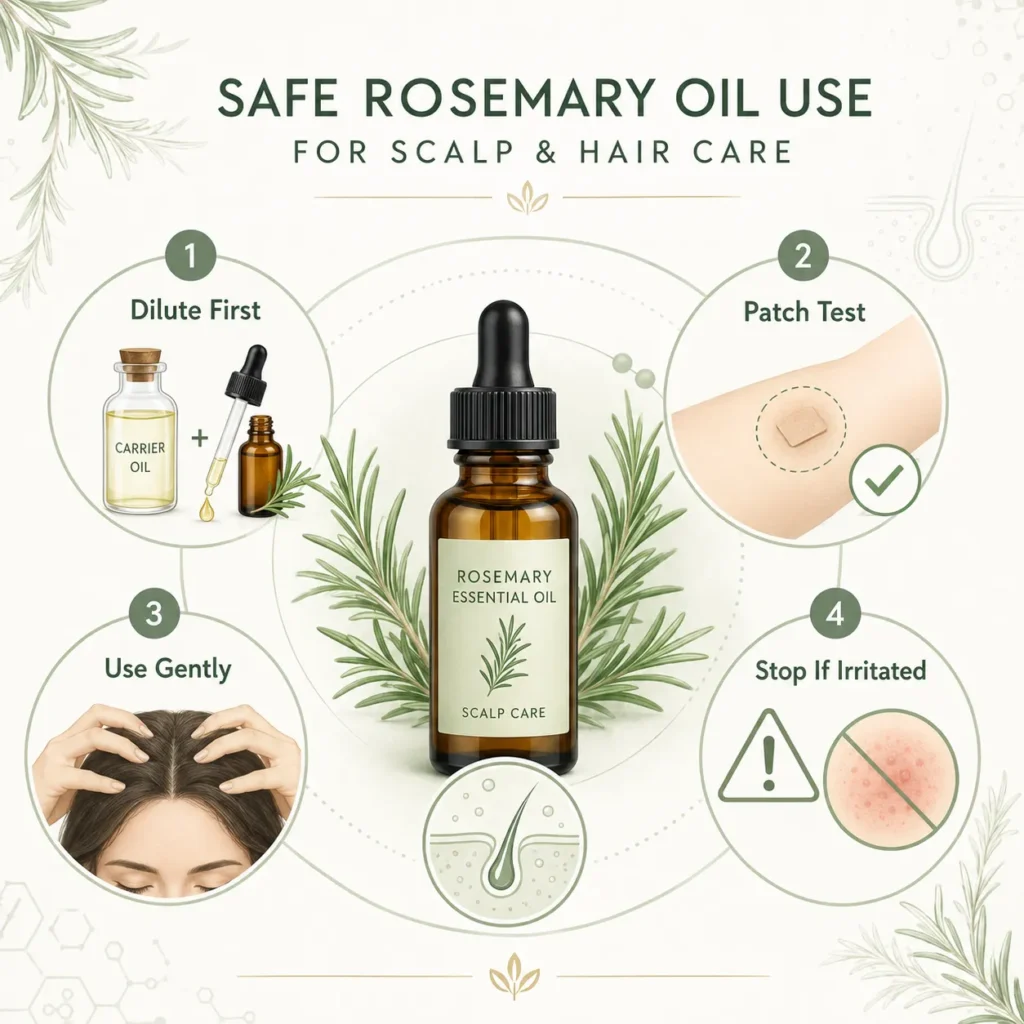
The most important safety rule is simple: do not apply undiluted rosemary essential oil directly to the scalp.
Essential oils are highly concentrated. Used incorrectly, they may irritate the scalp, especially if your skin is already sensitive.
A sensible routine may include:
- Mixing a few drops of rosemary essential oil into a carrier oil, such as jojoba, coconut, or argan oil
- Applying gently to the scalp
- Leaving it for a short period at first
- Washing it out if the scalp feels itchy, hot, sore, or uncomfortable
Do not use more oil in the hope of faster results. More oil does not mean better results.
Rosemary Oil vs Rosemary Water
Rosemary oil and rosemary water are not the same.
Rosemary essential oil is concentrated and must be diluted. Rosemary water is usually made by steeping rosemary leaves in water. It is much weaker, may spoil faster, and may not have the same properties as essential oil.
If you use rosemary water, keep it fresh, avoid applying it to an irritated scalp, and stop if you notice itching, redness, or discomfort.
Can Rosemary Oil Cause Irritation?
Yes, rosemary oil can irritate the scalp.
Some people tolerate it well. Others may develop itching, redness, burning, flaking, or soreness. If this happens, stop using it.
If the reaction continues, or if you regularly react to hair-care products, read more about scalp contact dermatitis. Product reactions are one reason why “natural” does not always mean gentle.
How Long Would It Take to See Any Difference?
Most people should not expect an overnight change. The 2015 study looked at a six-month period, not a few days or weeks.
If rosemary oil is being used as part of a routine, expectations should be based on consistency over months rather than instant results.
However, if shedding is worsening during that time, do not continue waiting because a social media routine suggested it. Persistent shedding needs proper assessment.
Who Should Be More Careful?
Be cautious with rosemary oil if you have:
- Sensitive skin
- Eczema-prone skin
- A history of scalp irritation
- Active redness, burning, or broken skin
- Pregnancy or breastfeeding concerns
- A known allergy to essential oils or fragrance
If you are unsure what is happening on your scalp, it is safer to seek advice first.
If your concern is ongoing shedding, thinning, or changes in density, it may also help to understand the hair growth cycle. This explains why hair changes take time and why quick fixes often disappoint.
Final Thoughts
Rosemary oil is not useless, but it is not magic.
A balanced view is best. Rosemary oil may support scalp care and has limited evidence in certain hair-loss contexts, but it should not be promoted as a guaranteed growth solution.
Use it carefully. Dilute it properly. Stop if irritation develops. Seek professional advice if hair or scalp symptoms persist.
FAQs
Does rosemary oil regrow hair?
Rosemary oil may support some people, but it should not be described as a guaranteed regrowth treatment. Evidence is limited, and results vary.
Can I use rosemary oil every day?
Some people use it regularly, but daily use may irritate sensitive scalps. Start slowly and always dilute essential oils.
Should rosemary oil be applied to the scalp or hair?
For scalp-focused use, it needs to reach the scalp, not just coat the hair. However, essential oils must be diluted first.
Can rosemary oil make shedding worse?
If it irritates your scalp, it may increase discomfort, redness, itching, or inflammation. Stop using it if symptoms develop.
When should I see a specialist?
Seek advice if shedding is sudden, patchy, worsening, painful, or linked with scaling, redness, or scalp discomfort.