A head spa is one of the fastest-growing beauty and wellness trends. Often inspired by Japanese scalp-care rituals, it usually combines scalp cleansing, massage, relaxation, exfoliation, and hair conditioning. It can look luxurious online, but the basic idea is simple: giving your scalp the same type of care and attention that many people already give …

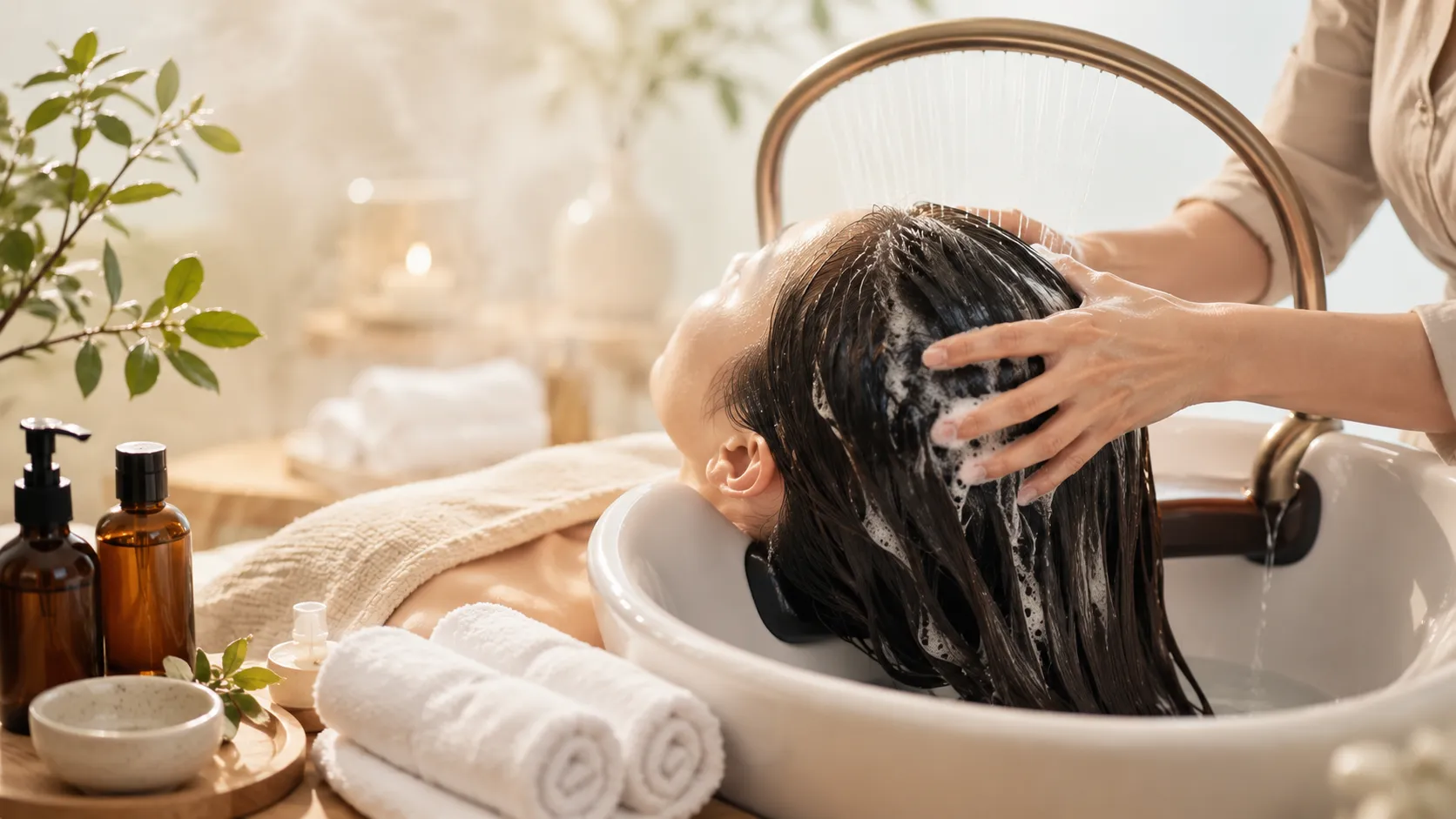
A head spa is one of the fastest-growing beauty and wellness trends. Often inspired by Japanese scalp-care rituals, it usually combines scalp cleansing, massage, relaxation, exfoliation, and hair conditioning.
It can look luxurious online, but the basic idea is simple: giving your scalp the same type of care and attention that many people already give their face.
A head spa is not a medical treatment and should not be used to diagnose scalp or hair concerns. As a relaxation and scalp-care ritual, however, it can be a gentle way to reset your routine.
Quick Answer: What Is a Head Spa?
A head spa is a scalp-focused treatment that usually includes cleansing, massage, exfoliation, conditioning, and relaxation.
Some professional treatments may also include scalp inspection, aromatherapy, steam, or neck and shoulder massage.
At home, a simple head spa can be recreated with gentle cleansing, scalp massage, conditioning, and careful rinsing.
Why Are Head Spas So Popular?
Head spas are popular because they feel both relaxing and practical. Many people invest in skincare but ignore the scalp until it becomes itchy, oily, flaky, or uncomfortable.
The trend has also grown because of video content. Water streams, foam, massage, scalp cameras, and glossy hair make the treatment highly shareable.
The deeper reason is simple: people want hair care to feel less rushed.
What Happens During a Professional Head Spa?
A professional head spa may include:
- Scalp discussion or visual inspection
- Gentle brushing or detangling
- Scalp cleansing
- Massage
- Steam or warm towels
- Scalp exfoliation
- Conditioning mask
- Rinse and finish
Not every head spa is the same. Some are beauty-focused. Some are relaxation-focused. Some are linked to salons, while others are offered as wellness treatments.
The important thing is to understand what you are booking. A head spa may help the scalp feel cleaner and more relaxed, but it should not be sold as a cure for hair loss, scalp disease, or persistent symptoms.
Is a Head Spa Good for Your Scalp?
A gentle head spa can help remove product build-up, encourage better cleansing habits, and make the scalp feel refreshed.
Scalp massage may also help people become more aware of tension and scalp comfort. However, the massage should be gentle. Strong scrubbing is not better.
If you already have scalp soreness, broken skin, weeping patches, severe flakes, or burning, avoid aggressive scalp treatments and seek advice first. You can explore common scalp concerns on the scalp conditions page.
Can You Do a Head Spa at Home?
Yes, you can create a simple head spa routine at home. It will not be exactly the same as a professional treatment, but it can still feel relaxing and useful.
The aim is not to use lots of products. The aim is to slow down, cleanse properly, massage gently, and condition the hair in a way that suits your scalp and hair type.
Step 1: Start With Dry Detangling
Before washing, gently detangle your hair. This reduces knots and makes cleansing easier.
Use a wide-tooth comb or soft brush. Start at the ends and work upwards. Avoid dragging from the roots.
If your scalp is tender, keep this step very light.
Step 2: Pre-Cleanse the Scalp
If you use oils, dry shampoo, styling creams, gels, or heavy products, your scalp may need a more thorough cleanse.
Wet your hair fully. Apply shampoo to the scalp, not just the lengths. Use fingertips rather than nails. Massage in small circles, then rinse well.
If needed, shampoo a second time. The first wash removes build-up. The second wash often cleans more effectively.
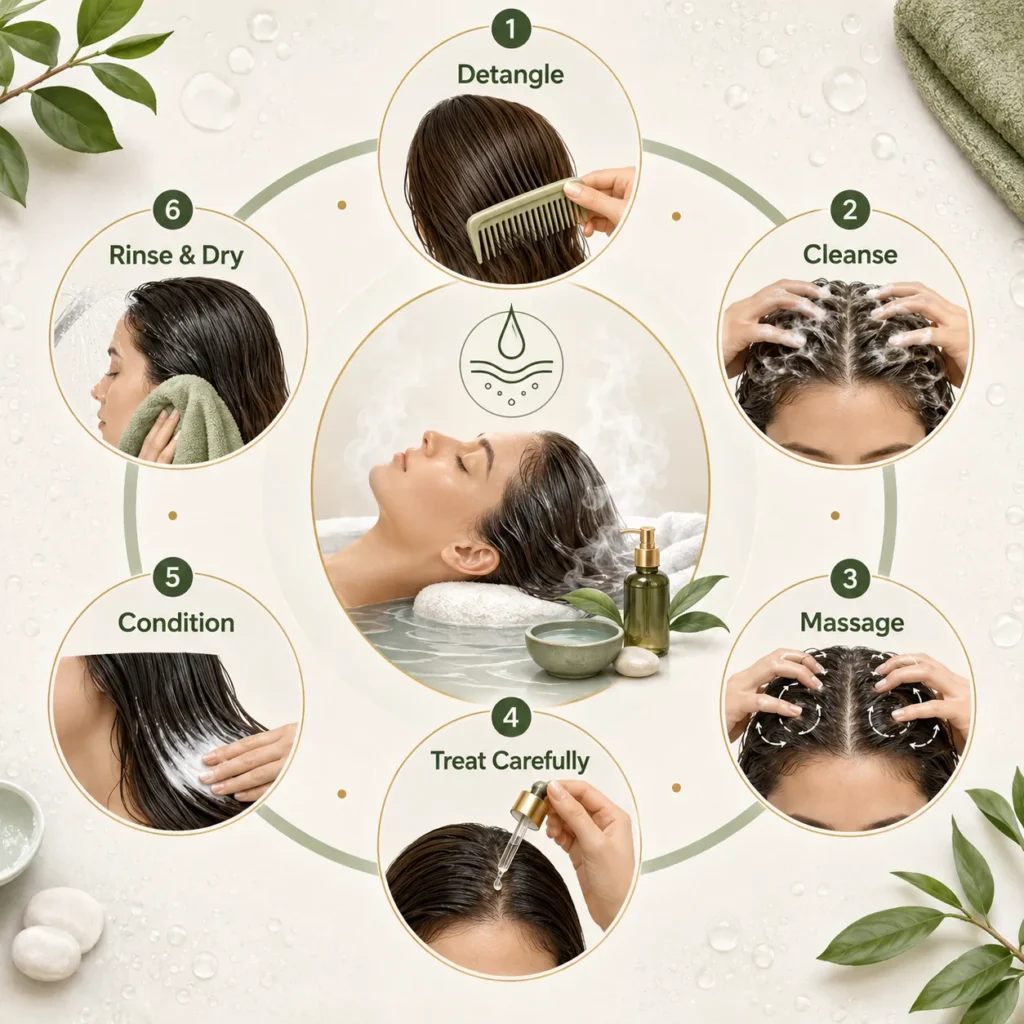
Step 3: Add a Gentle Scalp Massage
A scalp massage should feel relaxing, not painful.
Use the pads of your fingers. Move the scalp gently rather than scratching the surface. Spend one to three minutes working around the hairline, crown, sides, and nape.
Avoid firm pressure if your scalp feels inflamed, sore, or irritated.
Step 4: Use Scalp Treatments Carefully
Some at-home head spa routines include scalp scrubs, exfoliating tonics, oils, or masks. These should be used carefully.
Not every scalp needs exfoliation. Overuse can leave the scalp irritated. If you already have flakes, redness, or itching, do not assume a scrub is the answer.
Flaking can have different causes. For example, dandruff and seborrhoeic dermatitis need a different approach from simple product build-up. You can read more on the dandruff and seborrhoeic dermatitis page.
Step 5: Condition the Hair Lengths
Conditioner should usually be focused on the mid-lengths and ends, especially if your scalp becomes oily quickly.
If your hair is dry, curly, coloured, or textured, a richer mask may help the hair feel softer. Leave it on as directed, then rinse thoroughly.
Do not leave rinse-out masks on the scalp longer than recommended. More time does not always mean better results.
Step 6: Rinse Properly
Poor rinsing is one of the most common reasons hair feels heavy after a home treatment.
Rinse until the scalp feels clean and the water runs clear. Product residue can make hair look dull or greasy.
Step 7: Dry Gently
After washing, avoid rough towel drying. Squeeze excess water out gently. Use a microfibre towel or soft cotton T-shirt if your hair frizzes easily.
If blow-drying, use moderate heat and avoid holding the dryer too close to the scalp.
How Often Should You Do a Head Spa at Home?
For most people, once a week or once every two weeks is enough.
If your scalp is oily or product-heavy, you may prefer a weekly routine. If your scalp is dry or sensitive, keep it less frequent and very gentle.
A head spa should leave your scalp feeling comfortable. If it leaves your scalp itchy, tight, sore, or greasy, adjust the products or reduce the frequency.
Who Should Avoid At-Home Scalp Treatments?
Avoid scalp scrubs, essential oils, or strong exfoliating products if you have:
- Active scalp irritation
- Open skin
- Burning or soreness
- Severe flaking
- Unexplained patches
- Recent allergic reactions
- A very sensitive scalp
If products often trigger itching or redness, you may find the scalp contact dermatitis page useful.
Head Spa vs Trichology Consultation
A head spa is a wellness or beauty ritual. A trichology consultation is different.
A consultation is more appropriate if you have persistent shedding, scalp discomfort, patchy hair loss, scaling, or symptoms that keep returning.
A head spa may make the scalp feel clean, but it does not identify the underlying reason for ongoing symptoms.
For professional support, visit the consultation page.
Final Thoughts
A head spa can be a relaxing way to care for your scalp and hair. The best at-home version is simple: cleanse well, massage gently, condition carefully, and avoid overloading the scalp with too many products.
The key is to treat a head spa as a supportive self-care ritual, not a medical solution. If your scalp feels persistently uncomfortable or your hair is changing in a way that worries you, seek proper advice rather than relying on trends.
FAQs
What is the purpose of a head spa?
A head spa focuses on scalp cleansing, massage, relaxation, and hair conditioning. It is designed to refresh the scalp and create a calming hair-care ritual.
Can a head spa help hair growth?
A head spa may support scalp comfort and relaxation, but it should not be promoted as a guaranteed hair growth treatment.
Can I do a head spa at home?
Yes. You can do a simple version with gentle shampooing, scalp massage, conditioning, and careful rinsing.
How often should I do a head spa?
Once a week or every two weeks is enough for many people. Sensitive scalps may need less frequent treatments.
Should I use a scalp scrub?
Only if your scalp tolerates it. Avoid scrubs if your scalp is sore, red, flaky, broken, or sensitive.