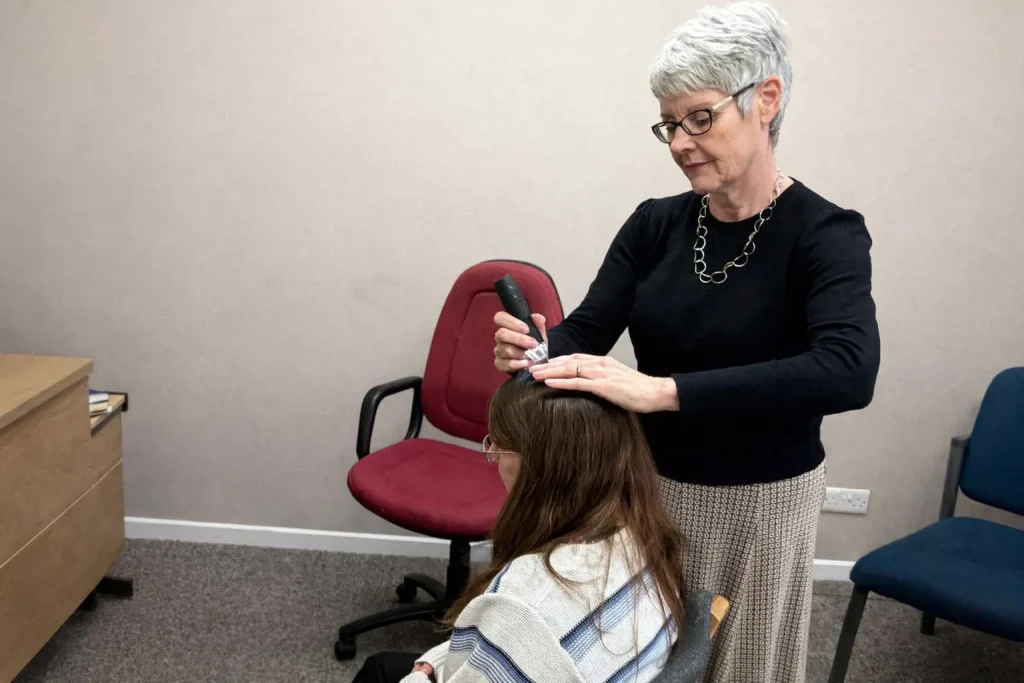
Sudden onset of itching, redness, burning, or scalp sensitivity is commonly associated with inflammatory scalp conditions such as contact dermatitis. At The Hair & Scalp Clinic, located at 83a High Street, Huntingdon, we provide a professional clinical environment for the assessment and structured management of acute and reactive scalp responses.
Led by Tracey Walker FIT, a Fellow of the Institute of Trichologists, our practice supports patients across Cambridgeshire who require diagnostic clarity around why their scalp is reacting to specific external substances and how this can be safely managed over time.
Contact dermatitis is a reactive scalp condition that occurs when the skin barrier responds adversely to an external irritant or allergen. Common triggers include hair colourants, chemical relaxers, fragrances, preservatives, and certain styling or cleansing products.
Because contact dermatitis can closely resemble other inflammatory scalp conditions—such as seborrhoeic dermatitis or scalp psoriasis—accurate clinical assessment is essential before any management plan is considered.
Patients attending our clinic from Huntingdon, Brampton, Godmanchester, and surrounding Cambridgeshire areas may present with:
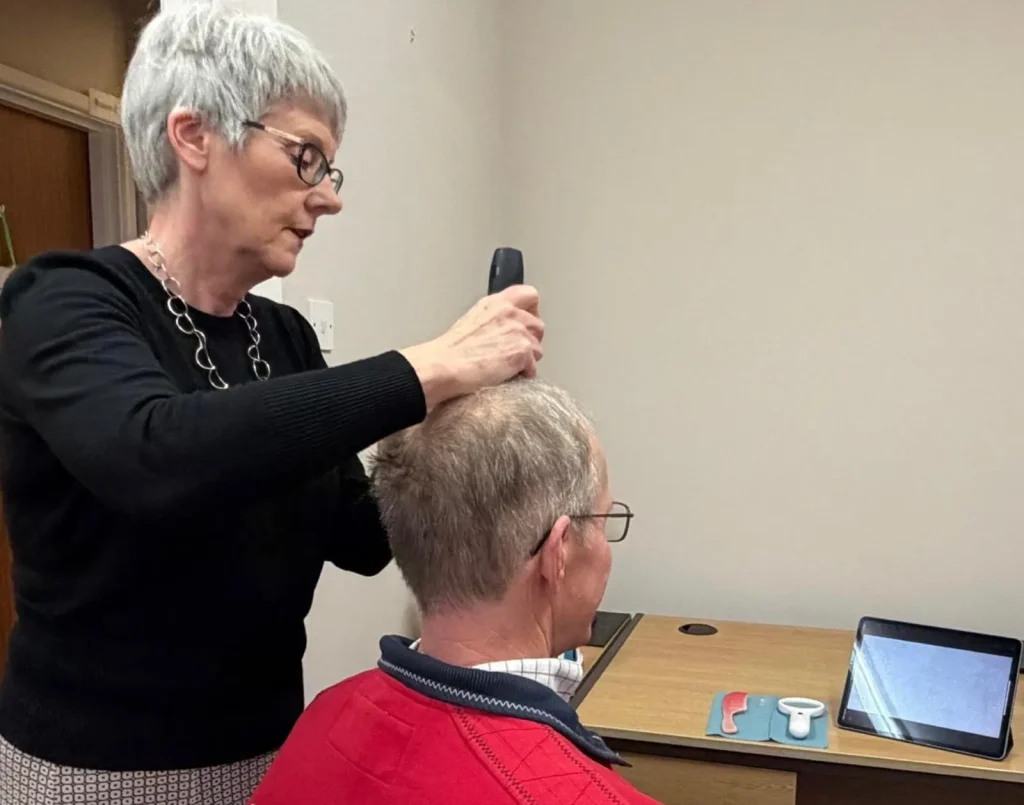
Attempting to soothe a reacting scalp with additional cosmetic products can often prolong irritation. As a consultant trichologist, Tracey Walker FIT carries out a hands-on clinical assessment to identify the likely cause of the reaction and assess the degree of skin barrier disruption.
Diagnostic assessment may include:
This process ensures management guidance is based on clinical evidence rather than assumptions.
Contact dermatitis requires careful, conservative management focused on supporting the scalp barrier and reducing ongoing irritation. We work within the ethical standards of the Institute of Trichologists and do not claim to cure reactive skin conditions.
Management guidance may include:
Our Huntingdon clinic is easily accessible via the A14 and A1(M) corridors and supports patients from St Ives, St Neots, Cambridge, and the wider Cambridgeshire area. We provide a discreet, professional clinical setting near Hinchingbrooke Hospital for specialist scalp assessment.
Irritant contact dermatitis results from direct damage to the skin barrier, while allergic contact dermatitis involves an immune response to a specific substance. Clinical assessment is required to differentiate between the two.
While contact dermatitis primarily affects the skin, significant or prolonged inflammation can place follicles under stress, which may lead to temporary shedding. Clinical management aims to reduce this scalp stress.
In many cases, simplifying the routine is advisable during active inflammation. During consultation, we provide tailored guidance on suitable cleansing and product use.
Duration varies depending on the trigger and severity. Some reactions settle quickly once exposure stops, while others require longer-term. monitoring and barrier support.
Yes. Following a contact reaction, patch testing is essential before any future chemical services. We provide professional guidance on appropriate testing and safer alternatives.
If you are experiencing an ongoing or acute scalp reaction, a professional assessment can provide clarity and direction. Contact our Huntingdon clinic to arrange an appointment with an experienced consultant trichologist.
Copyright © 2026 The Hair & Scalp Clinic | Developed By