Nutrition & hair loss is a topic I frequently discuss with patients who are concerned about increased shedding or gradual thinning. When changes in hair density occur, many people immediately assume genetics is responsible. However, nutritional imbalance is a common and often overlooked contributing factor. Hair is not essential for survival. When the body lacks …

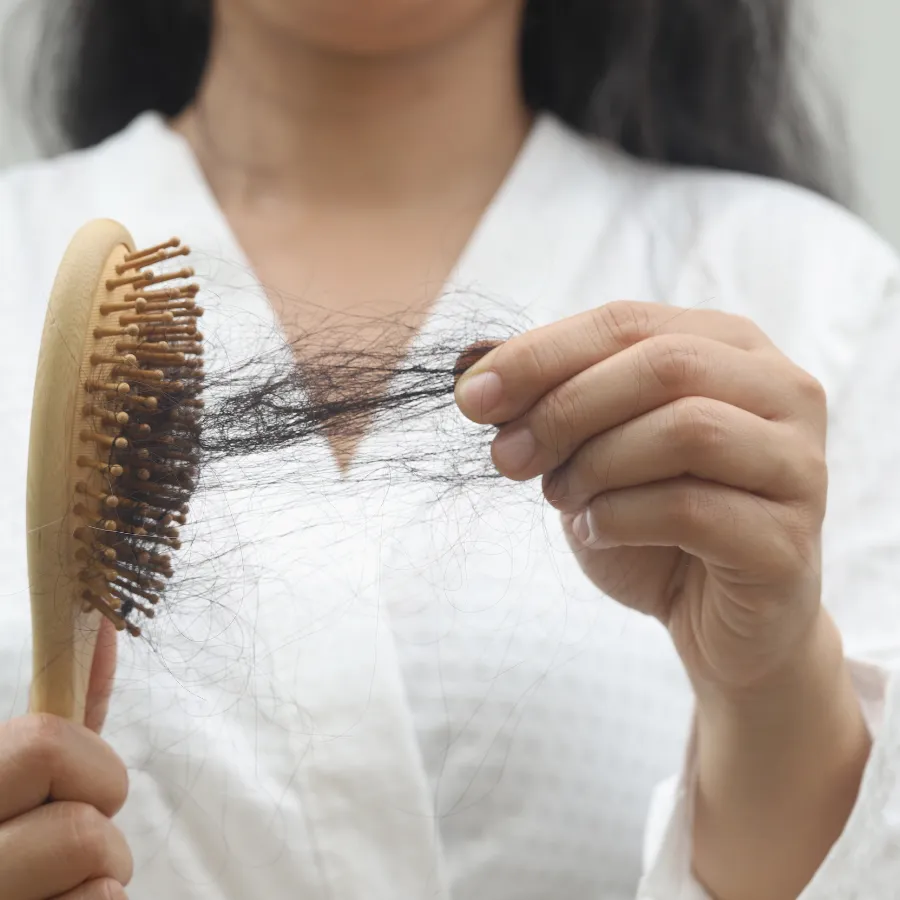
Nutrition & hair loss is a topic I frequently discuss with patients who are concerned about increased shedding or gradual thinning. When changes in hair density occur, many people immediately assume genetics is responsible. However, nutritional imbalance is a common and often overlooked contributing factor.
Hair is not essential for survival. When the body lacks key nutrients, it prioritises vital organs over hair follicles. As a result, the hair growth cycle may shift, leading to excessive shedding or slower regrowth. Understanding the role of nutrition and when blood tests are appropriate allows us to approach hair concerns in a structured and medically responsible manner.
How Nutrition Affects Hair Growth
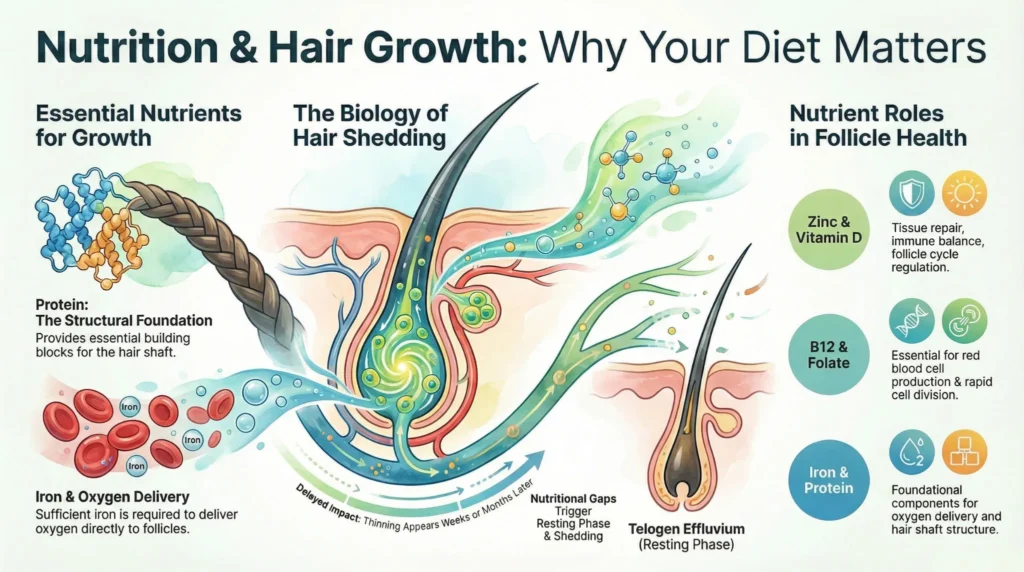
Hair follicles are highly active biological structures. During the growth (anagen) phase, cells divide rapidly, requiring a consistent supply of oxygen, protein, vitamins, and trace minerals.
If nutritional intake is inadequate or if absorption is impaired, follicles may prematurely shift into the resting (telogen) phase. This process, commonly referred to as telogen effluvium, can result in noticeable shedding several weeks or months after the deficiency develops.
Key nutrients associated with hair health include:
- Iron – Essential for oxygen delivery to follicles
- Vitamin D – Plays a regulatory role in follicle cycling
- Vitamin B12 – Supports red blood cell production
- Folate – Required for cell division
- Zinc – Involved in tissue repair and immune balance
- Protein – The structural foundation of the hair shaft
Hair thinning related to nutritional factors rarely occurs immediately. It often develops gradually and may follow dietary changes, illness, restrictive eating patterns, or digestive disorders.
When Are Blood Tests Appropriate?
Not everyone experiencing hair shedding requires blood tests. However, testing may be advisable when:
- Shedding persists beyond three months
- Thinning is diffuse across the scalp
- Fatigue accompanies hair changes
- There is a history of heavy menstrual bleeding
- A restrictive diet has been followed
- Thyroid imbalance is suspected
Blood tests provide objective data. They help avoid guesswork and unnecessary supplementation. Taking high-dose supplements without a confirmed deficiency is not recommended and may, in some cases, create further imbalance.
In clinical practice, I may suggest that patients discuss specific investigations with their GP where appropriate.
Common Blood Tests Linked to Nutrition & Hair Loss
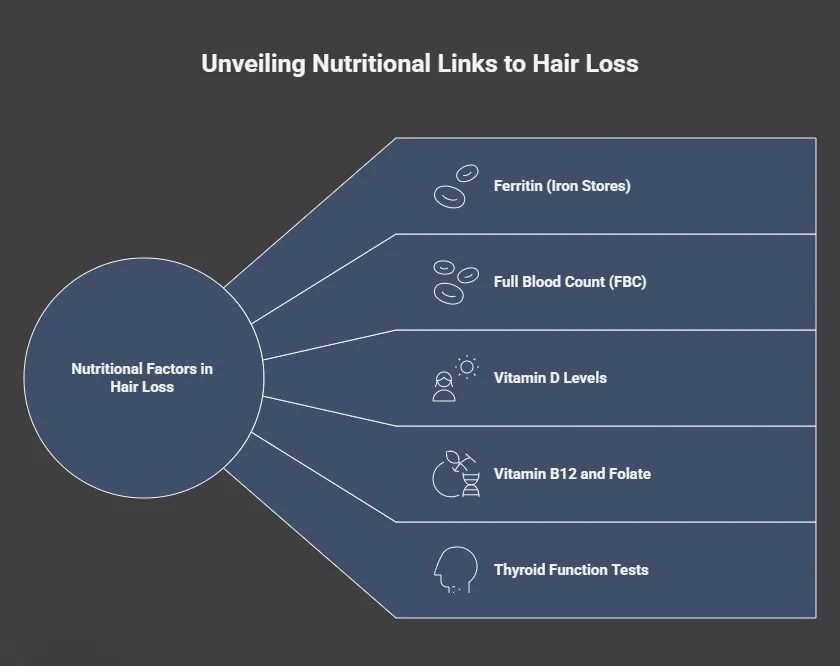
When nutritional factors are suspected, the following investigations are commonly considered:
Ferritin (Iron Stores)
Ferritin measures stored iron. Low ferritin is frequently associated with diffuse shedding, particularly in women. Even when haemoglobin appears normal, low iron stores may influence the hair cycle.
Full Blood Count (FBC)
Assesses overall red blood cell health and screens for anaemia.
Vitamin D Levels
Deficiency is common in the UK, particularly during autumn and winter months, and may influence follicle cycling.
Vitamin B12 and Folate
Support healthy cell turnover and tissue regeneration.
Thyroid Function Tests
Although not strictly nutritional, thyroid imbalance can significantly affect hair growth and shedding.
Testing is not about diagnosing hair loss in isolation. It is about identifying whether systemic health factors are contributing.
Can Correcting Nutrition Improve Hair Loss?
The answer depends on the underlying cause.
If shedding is primarily driven by nutritional deficiency, correcting that deficiency may support restoration of a normal growth cycle. However, visible improvement takes time. Because of the length of the hair cycle, changes may not be noticeable for several months.
If thinning is genetic (androgenetic alopecia), improving nutrition alone will not reverse it. Nevertheless, ensuring adequate nutritional status supports overall scalp health and may help maintain existing density.
Absorption must also be considered. Some individuals consume a balanced diet but have digestive conditions that limit nutrient uptake.
There is no universal supplement for hair growth. Management should always be guided by confirmed need.
Signs Nutrition May Be a Contributing Factor
Patients experiencing nutrition-related shedding may report:
- Increased hair on clothing or bedding
- Diffuse thinning rather than patterned recession
- Brittle nails
- Fatigue
- Pale skin
These signs do not confirm deficiency but may warrant further evaluation.
When Should You Seek Advice?
You may wish to seek professional assessment if:
- Shedding continues for more than three months
- Hair feels noticeably thinner
- You experience unexplained fatigue
- You have recently changed your diet or experienced illness
Early evaluation allows us to determine whether nutritional factors are involved or whether other contributors, such as hormonal changes or inflammatory scalp conditions, are playing a role.
Patients attending The Hair & Scalp Clinic in Huntingdon receive a detailed, evidence-based scalp assessment with Consultant Trichologist Tracey Walker FIT. The focus is always on identifying the underlying cause before recommending any management plan.
Hair health often reflects wider wellbeing. With careful investigation, realistic expectations, and appropriate clinical guidance, nutrition-related shedding can be properly understood and safely managed.