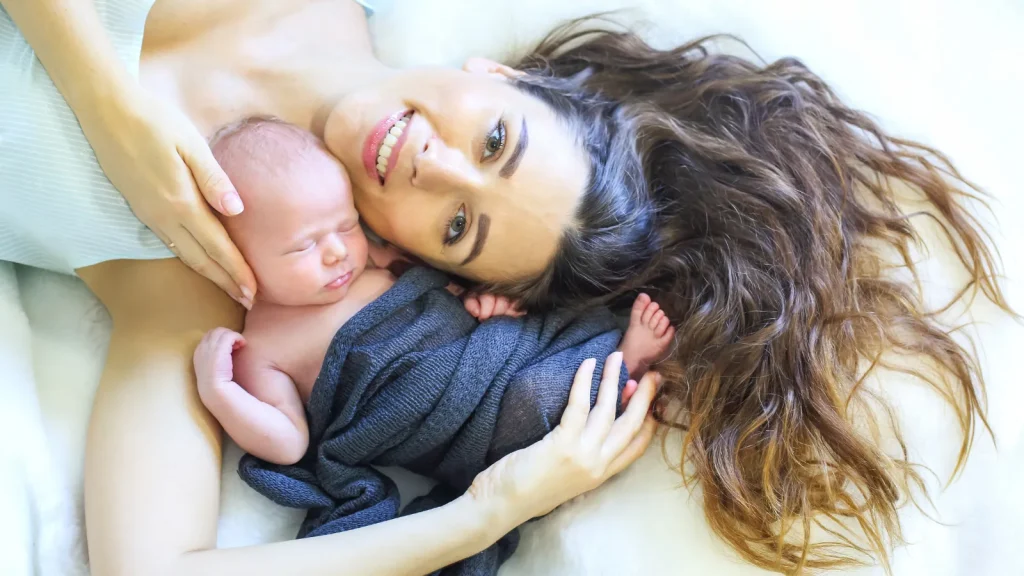
For many women, the period following childbirth brings unexpected physical changes, including noticeable hair shedding. Clinically referred to as postpartum telogen effluvium, post-pregnancy hair loss occurs as a result of rapid hormonal shifts after delivery and is a common, temporary response of the hair cycle.
At The Hair & Scalp Clinic, we provide an established and empathetic clinical environment to support women during this transitional phase. Led by Tracey Walker FIT, a Fellow of the Institute of Trichologists, our clinic supports patients across Cambridgeshire by providing clear diagnosis, clinical reassurance, and structured management during post-pregnancy hair changes.
During pregnancy, elevated oestrogen levels keep a high proportion of hairs in the anagen (growth) phase and very little shedding occurs. After childbirth, hormone levels naturally return to (baseline) a normal level, causing a large number of hairs to enter the telogen (resting) phase at the same time and subsequently these are shed en masse 2-4 months later
(Around three months later, this resting hair is shed.) Although this process is biologically normal, it can feel distressing, particularly when combined with fatigue, nutritional demands, and emotional adjustment during early motherhood. As a long-standing trichology clinic in Huntingdon, our role is to assess whether your shedding follows a typical postpartum pattern or whether additional factors are contributing.
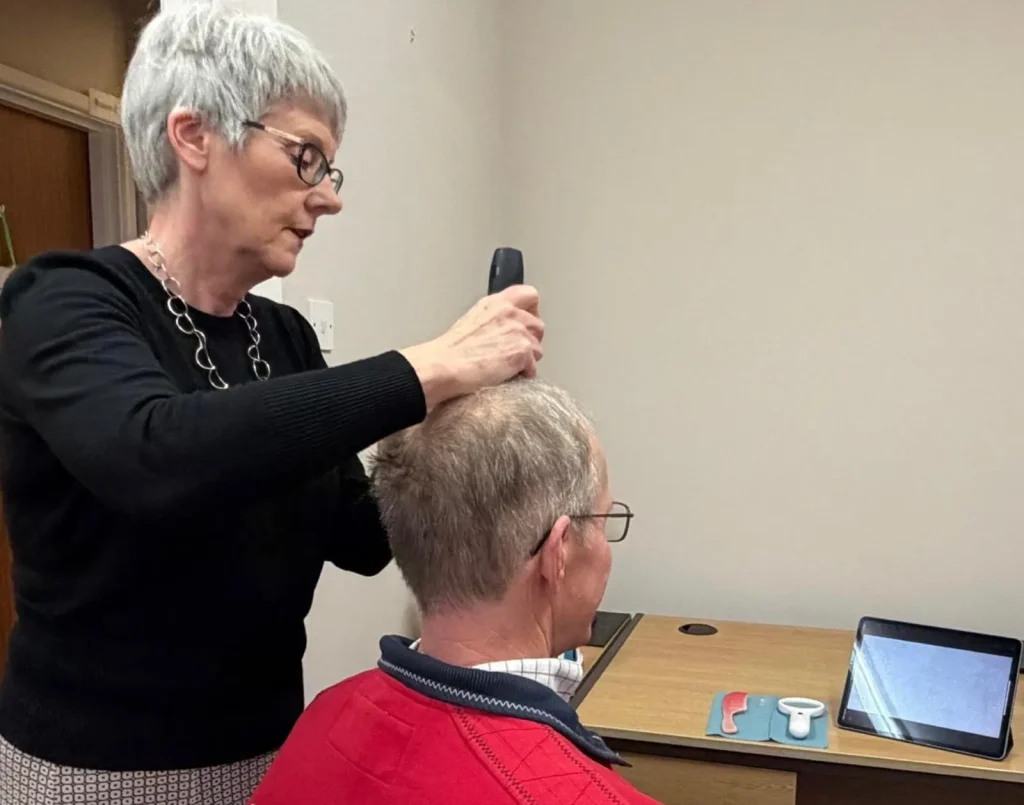
If hair shedding feels excessive or does not begin to stabilise over time, a professional assessment is recommended. During a consultation at our Cambridgeshire clinic, we carry out a comprehensive clinical review that may include:
This diagnostic process allows us to distinguish postpartum shedding from other hair loss conditions that may require different management.
Post-pregnancy hair loss is a self-limiting condition that resolves naturally over time. Our clinical role is not to alter the biological process, but to support scalp health and identify factors that may unnecessarily prolong shedding.
Addressing deficiencies commonly seen after pregnancy to ensure the body has the resources required for healthy regrowth.
Supporting comfort and minimising irritation during periods of active shedding.
Managing fragile hair safely to reduce breakage and mechanical stress during the recovery phase.
Tracking stabilisation and regrowth patterns over time to provide peace of mind and clinical oversight.
We do not offer curative or growth-based treatments for postpartum hair loss. Our focus is on informed, responsible management and reassurance.
If you are concerned about ongoing hair shedding following pregnancy, we welcome you to our clinic at 83a High Street, Huntingdon, for professional assessment and guidance. We provide a supportive clinical service for women across Cambridgeshire, including patients from St Ives, St Neots, Cambridge, and surrounding areas.
Shedding usually begins around three months after childbirth and may continue for several months. If shedding persists beyond one year postpartum, further clinical assessment is advised.
No. Post-pregnancy hair loss (causes) presents as a diffuse thinning rather than complete baldness. The follicles remain intact and capable of producing hair.
Breastfeeding does not directly cause hair loss, but it increases nutritional demand. If nutrient intake is insufficient, the hair cycle may be affected.
The hormonal shift after childbirth cannot be prevented. However, maintaining good nutritional balance and scalp care can help reduce unnecessary strain on the hair cycle.
A Consultant Trichologist confirms that shedding is postpartum-related, rules out other hair loss conditions, and provides structured monitoring and clinical guidance during recovery.
Copyright © 2026 The Hair & Scalp Clinic | Developed By