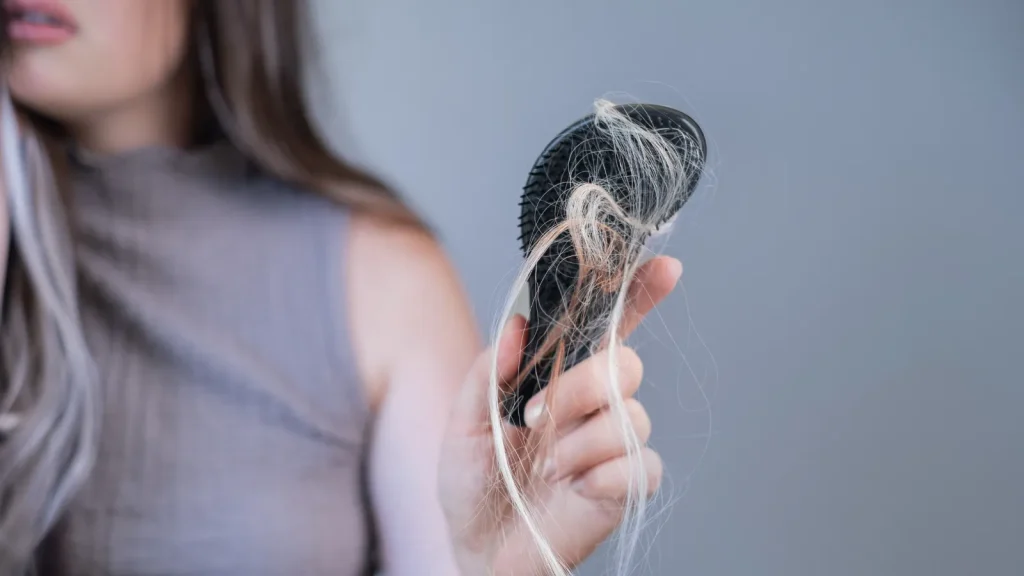
Hormonal hair loss (androgenetic alopecia / male or female pattern hair loss) is a complex condition in which changes within the endocrine system influence the normal hair growth cycle. Rather than causing sudden shedding, hormonally driven hair loss most commonly presents as a gradual reduction in hair density, which can be distressing for both men and women.
The Hair & Scalp Clinic provides an established clinical setting to assess the internal factors contributing to hormonal hair loss. Led by Tracey Walker FIT, a Fellow of the Institute of Trichologists, our clinic supports patients across Cambridgeshire through careful investigation, clinical monitoring, and structured management planning.
Hair follicle activity is closely linked to hormonal balance. When certain hormone levels fluctuate, the growth phase of the hair cycle may shorten while the resting phase lengthens. Over time, this can result in reduced hair density, a widening parting, or general thinning across the scalp.
As a specialist trichology practice based in Huntingdon, we regularly assess hair changes associated with:
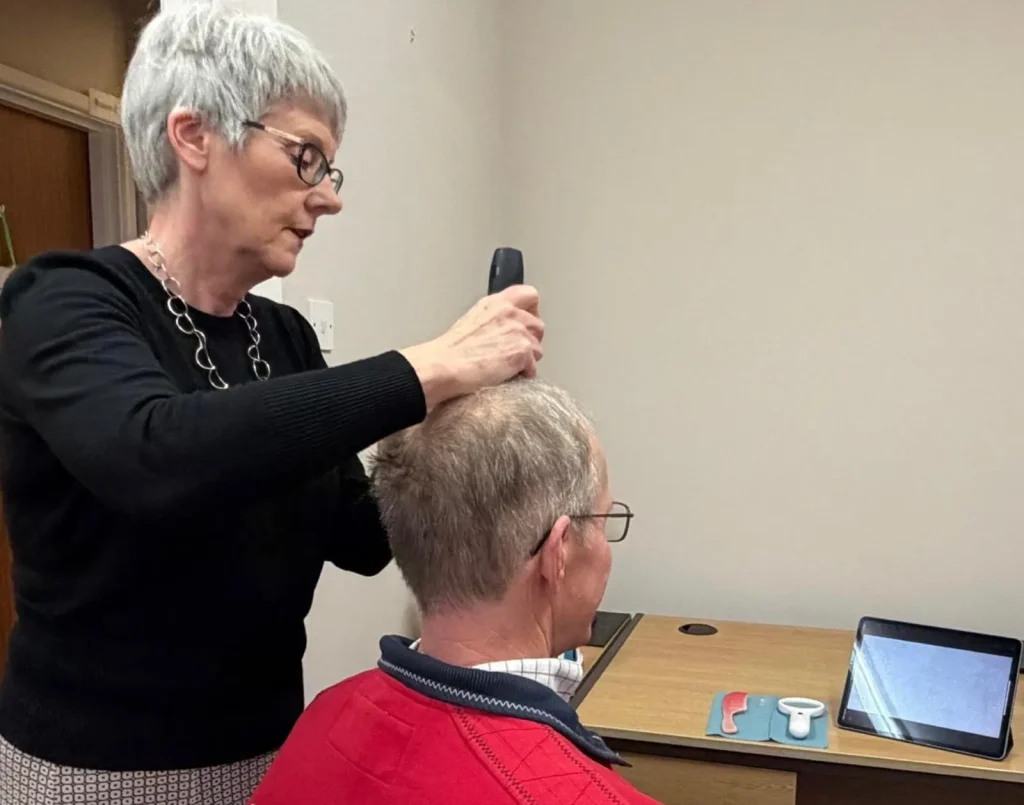
Because hormonal hair loss originates internally, a physical scalp examination alone is not sufficient. During a consultation at our long-standing Huntingdon clinic, Tracey Walker uses digital trichoscopy to assess follicular activity and scalp condition at high magnification.
Clinical assessment for patients across Cambridgeshire may include:
This diagnostic process allows us to differentiate hormonal hair loss from other forms of thinning or shedding.
Hormonal hair loss is typically a long-term condition that requires ongoing management rather than a single intervention. Our role as trichologists is to support scalp and follicular health while working within the wider medical picture.
Management may include:
We do not claim to correct hormonal imbalance or cure hormonal hair loss. Our focus is on informed, responsible clinical management.
If you are concerned that hormonal changes may be affecting your hair density, early clinical assessment is recommended. Contact our clinic at 83a High Street, Huntingdon, for professional evaluation and guidance from an experienced consultant trichologist.
(Androgens), Testosterone, oestrogen, progesterone, and thyroid hormones all influence the hair cycle. Sensitivity to these hormones varies between individuals and is often genetically influenced.
Hormone replacement therapy can influence hair in different ways depending on formulation and individual sensitivity. Some patients notice improvement in stability, while others experience increased shedding. Clinical assessment is recommended.
In some cases, certain progestogens may contribute to thinning due to their androgenic properties. Reviewing hormonal medication is an important part of clinical assessment.
Effective management begins with identifying contributing factors through clinical assessment and supporting scalp and follicular health alongside appropriate medical care.
Hormonal hair loss is generally a long-term condition that requires ongoing monitoring and management. Outcomes vary depending on individual biology and underlying hormonal influences.
Copyright © 2026 The Hair & Scalp Clinic | Developed By