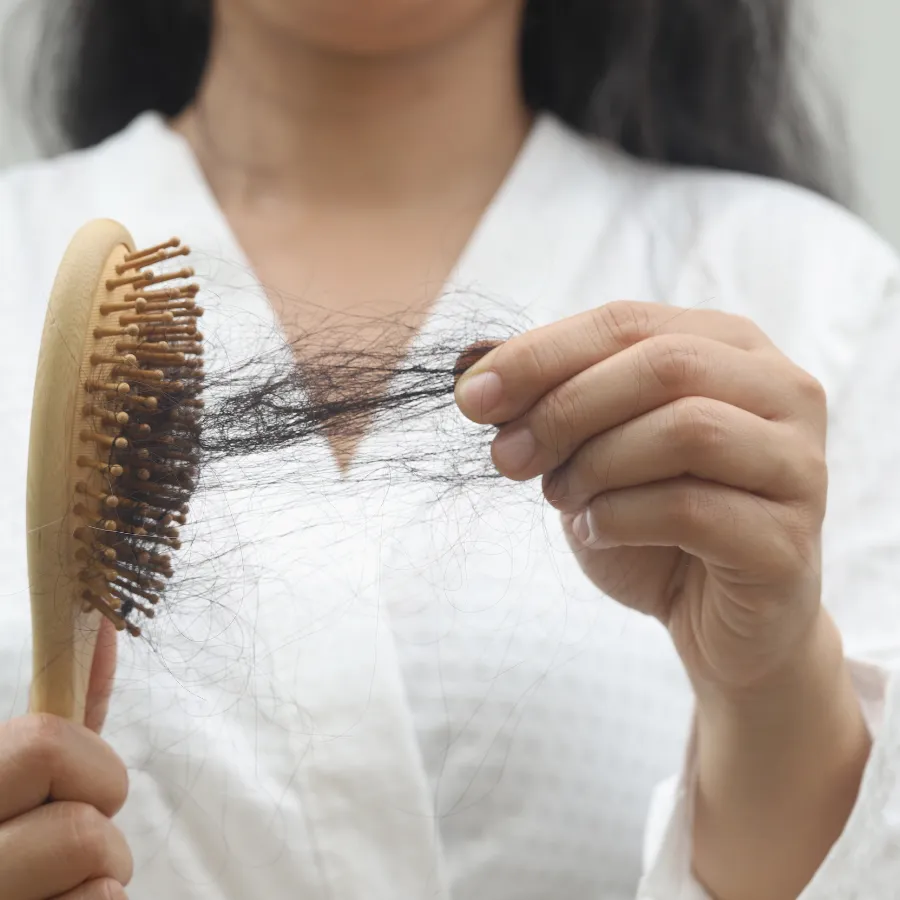
Hair growth cycle explained is something I regularly discuss with patients who are worried about increased shedding or thinning. Understanding how hair naturally grows and sheds can prevent unnecessary anxiety and help you recognise when something may need further assessment. Many people assume that seeing hair in the shower or on their brush means they …

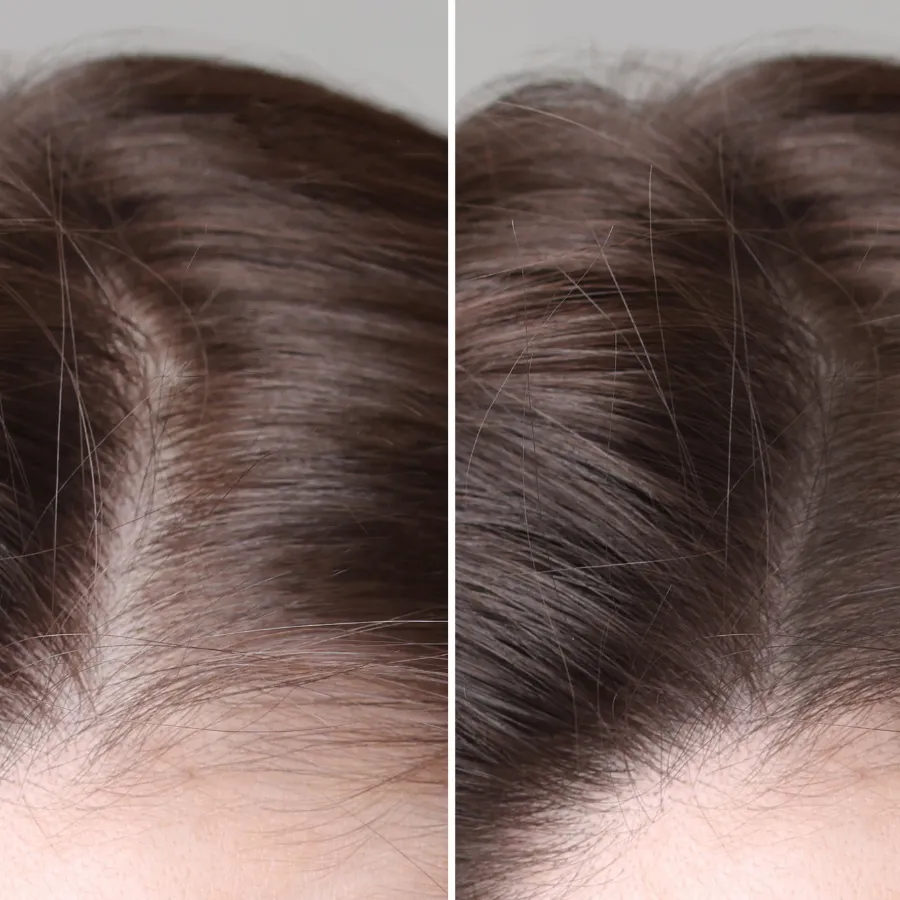
Hair growth cycle explained is something I regularly discuss with patients who are worried about increased shedding or thinning. Understanding how hair naturally grows and sheds can prevent unnecessary anxiety and help you recognise when something may need further assessment.
Many people assume that seeing hair in the shower or on their brush means they are going bald. In most cases, that simply isn’t true. Hair growth follows a structured biological cycle, and shedding is a normal part of that process. However, when the balance of this cycle becomes disrupted, you may notice more significant changes.
My role as a Consultant Trichologist is to help you understand what is expected, what is temporary, and what may require further investigation.
What Is the Hair Growth Cycle?
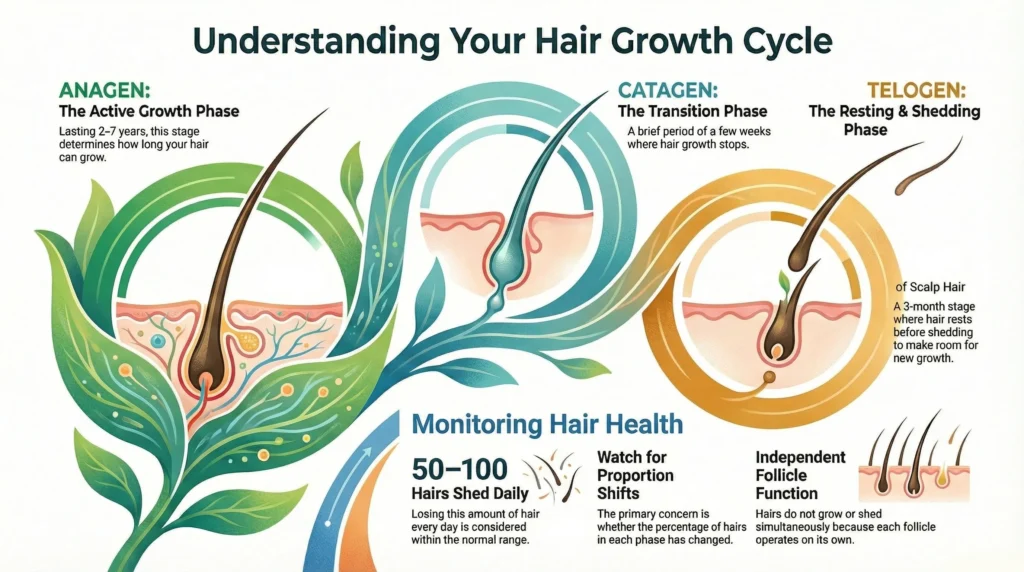
The hair growth cycle refers to the natural stages each hair follicle goes through. Every hair on your scalp grows from a tiny structure beneath the skin called a follicle. Each follicle functions independently, which means your hairs are not all growing or shedding at the same time.
There are three main stages:
Anagen (Growth Phase)
This is the active growth stage and can last between two and seven years. The length of this phase largely determines how long your hair can grow. Around 85–90% of scalp hairs are typically in this phase at any given time.
Catagen (Transition Phase)
This is a short stage lasting a few weeks. Growth stops, and the follicle gradually prepares to enter the resting phase.
Telogen (Resting and Shedding Phase)
This phase lasts approximately three months. At its conclusion, the hair sheds and a new hair begins forming within the same follicle. Around 10–15% of hairs are normally in this stage.
Losing between 50 and 100 hairs per day is considered within a normal range. The key concern is whether the proportion of hairs in each phase has shifted.
What Can Disrupt the Cycle?
The hair growth cycle can be influenced by a range of internal and external factors. During assessment, I consider what may have altered this balance.
Common influences include:
Hormonal changes
Pregnancy, menopause, thyroid imbalance, or sensitivity to androgens may shorten the growth phase.
Physical or emotional stress
Illness, surgery, or significant psychological stress can push a larger number of hairs into the shedding phase simultaneously. This is known as telogen effluvium.
Nutritional deficiencies
Low iron levels, inadequate protein intake, or restrictive diets may affect follicular activity.
Scalp conditions
Inflammatory scalp conditions such as seborrhoeic dermatitis or psoriasis can disturb the follicular environment.
Genetic pattern thinning
In some individuals, follicles gradually miniaturise over time. The growth phase shortens, and the hairs produced become finer.
Often, more than one factor is contributing.
What Signs Should You Look For?
Some shedding is normal. What matters is whether there has been a noticeable change.
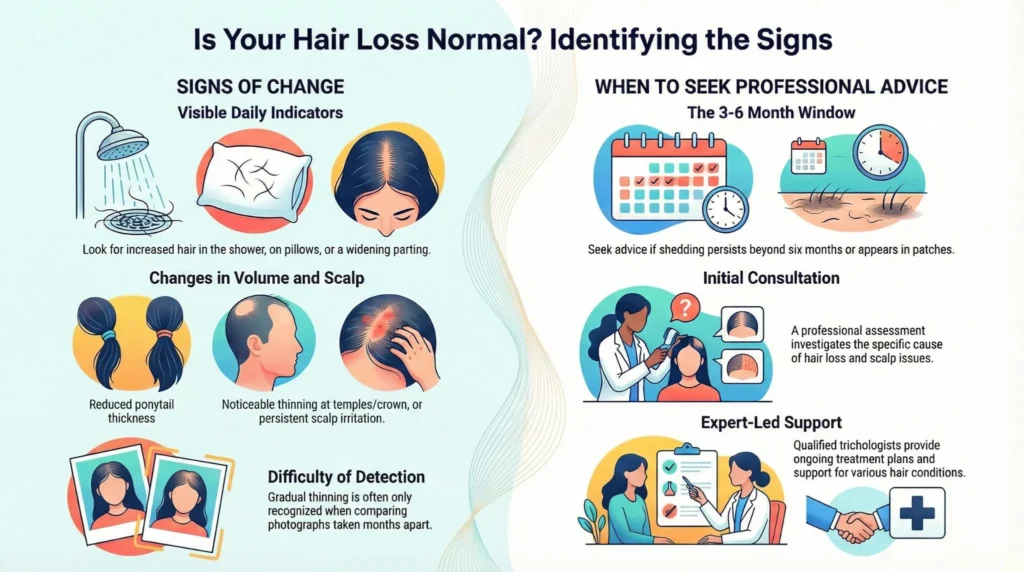
You may observe:
- Increased hair in the shower or on your pillow
- A widening parting
- Thinning at the temples or crown
- Reduced ponytail thickness
- Persistent scalp irritation
Temporary shedding after illness or stress may last several months before settling. However, if thinning continues beyond three to six months, or if you notice patchy hair loss, seeking professional advice is sensible.
Gradual thinning can be difficult to detect. Many patients only recognise changes when comparing photographs taken months or years apart.
How Is It Assessed?
Assessment begins with a detailed medical and lifestyle history. Understanding changes in health, stress, diet, or medication is essential.
I then carry out a close examination of the scalp to evaluate:
- Hair density
- Variation in hair diameter
- Signs of inflammation
- Pattern distribution
Patterns often provide important diagnostic clues. Genetic thinning tends to follow predictable areas, whereas stress-related shedding is usually diffuse.
Where appropriate, I may suggest discussing blood tests with your GP to assess iron stores or thyroid function. Assessment is always focused on identifying the underlying cause before discussing management.
Management Options
Management depends entirely on what is affecting the cycle.
If shedding is stress-related and temporary, the cycle often resets naturally. In these cases, reassurance and monitoring may be sufficient.
If nutritional imbalance is present, correcting deficiencies can support healthier growth.
For inflammatory scalp conditions, improving the scalp environment is important in protecting follicular function.
In cases of genetic thinning, early management may help slow progression. However, no intervention can permanently override genetic influence. The aim is to support follicular health and maintain density where possible.
Each individual requires a tailored approach.
When Should You Seek Advice?
You may wish to seek professional guidance if:
- Shedding persists beyond three months
- Thinning becomes visibly noticeable
- Sudden patchy hair loss occurs
- The scalp feels persistently sore or inflamed
Seeking assessment does not mean something serious is wrong. In many cases, patients simply need reassurance and clarity. In others, early evaluation allows contributing factors to be addressed before progression continues.
Patients visiting The Hair & Scalp Clinic in Huntingdon receive a detailed, evidence-based scalp assessment with Consultant Trichologist Tracey Walker FIT. The focus is always on understanding the individual cause before recommending any management plan.
Hair changes can feel distressing. With calm guidance, accurate diagnosis, and realistic expectations, most concerns can be properly understood and appropriately managed.