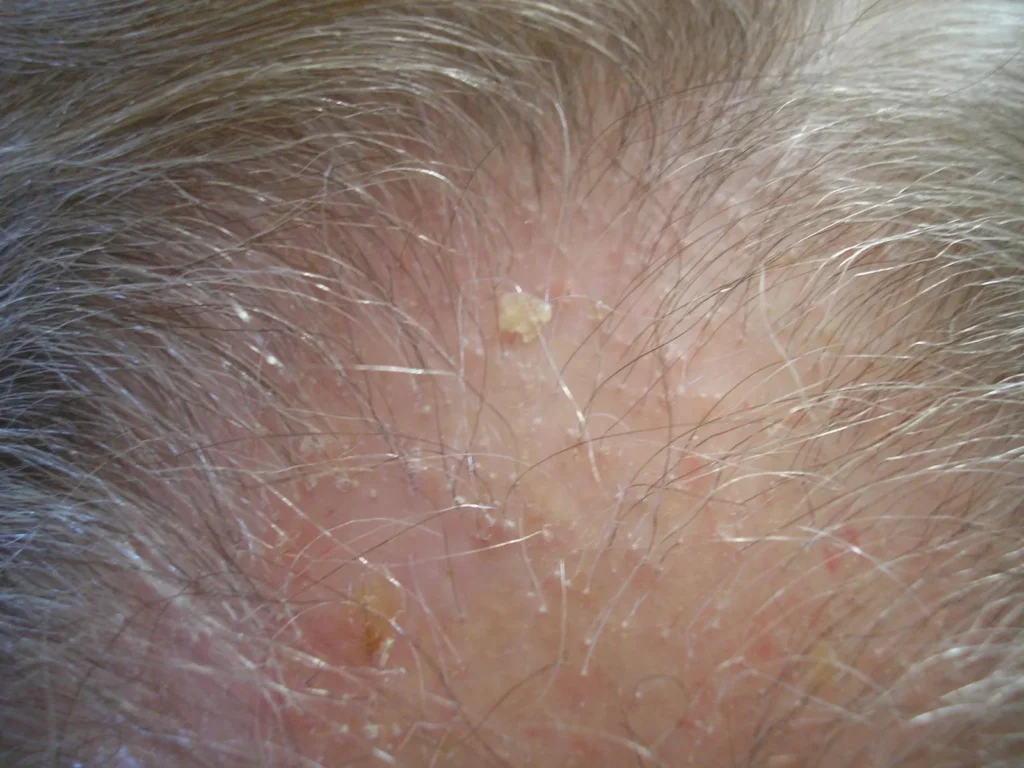
Lichen planopilaris (LPP) is a form of primary scarring alopecia, where inflammation damages the hair follicles and may replace them with scar tissue. Once this scarring has occurred, the affected follicles cannot produce hair again.
This makes LPP one of the more serious hair loss conditions seen in trichology. Early recognition is important because the aim is not to regrow hair from scarred areas, but to identify active inflammation and support appropriate management before further follicular damage occurs.
At The Hair & Scalp Clinic in Huntingdon, Tracey Walker FIT, Fellow of the Institute of Trichologists, provides specialist trichological assessment for patients with suspected scarring alopecia. With over 40 years of professional experience in hair and scalp health, clinical education, and expert witness work, Tracey offers careful scalp examination, trichoscopy assessment, and guidance on when dermatology referral may be required.
The clinic supports patients from Huntingdon, Cambridge, Peterborough, St Ives, St Neots, Ely, Brampton, Godmanchester, and across Cambridgeshire.
Lichen planopilaris is believed to be an immune-mediated inflammatory condition affecting the hair follicle. It targets the follicular structures responsible for regeneration. When these structures are destroyed, the hair loss becomes permanent in that area.
LPP is considered a follicular form of lichen planus, an inflammatory condition that may also affect the skin, nails, or mucous membranes. On the scalp, it can present with colour changes around the follicles (e.g., redness, pink or purple tones depending on the skin colour), fine scaling, irritation, burning, itching, or gradual areas of permanent hair loss.
Because early LPP may resemble other forms of thinning or scalp inflammation, accurate clinical assessment is essential.
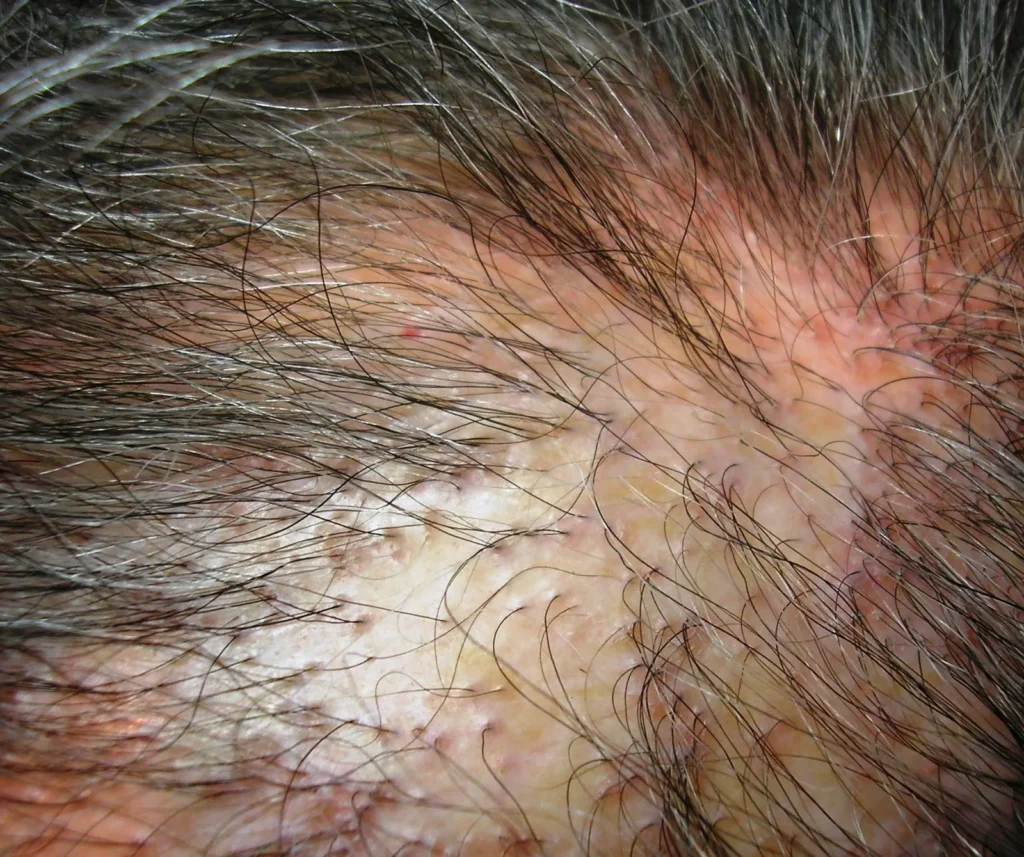
Lichen planopilaris can present in several recognised forms.
Classic LPP often causes patchy areas of scarring hair loss, most commonly affecting the central or upper scalp. It may be associated with redness, scaling, itching, or tenderness around individual follicles.
Frontal fibrosing alopecia (FFA) is considered a clinical variant of LPP. It typically causes a gradual recession of the frontal and temporal hairline as well as the hairline behind the ears, and may also involve eyebrow or eyelash thinning.
FFA is sometimes mistaken for natural hairline recession, ageing-related thinning, or menopause hair loss. For this reason, women in perimenopause or menopause who notice hairline changes should consider specialist assessment.
This is a rarer variant associated with scalp LPP, patchy body hair loss, and follicular papules on the skin.
Symptoms of LPP can vary. Some patients experience discomfort, while others notice gradual hair loss without obvious scalp symptoms.
Signs may include:
LPP does not always cause strong symptoms in the early stages. Some patients only seek help once visible hair loss has already developed.
If you are unsure whether symptoms are due to inflammation, shedding, or pattern thinning, it may also be useful to read about female pattern hair loss and telogen effluvium, as these conditions can sometimes be confused with early scarring alopecia.
Unlike non-scarring forms of hair loss, lichen planopilaris can permanently destroy follicles. Once a follicle has been replaced by scar tissue, regrowth in that area is not possible.
The purpose of early assessment is to identify whether inflammation is active and whether referral for medical management is required. A trichologist cannot reverse established scarring, but clinical assessment can help identify signs of active disease and support timely referral where appropriate.
This is particularly important when symptoms include:
Diagnosis is usually based on clinical examination and dermoscopy or trichoscopy. In some cases, a referral to a dermatologist may be recommended for a scalp biopsy to confirm the diagnosis.
During a consultation, Tracey Walker (may) will:
For patients with coexisting scalp irritation, related pages on scalp psoriasis, dandruff and seborrhoeic dermatitis may also be useful.
There is currently no cure for lichen planopilaris. Management is usually long-term and focuses on reducing active inflammation, monitoring change, and preserving unaffected follicles where possible.
Because LPP is a scarring alopecia, medical supervision is often required. A dermatologist may recommend treatments such as:
These treatments must be prescribed and monitored by an appropriate medical professional.
From a trichology perspective, support may include:
For a broader explanation of the clinic’s approach, see our page on hair loss treatment and scalp management.
Nutrition does not cause LPP in isolation, but wider health factors can influence the scalp and follicular environment. Where appropriate, Tracey may review existing blood results or suggest discussing further tests with your GP.
Relevant markers may include:
For more information, see our guide to nutrition and blood tests in hair loss.
Lichen planopilaris can fluctuate. Some patients experience active phases with (redness), discolouration, scaling, itching, or burning, followed by quieter periods. Others notice slow progression without obvious symptoms.
Monitoring is important because visible hair loss alone does not always show whether inflammation is active. Trichoscopy can help assess scalp changes and guide whether further medical review is needed.
The aim is to provide a realistic picture of:
Understanding the hair growth cycle can also help explain why changes in density may take time to assess.
A specialist trichological assessment may be helpful if you notice:
The Hair & Scalp Clinic is based at 83a High Street, Huntingdon, and supports patients from Cambridge, Peterborough, St Ives, St Neots, Ely, Brampton, Godmanchester, and across Cambridgeshire.
You can book a specialist consultation directly with the clinic.
Frontal fibrosing alopecia is considered a clinical variant of lichen planopilaris. Classic LPP usually causes patchy scarring hair loss, while frontal fibrosing alopecia most often causes gradual recession of the frontal and temporal hairline, sometimes with eyebrow loss.
There is currently no cure for lichen planopilaris. Management focuses on identifying active inflammation, supporting appropriate medical referral, and monitoring progression over time.
Hair does not regrow from areas where follicles have been destroyed and replaced by scar tissue. If inflammation is present before complete follicular destruction, medical management may help preserve remaining follicles.
Perifollicular scaling appears as fine white or silvery scales around the base of hair shafts. It may be subtle and is often easier to identify under trichoscopy than with the naked eye.
Both can involve immune-related hair loss, but the key difference is scarring. Alopecia areata is non-scarring, meaning follicles remain intact. LPP is scarring, meaning follicular damage can be permanent.
A trichologist can assess scalp and hair findings, identify signs suggestive of scarring alopecia, and advise when dermatology referral is needed. A dermatologist () may be required for biopsy, prescription medication, and systemic medical management.
You should seek assessment promptly if you notice progressive hairline recession, eyebrow thinning, burning, scaling, or smooth areas where hair is not returning. Early assessment is important because established scarring cannot be reversed.

Follow Us
Copyright © 2026 The Hair & Scalp Clinic | Developed By