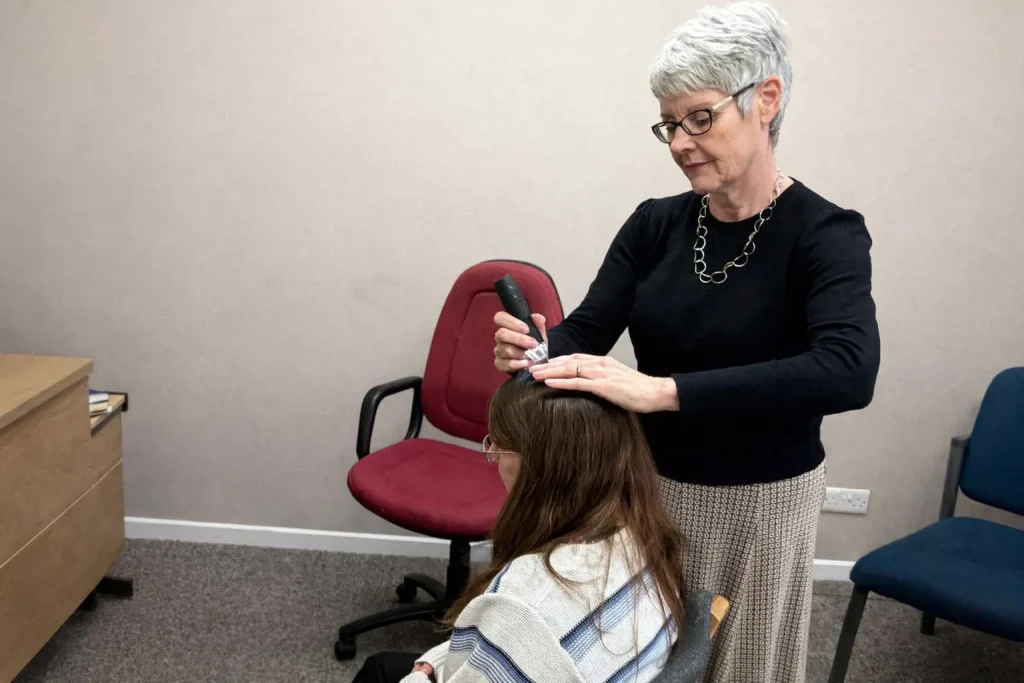
Persistent red bumps, pustules, and localised scalp soreness are common features of inflammatory scalp conditions such as folliculitis. At The Hair & Scalp Clinic, located at 83a High Street, Huntingdon, we provide a specialist clinical environment for the accurate assessment and ongoing management of hair follicle inflammation.
Led by Tracey Walker FIT, a Fellow of the Institute of Trichologists, our practice supports patients across Cambridgeshire who experience painful, recurrent, or unexplained scalp irritation and require structured clinical guidance rather than trial-and-error use of products.
Folliculitis is an inflammatory condition affecting hair follicles, often associated with ingrown hairs, mechanical irritation, or a microbial imbalance. It may present with red papules, pustules, or crusting around the base of the hair shaft and can be uncomfortable or painful.
As a specialist trichology clinic in Huntingdon, our role is to differentiate folliculitis from other scalp conditions, such as scalp psoriasis or seborrhoeic dermatitis and to diagnose the particular type of folliculitis dependent on the presentation. Because folliculitis can have multiple underlying causes, accurate clinical diagnosis is essential before any management approach is advised.
Patients attending our clinic from Huntingdon, St Ives, St Neots, and the wider Cambridgeshire region may present with:
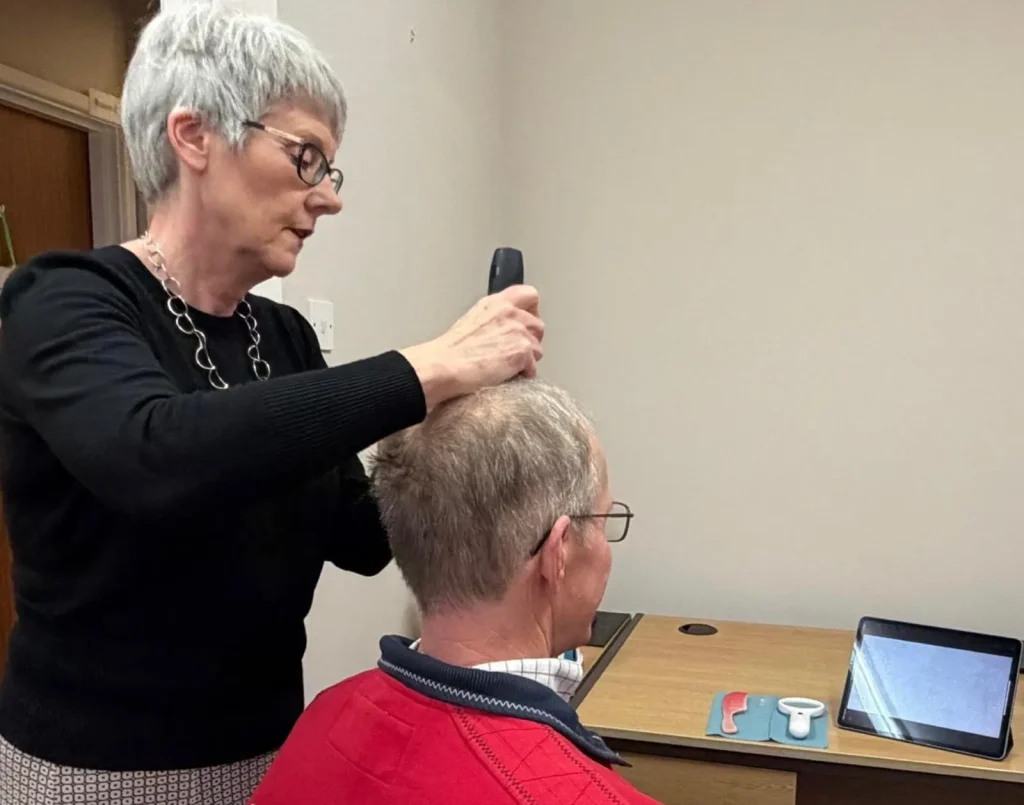
Many individuals attempt to manage “scalp spots” using general antiseptics or cosmetic products without a confirmed diagnosis. As a consultant trichologist, Tracey Walker performs a hands-on clinical assessment to identify the nature and contributing factors of follicular inflammation.
Diagnostic assessment may include:
This approach ensures recommendations are based on clinical findings rather than assumptions.
Folliculitis often requires structured clinical management rather than generalised remedies. Our role is to support scalp health, minimise ongoing irritation, and monitor the condition over time.
Management guidance may include:
We do not claim to cure folliculitis. Our focus is on responsible clinical management and ongoing assessment.
Our Huntingdon clinic is conveniently located near the River Great Ouse and is easily accessible via the A14 and A1(M). We provide a discreet clinical setting for patients across Cambridgeshire requiring specialist trichological assessment.
No. Folliculitis involves inflammation of the hair follicle itself, whereas acne primarily affects sebaceous glands. Management approaches differ, which is why professional diagnosis is important.
The majority of cases of folliculitis do not usually damage hair follicles permanently. However, severe or long-standing inflammation may increase the risk of scarring. Early clinical assessment helps identify this risk.
Products can potentially irritate infected scalps; therefore, during consultation, we review your routine and provide guidance on suitable product use.
No, Folliculitis is not generally contagious.
The course varies depending on severity and cause. Acute cases may settle relatively quickly, while chronic or recurrent forms require longer-term clinical monitoring.
If you are experiencing painful or persistent scalp lesions, a professional assessment can provide clarity and direction. Contact our Huntingdon clinic to arrange a consultation with an experienced consultant trichologist.

Follow Us
Copyright © 2026 The Hair & Scalp Clinic | Developed By