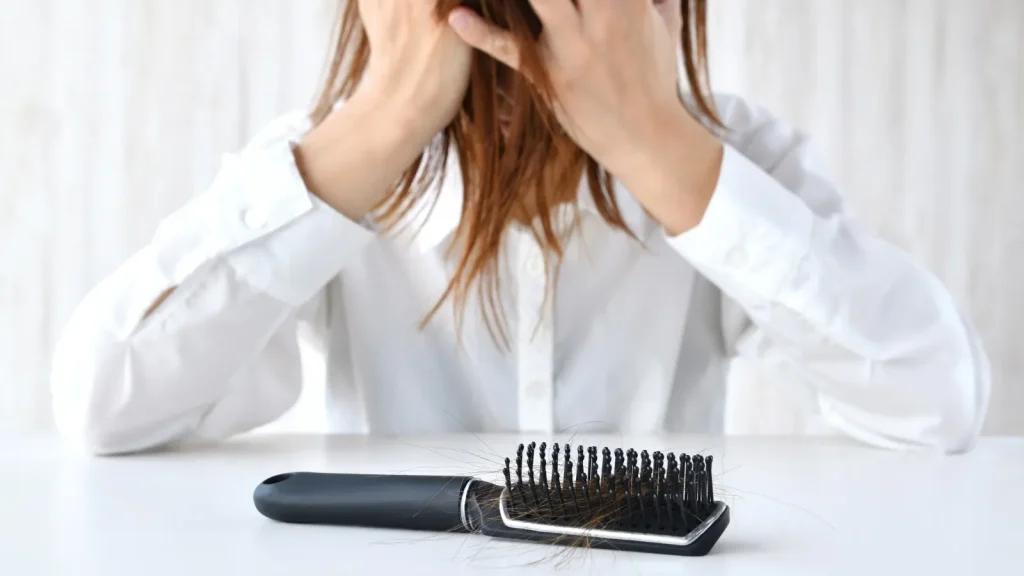
The transition through perimenopause and menopause involves significant biological changes that commonly affect the hair and scalp. At The Hair & Scalp Clinic, we provide an established clinical environment for the professional assessment of menopause-related hair changes.
Led by Tracey Walker FIT, a Fellow of the Institute of Trichologists, our Huntingdon clinic supports patients across Cambridgeshire who require a structured, evidence-aware investigation into hair thinning and changes in hair texture associated with hormonal transition.
During menopause, declining oestrogen and progesterone levels alter the biological environment of the hair follicles. This shift may allow androgens to exert a greater influence, contributing to gradual follicular miniaturisation.
Menopausal hair changes typically present as a progressive reduction in hair diameter or an overall decrease in volume, most commonly observed (at the crown) on the top of the head or frontal hairline. As a specialist trichology practice, our role is to investigate these changes clinically and distinguish hormonal thinning from other contributing factors.
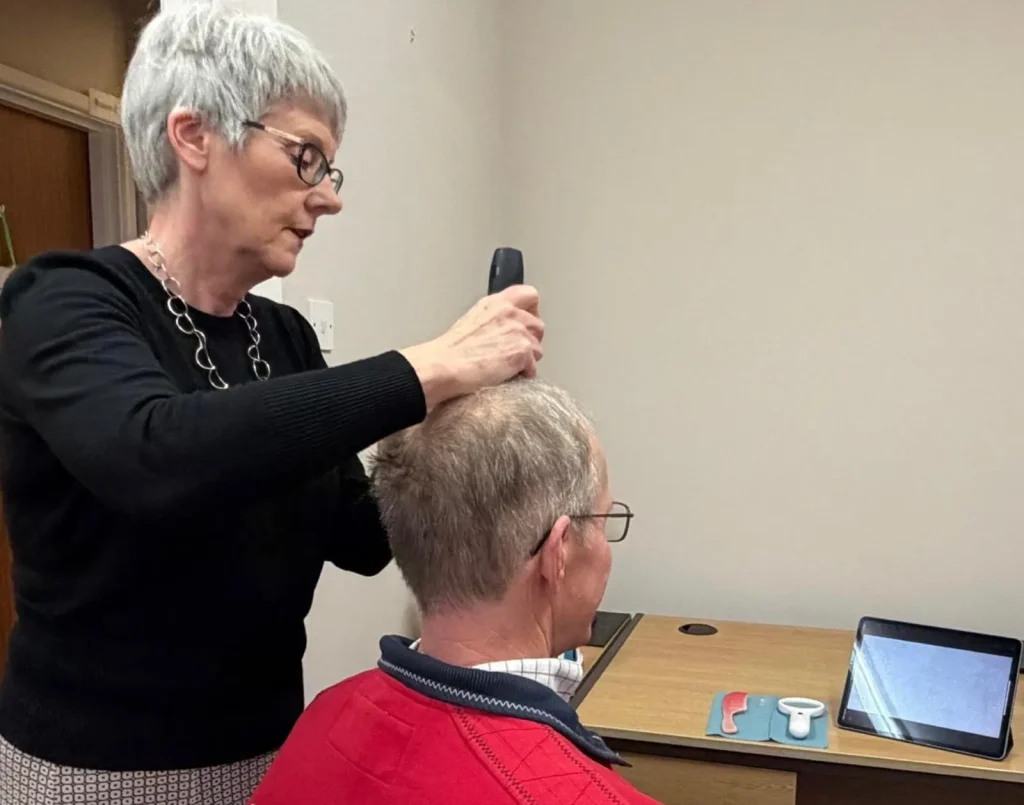
Every patient attending our clinic at 83a High Street, Huntingdon, undergoes a comprehensive diagnostic assessment. The aim of this process is to identify the nature of the hair change and exclude alternative or co-existing conditions.
As part of this investigation, Tracey Walker may utilise:
This approach ensures management decisions are based on clinical findings rather than generalised advice.
Menopausal hair change is a long-term biological process that requires ongoing management rather than corrective intervention. Our role is to support scalp health and monitor follicular behaviour over time.
Management guidance may include:
Discussion of appropriate clinical-grade products suitable for menopausal (scalps) hair thinning.
Addressing identified deficiencies that may place additional strain on hair health.
Managing changes in sebum production and skin hydration.
Advice on hair fibres, masking products, or hairpieces where aesthetic support is required.
We do not claim to reverse hormonal change or restore hair density. Our focus remains on responsible clinical management.
Our Huntingdon-based clinic provides specialist trichological assessment for patients throughout Cambridgeshire. Conveniently located near the A14 and A1 corridors, we regularly support individuals from:
Effective management of menopausal hair change begins with an accurate clinical diagnosis. Contact our Huntingdon clinic to arrange an assessment with an experienced consultant trichologist.
Hair changes are primarily linked to declining oestrogen and progesterone levels, which influence the hair growth cycle. Clinical assessment helps determine how these hormonal shifts are affecting individual hair patterns.
Hormone replacement therapy can influence hair differently depending on formulation and individual sensitivity. Some preparations may be beneficial, while others may contribute to thinning. Clinical review is recommended.
Reduced oestrogen levels often lower scalp sebum production, leading to dryness and increased fragility of the hair shaft. Clinical guidance can help manage these changes.
No referral is required. Patients may book directly with The Hair & Scalp Clinic. We work alongside GPs where further medical investigation is appropriate.
We use clinical trichoscopy to observe changes in hair diameter and follicular behaviour over time, allowing informed adjustments to management where appropriate.

Follow Us
Copyright © 2026 The Hair & Scalp Clinic | Developed By