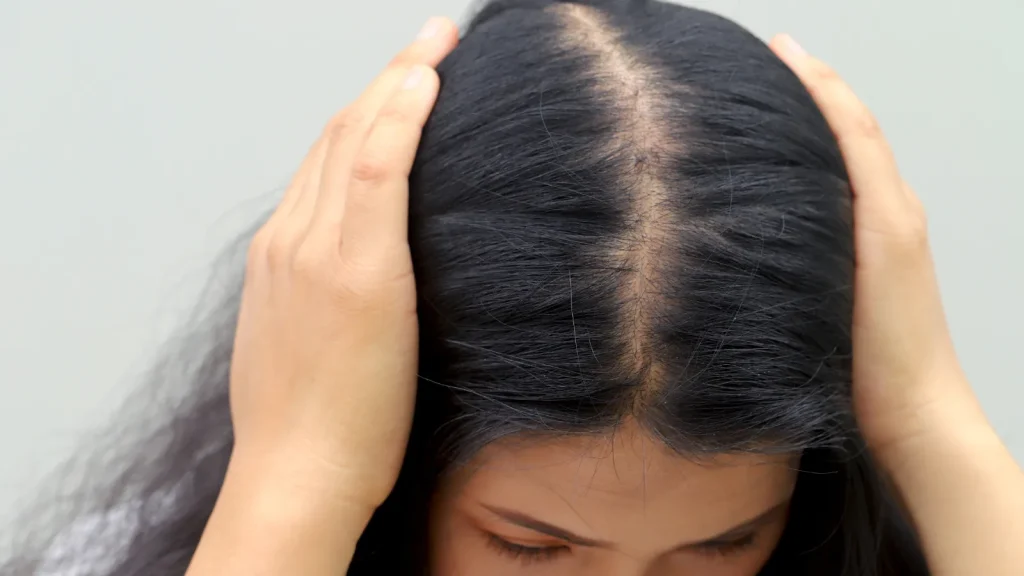
Telogen effluvium is one of the most common causes of temporary hair loss and is often the most distressing for patients. It is characterised by sudden, diffuse shedding across the entire scalp rather than the formation of distinct patches.
At The Hair & Scalp Clinic, we support patients across Cambridgeshire who are experiencing telogen effluvium. Led by Tracey Walker FIT, a Fellow of the Institute of Trichologists, our clinic provides a professional clinical environment in which to investigate the underlying triggers of shedding and establish a clear, evidence-based pathway to recovery.
Unlike genetic thinning, telogen effluvium is a reactive condition. It occurs when a significant physiological or emotional stressor forces a large number of hairs to prematurely exit the growth phase (anagen) and enter the resting phase (telogen).
Approximately three months after the triggering event, these resting hairs are shed simultaneously. Because the shedding occurs across the entire scalp, patients often report that their ponytail feels thinner or notice increased hair loss during washing or brushing. If you are experiencing these symptoms and are seeking specialist assessment in Cambridgeshire, early clinical evaluation is advised.
As a specialist practice based in Huntingdon, we take a comprehensive approach to identifying why the hair growth cycle has been disrupted. Common triggers for telogen effluvium include:
Because telogen effluvium can resemble the early stages of other hair loss conditions, including androgenetic alopecia, an accurate clinical diagnosis is essential.
During your consultation at our established Huntingdon clinic, Tracey Walker uses digital trichoscopy to assess follicular activity at high magnification. This allows us to identify signs of new regrowth and confirm that follicles remain active. We also review medical history and relevant blood results to ensure no underlying deficiencies are delaying recovery for patients across Cambridgeshire.
The outlook for telogen effluvium is generally very good once the underlying trigger has been identified and addressed. Our management approach focuses on:
If you are experiencing sudden hair shedding, do not leave your recovery to chance. Contact our clinic at 83a High Street, Huntingdon, for an expert clinical assessment and a clear, evidence-based management plan.
No. Although the shedding can be heavy, telogen effluvium does not cause total baldness. The condition reflects a disruption of the growth cycle rather than permanent follicle loss. Once the trigger is resolved, regrowth usually follows.
In acute cases, shedding typically lasts up to six months. If it persists beyond this timeframe, it may be classified as chronic telogen effluvium, which requires further clinical investigation.
No. The hairs currently shedding entered the resting phase several months earlier, so they cannot be retained. Clinical management focuses on ensuring healthy regrowth during the next cycle.
No. Washing does not cause hair loss; it simply releases hairs that have already detached. Avoiding washing may worsen scalp conditions such as seborrhoeic dermatitis.
A Consultant Trichologist performs a differential diagnosis using trichoscopy and clinical assessment to confirm the cause of shedding and ensure appropriate management, avoiding unnecessary or ineffective treatments.

Follow Us
Copyright © 2026 The Hair & Scalp Clinic | Developed By