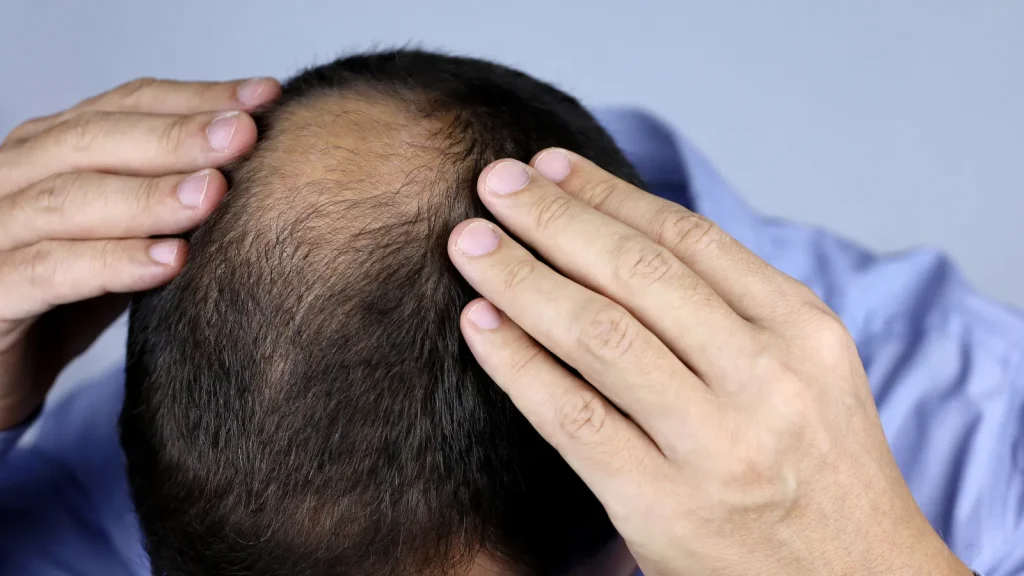
Male pattern baldness (androgenetic alopecia) is the most common form of hair loss in men, affecting a large proportion of the male population at various stages of life. Although often regarded as an inevitable part of ageing, the underlying biological process is complex and primarily driven by a genetic sensitivity of the hair follicles to the hormone dihydrotestosterone (DHT).
At The Hair & Scalp Clinic, we provide an established clinical setting in which to assess the progression and pattern of hair loss accurately. Led by Tracey Walker FIT, a Fellow of the Institute of Trichologists, our approach moves beyond the claims of high-street products and focuses on evidence-based clinical management aimed at stabilising hair loss and, where follicles remain active, supporting regrowth.
The defining feature of male pattern baldness is a process known as follicular miniaturisation. This occurs when genetically susceptible follicles gradually shrink in response to DHT over repeated hair growth cycles.
As miniaturisation progresses, the hairs produced become increasingly fine, short, and lightly pigmented. If the process continues unchecked, the follicle may eventually stop producing a visible hair shaft altogether. This typically follows a recognisable pattern:
Many men seek hair loss treatment through online subscription services without undergoing a physical scalp examination. This can be problematic, as conditions such as nutritional deficiencies, inflammatory scalp disorders, or thyroid imbalance may mimic or accelerate androgenetic hair loss.
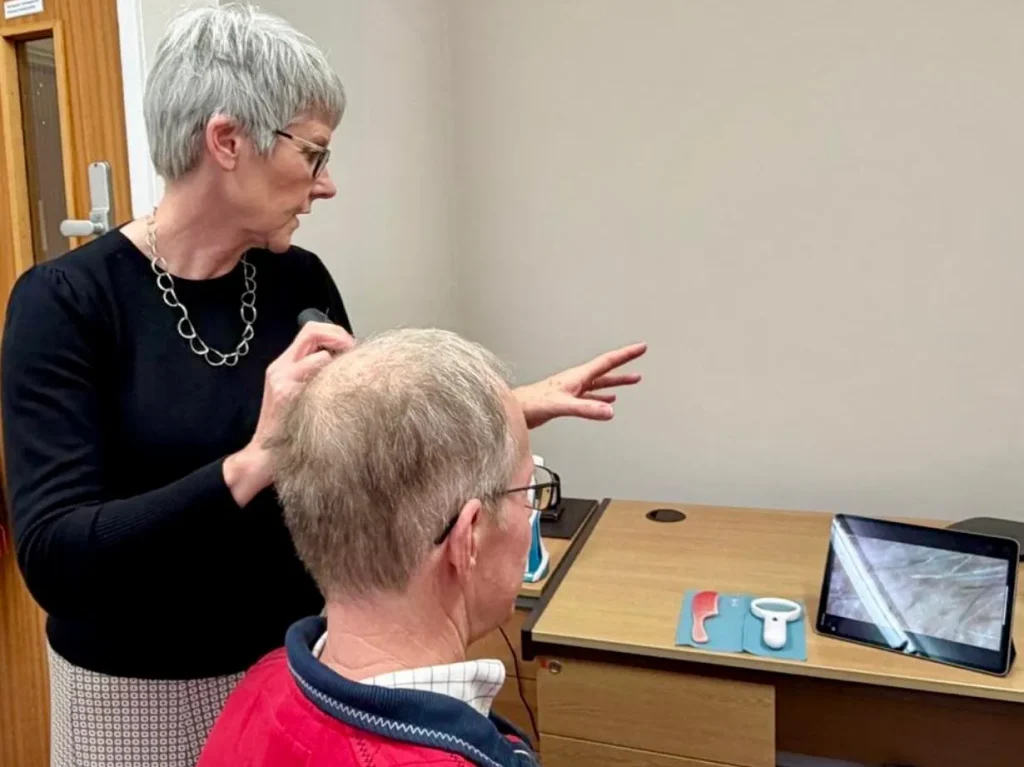
During a consultation at our Cambridgeshire clinical hub, Tracey Walker carries out a detailed digital trichoscopy, allowing the scalp to be examined at high magnification in order to:
All management plans are tailored to the individual and guided by the Hamilton–Norwood Scale, ensuring recommendations reflect the stage and pattern of hair loss identified. Our focus remains on clinical integrity, patient safety, and realistic outcomes. Management may include:
Early intervention remains the most effective approach to managing male pattern baldness. Once a follicle has fully miniaturised and the scalp surface becomes smooth, non-surgical management options become significantly more limited.
Visit The Hair & Scalp Clinic in Huntingdon for a thorough clinical assessment and a clear, evidence-based prognosis for your hair health.
Genetics play the primary role; however, the condition develops through the interaction between genetic predisposition and androgen hormones. External factors such as stress, nutritional imbalance, and certain medications may influence the rate of progression.
When identified at an early to mid-stage, it is often possible to reverse follicular miniaturisation and regain visible density. In more advanced cases, management focuses on stabilising remaining hair and preventing further loss.
A Consultant Trichologist specialises in the biological health of the hair and scalp and provides medical, non-surgical management. Stabilisation and scalp optimisation are often recommended before any surgical intervention is considered.
No. Male pattern baldness is hormonally driven and occurs beneath the skin at the follicular level. However, excessively tight or unhygienic headwear may contribute to scalp irritation and should be avoided.
Clinical management should begin as soon as changes in hair density or hairline position are noticed. Early stabilisation is far more effective than attempting recovery after significant follicular miniaturisation has occurred.

Follow Us
Copyright © 2026 The Hair & Scalp Clinic | Developed By